Sunflower
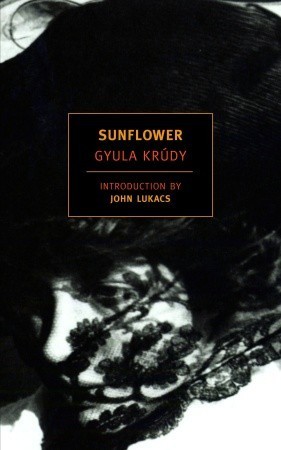
Sunflower is a novel by Gyula Krúdy, the Hungarian novelist who lived from 1878 to 1933. The novel was originally published in Hungarian as Napraforgó in 1918 and was one of the major works of Krúdy’s middle period, alongside the Sindbad story cycle that had been developing across the same years and that has become his most famous work in international circles.
The novel is set in the country house world of pre war Hungary and follows the slow developing romantic situation among a small group of characters across a particular extended period in the Hungarian countryside. The central character is Eveline, a young woman whose various suitors and complicated romantic history provide the framework for the novel’s exploration of love, memory, and the strange relationships between the past and the present that Krúdy’s fiction characteristically explored.
The novel reflects Krúdy’s mature method in his middle and later fiction. The plot moves slowly across an extended period of time, with substantial attention given to the texture of particular country house life, the specific qualities of light at particular seasons, the meals and conversations and small social rituals that fill the days and evenings, and the slow developing relationships among characters whose feelings for each other shift across the long period the novel covers. The pace is deliberate and the atmosphere is patient, with Krúdy giving himself the room to develop the various effects he is working toward.
The novel has been translated into English by John Bátki and has been one of the works that brought Krúdy to international attention in the late twentieth and early twenty first centuries. The translation captures something of the strange atmospheric quality of the Hungarian original while inevitably losing some of the specifically Hungarian texture that gave the prose its full effect for readers in the original language.
The novel runs about three hundred pages in the English translation and is best read slowly, ideally with substantial breaks between sections to allow the cumulative atmospheric effect to develop. For readers interested in twentieth century central European literature, Sunflower is one of the essential Krúdy works alongside the Sindbad cycle. It pairs naturally with the other Krúdy translations and with the broader late Habsburg and interwar central European literature that includes Joseph Roth, Bruno Schulz, and Sándor Márai.
About the Author
Download free books by Gyula Krúdy on BDeBooks. Read Gyula Krúdy’s works online or download as PDF/EPUB — part of our growing free eBook collection.
See all books by Gyula Krúdy →