The Clockmaker’s Daughter
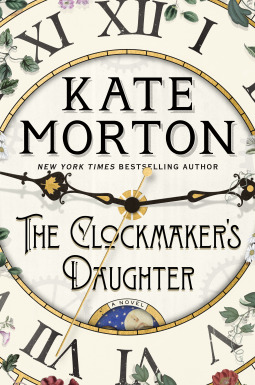
The Clockmaker’s Daughter is Kate Morton’s 2018 novel, one of her most ambitious in terms of structure and one of the more challenging entries in her catalogue. The novel weaves together multiple timelines across more than a hundred and fifty years, all centered on Birchwood Manor, an old country house on the upper Thames where a tragic event in the summer of 1862 has left echoes that the various inhabitants of the house across the generations have all sensed in different ways.
The central story involves the Magenta Brotherhood, a fictional group of artists, sculptors, and writers loosely modeled on the Pre Raphaelites, who spent that summer at Birchwood Manor working on their art and pursuing their entanglements with each other. By the end of that summer, one of them has died, another has gone missing, and a precious diamond has disappeared. The contemporary thread follows Elodie Winslow, a young London archivist who comes across an old photograph and a sketchbook in her work that begin to point her toward the mystery of what actually happened that summer at Birchwood Manor.
What makes the novel ambitious and divisive is Morton’s choice to add a ghostly first person narrator who appears in interleaved chapters throughout the book. The narrator is a woman who has been bound to Birchwood Manor since the events of 1862 and who can speak only to the reader, not to the various living characters who have inhabited the house across the decades. Some readers found the device beautiful and emotionally powerful. Others found it slowed the more conventional mystery elements that Morton’s earlier novels had moved more briskly through.
Morton writes the kind of multigenerational mystery that requires patience but rewards it. Her readers come for the slow accumulation of detail, the sense of place, and the emotional resolution that the structure builds toward. For longtime Kate Morton fans, The Clockmaker’s Daughter is a substantial late period work. For new readers, her earlier novels like The Forgotten Garden or The House at Riverton are easier entry points, but this novel rewards readers willing to commit to its more ambitious form.
About the Author
Download free books by Kate Morton on BDeBooks. Read Kate Morton’s works online or download as PDF/EPUB · part of our growing free eBook collection.
See all books by Kate Morton →