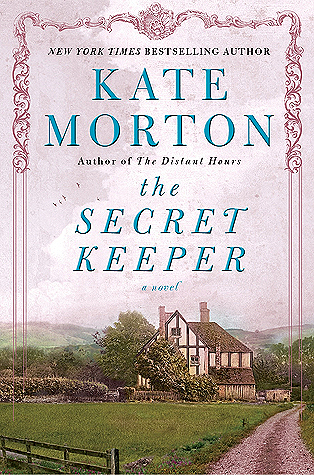
The Secret Keeper
The Secret Keeper is Kate Morton’s 2012 novel, weaving together two timelines around a violent event that the central character Laurel Nicolson witnessed as a teenager in 1961 and that she has spent the rest of her life trying to understand. The novel opens with the contemporary thread, in which the elderly actress Dorothy Nicolson is dying and her four daughters have gathered to be with her. Laurel, the eldest, is haunted by her memory of an event from her sixteenth summer, when she watched from a hiding place as her mother killed a man with a knife in the family garden and then never spoke of the incident again.
The historical thread takes the reader back to wartime London in the early 1940s, where the young Dorothy Smitham is working in a London office and dreaming of becoming someone bigger than her current circumstances suggest. Through the course of the war and the difficult years immediately after, Dorothy makes the choices that will shape the rest of her life and that will eventually lead to the moment in the 1961 garden that has haunted her daughter Laurel ever since. Kate Morton uses her characteristic dual timeline structure to slowly reveal the connections between the wartime Dorothy and the woman who would become Laurel’s mother, with the central mystery of who the dying man in the garden actually was and what he had to do with Dorothy’s earlier life unfolding across the second half of the novel.
Kate Morton writes the kind of multigenerational mystery that requires patience but rewards it. The wartime London setting is rendered with the kind of atmospheric care that her readers have come to expect from her, with the specific texture of the London Blitz and the wider home front experience giving the historical chapters their weight. Dorothy as a young woman is one of Morton’s strongest characters, with her ambitions, her self deceptions, and her slowly clarifying moral situation all rendered with the kind of psychological care that Morton’s best work shows.
The contemporary thread, with Laurel and her sisters at their mother’s bedside, gives the novel its emotional anchor. Laurel’s investigation into what actually happened in 1961 and what her mother’s wartime past has to do with it carries the second half of the book toward the kind of slow building reveals that Kate Morton fans come to her for.
For longtime Kate Morton readers, The Secret Keeper is one of the strongest entries in her catalogue. For new readers, this is a strong introduction.
About the Author
Download free books by Kate Morton on BDeBooks. Read Kate Morton’s works online or download as PDF/EPUB · part of our growing free eBook collection.
See all books by Kate Morton →