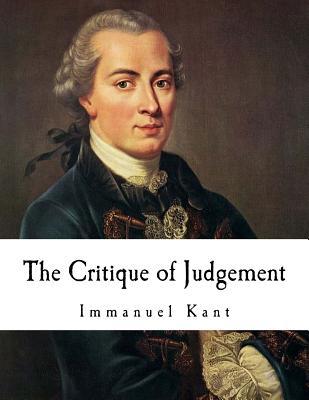
The Critique of Judgement
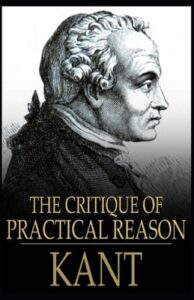
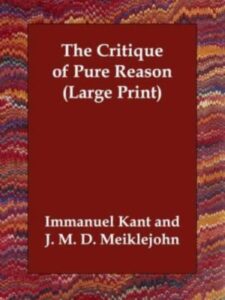
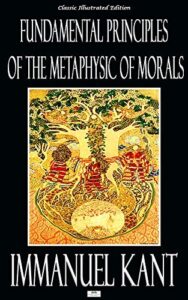
The Critique of Judgement is one of the three great Critiques by Immanuel Kant, the German philosopher who lived from 1724 to 1804. Originally published in German as Kritik der Urteilskraft in 1790, it completes the critical philosophy that Kant had set out across the Critique of Pure Reason of 1781 and the Critique of Practical Reason of 1788. The third Critique addresses the questions of aesthetic and teleological judgment, the kinds of judgment that fall between the theoretical reason of the first Critique and the practical reason of the second.
The book is divided into two main parts. The first part addresses the critique of aesthetic judgment and contains Kant’s substantial treatment of the experience of beauty and the sublime. Kant argues that the judgment that something is beautiful is not a judgment of personal preference but is a particular kind of universally valid judgment that nonetheless cannot be derived from concepts in the manner of theoretical knowledge. He develops the famous theory of disinterested pleasure, the idea that the genuine aesthetic response to beauty is free from any practical interest in the object and from any cognitive use of the object as an instance of a concept.
The second part addresses the critique of teleological judgment and considers the kinds of judgment by which we understand natural objects, particularly living organisms, as if they were organized according to purposes. Kant develops a careful position according to which teleological judgment is a necessary but regulative principle of our understanding of nature, not a constitutive principle that can be theoretically demonstrated. The discussion has substantial implications for the philosophy of biology and for the broader question of how natural science can handle the apparent purposiveness of biological organisms.
The third Critique is generally considered one of the most difficult works in the history of philosophy and is the most demanding of the three great Critiques. Its influence on subsequent philosophy and aesthetic theory has been enormous, with the Romantic movement, German Idealism, and much subsequent aesthetic and biological philosophy drawing substantially on its central arguments.
The book runs about four hundred pages and requires substantial patience and concentration. For readers approaching it for the first time, the prior two Critiques provide essential background. It pairs naturally with the broader Kantian critical philosophy and with the various major commentators on the third Critique including Hegel and Cassirer.
About the Author
Read and download 2 free books by Immanuel Kant on BDeBooks. Browse the complete collection of Immanuel Kant’s works available as free PDF and EPUB downloads. Discover novels, fiction, and other writings by Immanuel Kant in our online eBook library.
See all books by Immanuel Kant →