The Epitome Of The Divine Institutes
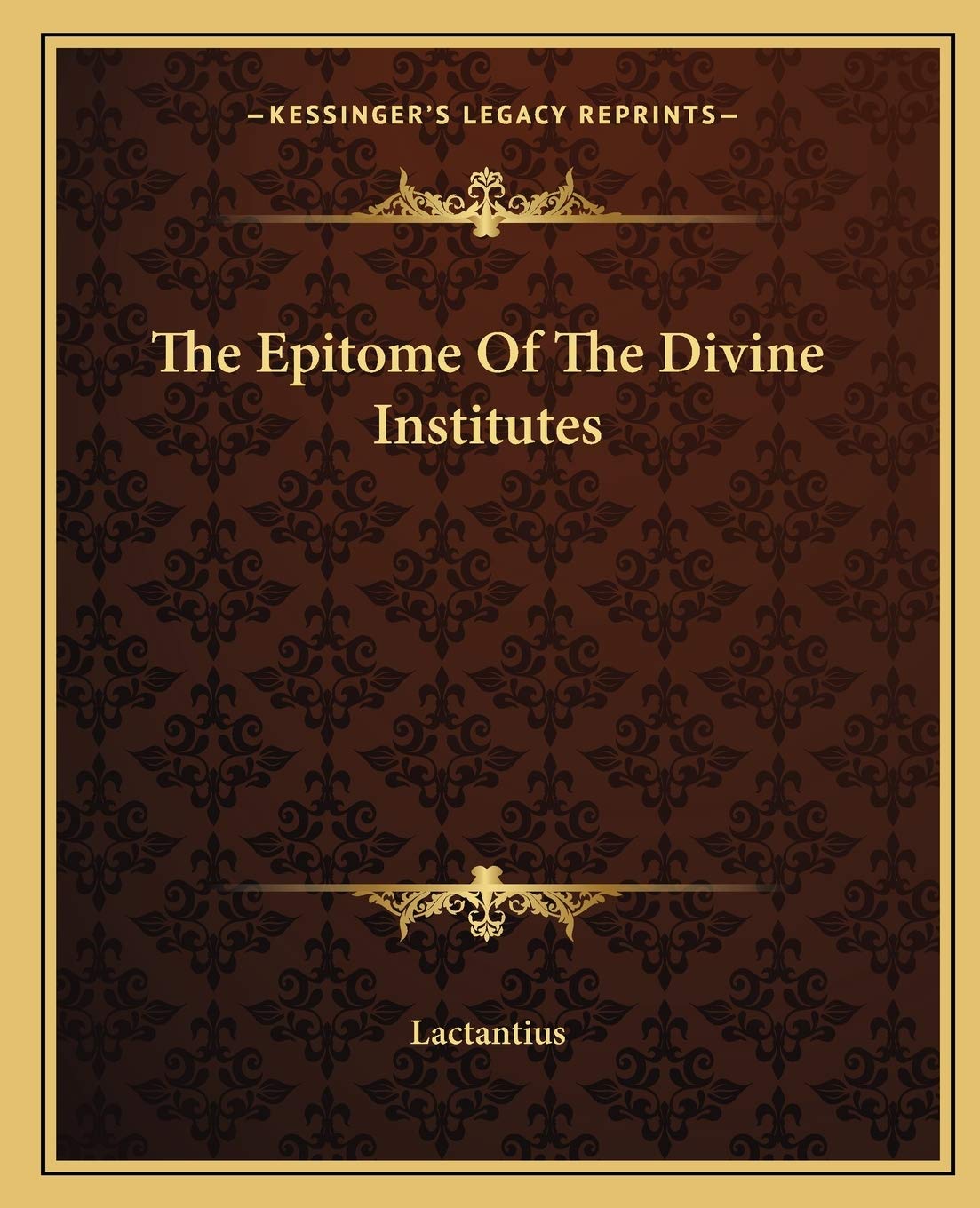
The Epitome Of The Divine Institutes is Lactantius’s own shorter version of his major seven volume work the Divinae Institutiones, written sometime after the larger work was completed. The Epitome condenses the central arguments of the longer work into a more manageable single volume, and Lactantius produced it for readers who wanted access to the substance of his major project without committing to the full seven books of the original. The two texts have circulated together in the Christian Latin tradition for centuries, with the Epitome serving both as a standalone introduction to Lactantius’s thought and as a study guide for readers working through the longer work.
The arguments of the Divinae Institutiones run across the seven original books. The critique of pagan religion. The critique of the false wisdom of the philosophers. The case for true wisdom and true religion united in Christianity. The justice of God and the proper relationship between divine and human justice. The true worship that consists of moral conduct rather than ritual sacrifice. And the eventual end of human existence in the divine judgment and the blessed life that follows for the faithful. The Epitome works through all of these themes in compressed form, with Lactantius distilling the central arguments while preserving the wider structure of the original.
Lactantius is sometimes called the Christian Cicero because of the polish of his Latin prose, and the Epitome shows him at his most concentrated. The arguments are dense by modern standards but they are organized clearly, and the comparative engagement with classical sources rewards readers who come to the text with some background in Greek and Roman philosophy. The book also contains some of his more developed material on the eschatological themes that the seventh book of the original Institutiones had addressed, with the discussion of the Last Judgment and the eventual blessed life of the faithful given particular attention.
For students of late antiquity, of patristic literature, of the long history of Christian engagement with classical philosophy, or of the wider development of Western theology in its formative period, the Epitome is a useful complement to the longer work. The English translation is generally readable. Anyone working with the text in a serious way will want a good edition with notes that flag Lactantius’s sources and the contemporary controversies he was responding to. The Epitome is shorter and more accessible than the full Divinae Institutiones and gives readers a sense of Lactantius’s voice and method in a single sitting.
About the Author
Download free books by Lactantius on BDeBooks. Read Lactantius’s works online or download as PDF/EPUB · part of our growing free eBook collection.
See all books by Lactantius →