Book Four Of True Wisdom And Religion
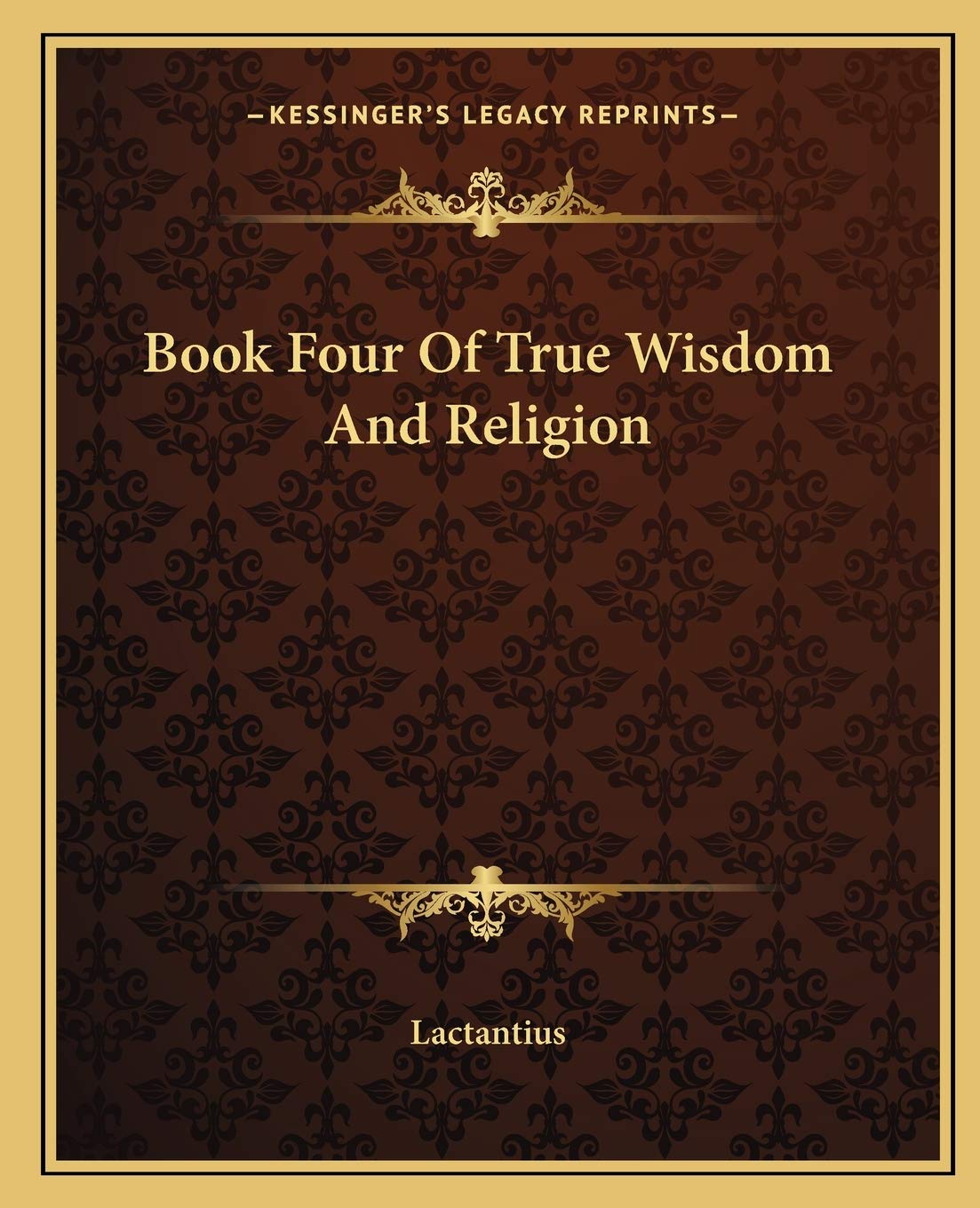
Book Four of the Divinae Institutiones, often given the subtitle De Vera Sapientia et Religione or On True Wisdom and Religion, is one of the central books in the seven volume defense of Christianity that Lactantius wrote in the early fourth century. The larger work was aimed at educated pagan readers in the late Roman Empire, the kind of people who could quote Cicero and Plato and who needed to be addressed in their own intellectual language if they were going to take the new religion seriously.
This particular book takes up the question of the relationship between wisdom and religion, working through what Lactantius saw as the inadequacy of pagan philosophy and pagan religion to provide a unified account of human knowledge of the divine. The pagan philosophers, in Lactantius’s argument, had pursued wisdom but had largely separated it from religious practice, leaving their religion in the hands of the priests and ritual specialists. The pagan priests, in turn, performed the rituals but could not give a coherent intellectual account of what they were doing. Christianity, Lactantius argued, brought the two together. True wisdom required true religion, and true religion required true wisdom, and neither could exist on its own.
The argument works through extensive citation of classical philosophy, particularly the Stoic and Platonic traditions, and through Lactantius’s own readings of the prophets and the gospels. The book also contains some of his more developed Christological material, with a focus on Christ as both the wisdom of God made manifest and the founder of a religion that integrates wisdom and worship in a way pagan tradition could not.
Lactantius is sometimes called the Christian Cicero because of the polish of his Latin prose, and Book Four shows him at his most philosophically ambitious. The arguments are dense by modern standards but they are organized clearly, and the comparative engagement with classical sources rewards readers who come to the text with some background in Greek and Roman philosophy. For students of late antiquity, of patristic literature, or of the long tradition of Christian engagement with classical philosophy, this is essential.
About the Author
Download free books by Lactantius on BDeBooks. Read Lactantius’s works online or download as PDF/EPUB — part of our growing free eBook collection.
See all books by Lactantius →