
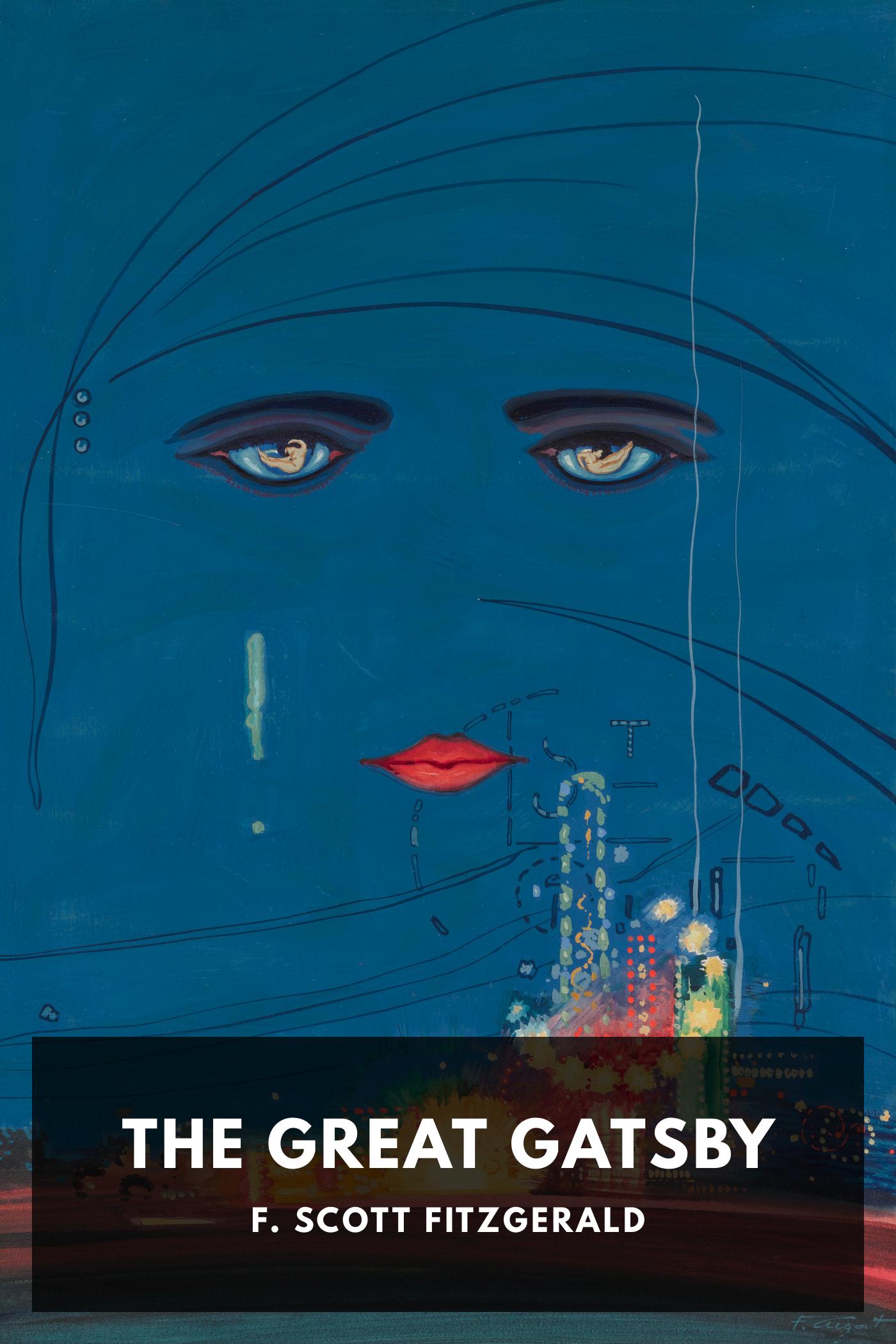
The Great Gatsby
- Downloads
- 1K+
- First published
- 1925
- Pages
- 135
Listen to The Great Gatsby Audiobook Free
-
Chapter 1
43:03 -
Chapter 2
29:40 -
Chapter 3
39:39 -
Chapter 4
37:18 -
Chapter 5
30:01 -
Chapter 6
29:12 -
Chapter 7
62:56 -
Chapter 8
30:57 -
Chapter 9
35:17
The Great Gatsby (1925) is a public domain work.
The audio edition streams in the page. There is no audio file to download.
About this book
The Great Gatsby is F. Scott Fitzgerald's novel of the Jazz Age, published by Scribner's in April 1925. The narrator, Nick Carraway, moves from the Midwest to Long Island's North Shore in the summer of 1922 and rents a house next to the mansion of Jay Gatsby, a mysterious millionaire who throws lavish parties every weekend. Across the bay lives Nick's cousin Daisy and her husband Tom Buchanan, and Gatsby's past turns out to be tied to Daisy. The book follows his pursuit of an old dream, with the green light at the end of Daisy's dock as its best-known symbol. It draws on Fitzgerald's own experience of wealth, ambition and disillusionment in the 1920s. Reviews on release were mixed, and the novel is now regarded as a classic of American literature.
From the opening pages
In my younger and more vulnerable years my father gave me some advice that I’ve been turning over in my mind ever since.
“Whenever you feel like criticizing anyone,” he told me, “just remember that all the people in this world haven’t had the advantages that you’ve had.”
He didn’t say any more, but we’ve always been unusually communicative in a reserved way, and I understood that he meant a great deal more than that. In consequence, I’m inclined to reserve all judgements, a habit that has opened up many curious natures to me and also made me the victim of not a few veteran bores. The abnormal mind is quick to detect and attach itself to this quality when it appears in a normal person, and so it came about that in college I was unjustly accused of being a politician, because I was privy to the secret griefs of wild, unknown men. Most of the confidences were unsought—frequently I have feigned sleep, preoccupation, or a hostile levity when I realized by some unmistakable sign that an intimate revelation was quivering on the horizon; for the intimate revelations of young men, or at least the terms in which they express them, are usually plagiaristic and marred by obvious suppressions. Reserving judgements is a matter of infinite hope. I am still a little afraid of missing something if I forget that, as my father snobbishly suggested, and I snobbishly repeat, a sense of the fundamental decencies is parcelled out unequally at birth.
And, after boasting this way of my tolerance, I come to the admission that it has a limit. Conduct may be founded on the hard rock or the wet marshes, but after a certain point I don’t care what it’s founded on. When I came back from the East last autumn I felt that I wanted the world to be in uniform and at a sort of moral attention forever; I wanted no more riotous excursions with privileged glimpses into the human heart. Only Gatsby, the man who gives his name to this book, was exempt from my reaction—Gatsby, who represented everything for which I have an unaffected scorn. If personality is an unbroken series of successful gestures, then there was something gorgeous about him, some heightened sensitivity to the promises of life, as if he were related to one of those intricate machines that register earthquakes ten thousand miles away. This responsiveness had nothing to do with that flabby impressionability which is dignified under the name of the “creative temperament”—it was an extraordinary gift for hope, a romantic readiness such as I have never found in any other person and which it is not likely I shall ever find again. No—Gatsby turned out all right at the end; it is what preyed on Gatsby, what foul dust floated in the wake of his dreams that temporarily closed out my interest in the abortive sorrows and short-winded elations of men.
Contents
About the author

More from this genre
See all
Books like this one
Discussion
No comments yet. Share a thought, a question or a favourite passage.
Copyright concern? Read our DMCA policy
Read or download
Public domain book This work is in the public domain and free of copyright. Anyone may read, download and share it.
- EPUB 337 KB
-
KINDLE Send to Kindle Send
- Download the EPUB file to this device.
- Open Amazon's Send to Kindle page, sign in, and add the file. Open Send to Kindle (opens in a new tab)
On a phone: open the downloaded EPUB and share it to the Kindle app.
You can also email the file to your Kindle address (it ends in @kindle.com) from an email address you approved in your Amazon account.
- PDF 1.0 MB
Downloads start right away. How to open EPUB on your phone
Book facts
- Author
- F. Scott Fitzgerald
- First published
- 1925
- Reading time
- About 4 hours
- Pages
- 135
- Language
- English
- Genre
- Language Learning
- Formats
- PDF, EPUB, Read online, Audiobook
- Audio read by
- Kara Shallenberg (1969-2023)