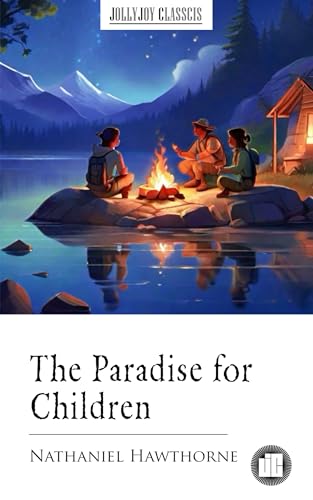
The Paradise for Children
The Paradise for Children is one of the alternative titles or alternative versions of Nathaniel Hawthorne’s retelling of the Pandora myth that appears in his 1851 children’s book A Wonder Book for Girls and Boys. The standard version of the story in the Wonder Book is titled The Paradise of Children, and this slight title variation either represents an alternative edition of the same story or a closely related retelling that Hawthorne produced.
The Pandora myth as Hawthorne renders it for young readers takes the classical Greek story and adapts it to the children’s literature tradition of the period. In the Wonder Book version, the central characters are children rather than adults, with Pandora and her companion Epimetheus being the only people in the world and living in a paradise where work, suffering, and trouble do not exist. The mysterious box that Mercury has left in their care contains all of the troubles that have not yet entered human life, and Pandora’s eventual opening of the box releases these troubles into the world while also leaving the gift of hope inside.
Hawthorne uses the children focused retelling to develop the moral material of the original myth in ways accessible to young readers. The wider Wonder Book frame, with young Eustace Bright telling the story to a group of children at the Tanglewood estate, provides the structural context for the retelling.
For families with young children encountering Greek mythology for the first time, the Pandora story in either of its Wonder Book variants is one of the most beloved entries in the wider collection. For students of nineteenth century American children’s literature or of Hawthorne’s wider catalogue, the various retellings are essential.
About the Author
Nathaniel Hawthorne was a 19th-century American novelist and short-story writer central to the Dark Romantic movement. He is best known for The Scarlet Letter and The House of the Seven Gables, with their themes of sin, guilt, and Puritan New England.
See all books by Nathaniel Hawthorne →