The Three Golden Apples
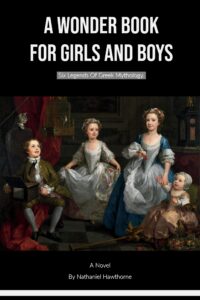
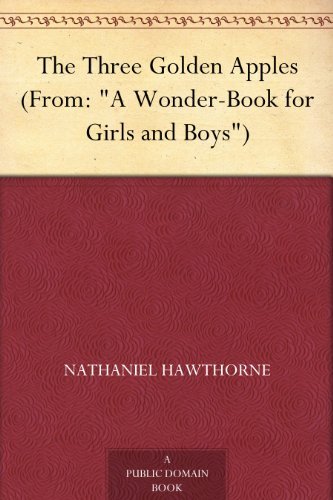
The Three Golden Apples is one of the six retold Greek myths in Nathaniel Hawthorne’s 1851 children’s book A Wonder Book for Girls and Boys. The story retells the classical Greek myth of Hercules and his quest for the golden apples of the Hesperides, one of the twelve labors that the hero was required to complete as penance.
In Hawthorne’s retelling, the focus is on Hercules’s encounter with the giant Atlas, who had been condemned to hold up the sky on his shoulders for eternity. Hercules, needing the golden apples that grow in a garden Atlas can reach but he cannot, persuades Atlas to fetch the apples for him while Hercules temporarily takes over the burden of holding up the sky. The story develops the various complications that arise when Atlas, having been freed from his eternal task, decides he would rather not return to it.
Hawthorne’s retelling renders the Greek mythological material in his characteristic warm prose, with the central encounter between Hercules and Atlas providing both the central narrative and the moral material that the children’s story works with. The wider Wonder Book frame, with young Eustace Bright telling the story to a group of children at the Tanglewood estate, provides the structural context for the retelling.
For families with young children encountering Greek mythology for the first time, The Three Golden Apples is one of the most engaging entries in the wider Wonder Book. The Hercules and Atlas confrontation has the kind of dramatic and moral weight that children’s storytelling reliably uses, with Hawthorne’s gentle prose giving the classical material its accessible texture.
About the Author
Nathaniel Hawthorne was a 19th-century American novelist and short-story writer central to the Dark Romantic movement. He is best known for The Scarlet Letter and The House of the Seven Gables, with their themes of sin, guilt, and Puritan New England.
See all books by Nathaniel Hawthorne →