

The Problems of Philosophy
- Downloads
- 100+
- First published
- 1912
- Pages
- 110
Listen to The Problems of Philosophy Audiobook Free
-
Preface / Chapter I - Appearance and Reality
17:50 -
Chapter II - The Existence of Matter
19:54 -
Chapter III - The Nature of Matter
20:00 -
Chapter IV - Idealism
16:12 -
Chapter V - Knowledge by Acquaintance and Knowledge by Description
28:15 -
Chapter VI - On Induction
16:42 -
Chapter VII - On Our Knowledge of General Principles
16:56 -
Chapter VIII - How A Priori Knowledge Is Possible
16:07 -
Chapter IX - The World of Universals
21:04 -
Chapter X - On Our Knowledge of Universals
19:46 -
Chapter XI - On Intuitive Knowledge
20:53 -
Chapter XII - Truth and Falsehood
17:41 -
Chapter XIII - Knowledge, Error, and Probable Opinion
21:48 -
Chapter XIV - The Limits of Philosophical Knowledge
21:00 -
Chapter XV - The Value of Philosophy / Bibliographical Note
16:28
The Problems of Philosophy (1912) is a public domain work.
The audio edition streams in the page. There is no audio file to download.
About this book
Bertrand Russell wrote this short guide in 1912 to introduce readers to the questions philosophers actually argue about. Can we prove that a table still exists when no one is looking at it? How do we know the sun will rise tomorrow? What is the difference between knowing a person and knowing facts about them? Russell works through problems of perception, matter, idealism, induction, and the nature of universals, always in plain prose that assumes no prior training. He is honest about how little philosophy can settle for certain, and he closes with a memorable case for why the questions still matter, arguing that they enlarge the mind and loosen the grip of narrow assumptions.
From the opening pages
Is there any knowledge in the world which is so certain that no reasonable man could doubt it? This question, which at first sight might not seem difficult, is really one of the most difficult that can be asked. When we have realized the obstacles in the way of a straightforward and confident answer, we shall be well launched on the study of philosophy—for philosophy is merely the attempt to answer such ultimate questions, not carelessly and dogmatically, as we do in ordinary life and even in the sciences, but critically, after exploring all that makes such questions puzzling, and after realizing all the vagueness and confusion that underlie our ordinary ideas.
In daily life, we assume as certain many things which, on a closer scrutiny, are found to be so full of apparent contradictions that only a great amount of thought enables us to know what it is that we really may believe. In the search for certainty, it is natural to begin with our present experiences, and in some sense, no doubt, knowledge is to be derived from them. But any statement as to what it is that our immediate experiences make us know is very likely to be wrong. It seems to me that I am now sitting in a chair, at a table of a certain shape, on which I see sheets of paper with writing or print. By turning my head I see out of the window buildings and clouds and the sun. I believe that the sun is about ninety-three million miles from the earth; that it is a hot globe many times bigger than the earth; that, owing to the earth’s rotation, it rises every morning, and will continue to do so for an indefinite time in the future. I believe that, if any other normal person comes into my room, he will see the same chairs and tables and books and papers as I see, and that the table which I see is the same as the table which I feel pressing against my arm. All this seems to be so evident as to be hardly worth stating, except in answer to a man who doubts whether I know anything. Yet all this may be reasonably doubted, and all of it requires much careful discussion before we can be sure that we have stated it in a form that is wholly true.
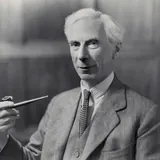
About the author

More from this genre
See all

Books like this one

Reviews and discussion
No ratings yet. Be the first reader to rate this book.
Rate this book
Pick a star, then sign in. Only readers who confirmed their email can rate.
No comments yet. Share a thought, a question or a favourite passage.
Copyright concern? Read our DMCA policy
Read or download
Public domain book This work is in the public domain and free of copyright. Anyone may read, download and share it.
- EPUB 472 KB
-
KINDLE Send to Kindle Send
- Download the EPUB file to this device.
- Open Amazon's Send to Kindle page, sign in, and add the file. Open Send to Kindle (opens in a new tab)
On a phone: open the downloaded EPUB and share it to the Kindle app.
You can also email the file to your Kindle address (it ends in @kindle.com) from an email address you approved in your Amazon account.
- PDF 867 KB
Your download is starting.
Downloads start right away. How to open EPUB on your phone
Book facts
- Author
- Bertrand Russell
- First published
- 1912
- Reading time
- About 3 hours
- Pages
- 110
- Language
- English
- Genre
- Western Philosophy
- Formats
- PDF, EPUB, Read online, Audiobook