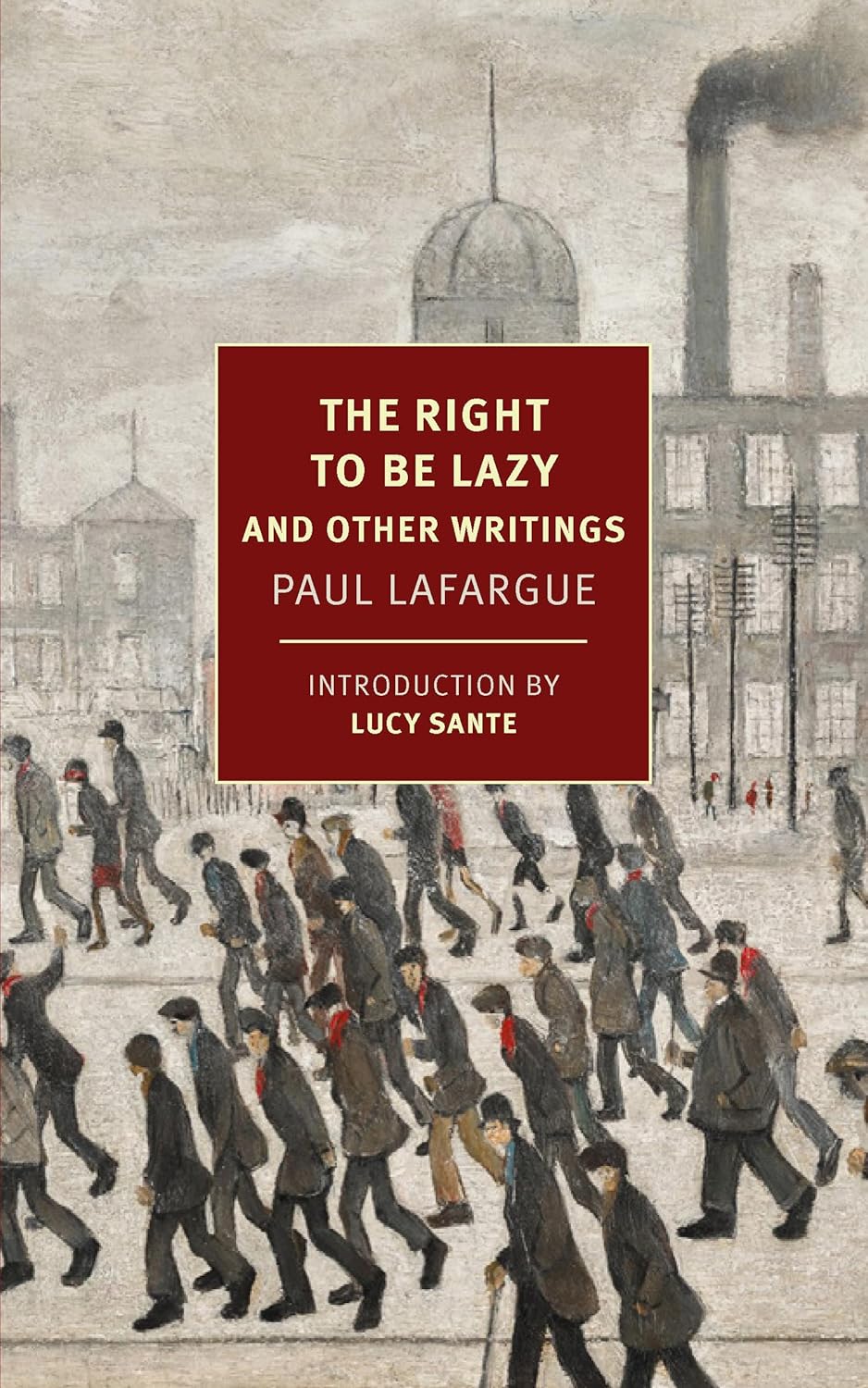
The Right to Be Lazy
The Right to Be Lazy, originally Le Droit à la paresse, is a Marxist polemical essay by Paul Lafargue (1842-1911), first published in French in 1880. Lafargue was Karl Marx’s son-in-law, having married Marx’s daughter Laura, and was one of the founding figures of the French socialist movement.
The essay attacks what Lafargue called the cult of work that capitalism had imposed on the working class. He argues that the standard nineteenth century socialist demand for the right to work missed the deeper point. The actual revolutionary demand should be the right to leisure, the right to be lazy, the right to enjoy life rather than to spend it in productive labor for the benefit of capitalist employers. Lafargue draws on classical, biblical, and ethnographic sources to argue that the work-centered industrial society of nineteenth century Europe was a historical aberration rather than a natural human condition.
The essay became one of the most widely circulated socialist pamphlets of the late nineteenth and early twentieth centuries. It remains in print and continues to be cited in contemporary debates about work, leisure, and the structure of capitalist society.
About the Author
Download free books by Paul Lafargue on BDeBooks. Read Paul Lafargue’s works online or download as PDF/EPUB — part of our growing free eBook collection.
See all books by Paul Lafargue →