


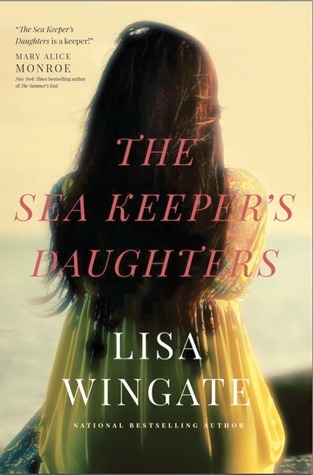
The Sea Keeper’s Daughters
Lisa Wingate

The Sea Keeper’s Daughters is one of Lisa Wingate’s novels in her loosely connected Carolina Heirlooms series, dual timeline contemporary fiction that uses the discovery of old documents to bridge the present day and a forgotten chapter of American history. Wingate would go on to write the bestselling Before We Were Yours about the Tennessee Children’s Home Society scandal, but the technique of weaving together a contemporary story and a historical mystery was already her signature in this earlier work.
The contemporary thread follows Whitney Monroe, a successful Charleston, South Carolina restaurant owner whose career is collapsing under the weight of a difficult business partner. When her elderly stepmother contacts her about troubles at the family inn back home in the Outer Banks of North Carolina, Whitney returns to a place she had been avoiding for years. While trying to figure out what to do about the inn and her stepmother, she discovers a stack of old letters in the attic that reveal a long buried family connection to the Federal Writers’ Project of the 1930s, the Depression era program that sent unemployed writers across the country to interview ordinary Americans about their lives.
The historical thread follows one of Whitney’s relatives, an aspiring writer working with the Federal Writers’ Project in Appalachia in the late 1930s and uncovering stories about her own family’s past that her relatives had been unwilling to talk about. The two timelines slowly converge as Whitney pieces together the connections.
Lisa Wingate writes accessible faith inflected fiction that handles its religious elements with a light touch rather than overt evangelism. Her readership crosses over significantly with general historical fiction readers who may not share her faith perspective but appreciate her storytelling. The Outer Banks setting is rendered with affection, the historical material on the Federal Writers’ Project is well researched, and the dual timeline structure builds toward a resolution that earns its emotional weight.
For readers who came to Wingate through Before We Were Yours, going back to her earlier novels offers more of the dual timeline storytelling she would later refine. For new readers, this is a comfortable introduction to her style.