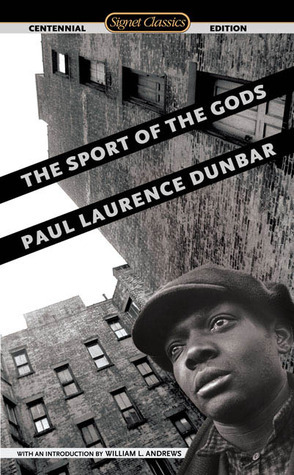
The Sport of the Gods
The Sport of the Gods is a novel by Paul Laurence Dunbar, first published in 1902. It is generally considered Dunbar’s strongest novel and is one of the early major works of African American urban realism, anticipating the more sustained twentieth-century African American urban fiction that would emerge in the Harlem Renaissance and after.
The novel opens in a Southern town shortly after Reconstruction. Berry Hamilton is a respected African American butler in the household of a white family. When jewelry disappears from the house, suspicion falls on Berry, and he is convicted of theft on weak evidence and sent to prison for ten years. The white community accepts the conviction without questioning. The African American community recognizes the injustice but cannot do anything about it. Berry’s wife Fannie loses her home, her standing in the community, and the protection that her husband’s employment had provided.
Fannie takes her children Joe and Kit and moves to New York to escape the impossible situation in the Southern town. The middle of the novel follows the family’s experience in New York. Joe falls into the city’s African American underworld and becomes involved in drinking and violent crime. Kit attempts a career on the African American vaudeville stage. Fannie struggles to keep the family together against the various pressures the urban environment produces. The story works through to a conclusion that involves the eventual revelation of Berry’s innocence but does not undo the damage that the original injustice has caused.
The novel anticipates much of the twentieth-century African American urban literature. The pattern of Southern injustice driving African American families north, the difficulties the families face in the new urban environment, the corrupting pressures of urban poverty, the difficulty of maintaining family stability under racial and economic strain, all became central themes of the later twentieth-century work by Richard Wright, James Baldwin, Toni Morrison, and the various others who developed the urban African American novel tradition.
The book runs about two hundred and fifty pages and is essential reading in African American literary history. It pairs with the work of Charles W. Chesnutt and with the early twentieth-century Harlem Renaissance fiction.
About the Author
Download free books by Paul Laurence Dunbar on BDeBooks. Read Paul Laurence Dunbar’s works online or download as PDF/EPUB · part of our growing free eBook collection.
See all books by Paul Laurence Dunbar →

Listen to The Sport of the Gods Audiobook Free
Listen to The Sport of the Gods by Paul Laurence Dunbar free online. The full audiobook (4 hr 34 min, 18 chapters, read by volunteer narrators) streams free on this page.
The Sport of the Gods (1902) is a public domain work.
| # | Chapter | Length | |
|---|---|---|---|
| 1 | 01 - The Hamiltons | 6:03 | |
| 2 | 02 - A Farewell Dinner | 15:44 | |
| 3 | 03 - The Theft | 13:18 | |
| 4 | 04 - From a Clear Sky | 14:56 | |
| 5 | 05 - The Justice of Men | 17:27 | |
| 6 | 06 - Outcasts | 17:09 | |
| 7 | 07 - In New York | 20:45 | |
| 8 | 08 - An Evening Out | 11:44 | |
| 9 | 09 - His Heart's Desire | 16:52 | |
| 10 | 10 - A Visitor from Home | 12:13 | |
| 11 | 11 - Broken Hopes | 15:38 | |
| 12 | 12 - 'All the World's a Stage' | 25:48 | |
| 13 | 13 - The Oakleys | 17:41 | |
| 14 | 14 - Frankenstein | 14:19 | |
| 15 | 15 - 'Dear, Damned, Delightful Town' | 8:59 | |
| 16 | 16 - Skaggs's Theory | 17:50 | |
| 17 | 17 - A Yellow Journal | 16:35 | |
| 18 | 18 - What Berry Found | 11:04 |
Prefer reading? Read The Sport of the Gods online free or download the PDF and EPUB above.