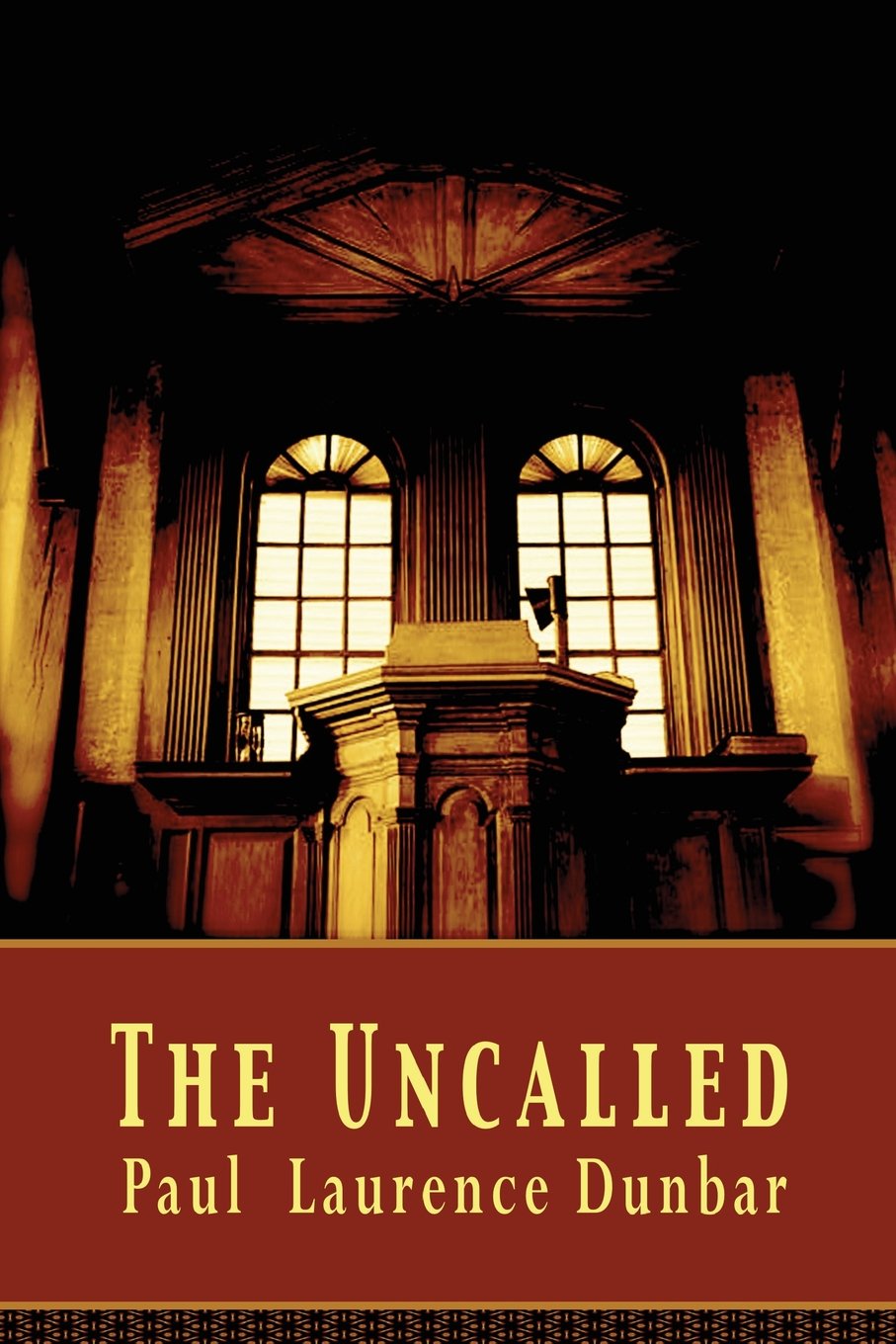
The Uncalled
The Uncalled is the first novel by Paul Laurence Dunbar, published in 1898. The book is unusual in Dunbar’s catalogue because most of the characters are white rather than African American. Dunbar set the novel in a small Ohio town much like the Dayton where he had grown up, and the story follows a young white man’s struggle with the Christian ministry that his adoptive guardian has determined will be his vocation.
Frederick Brent, the central character, is the orphaned son of a notorious drunkard who has died and left his young son to the care of the town. The strict spinster Hester Prime takes Frederick into her home and raises him with the firm intention that he will become a minister and atone for his father’s example. Frederick grows up under the constant pressure of this destined calling. He is sent to the seminary, ordained, and given a small congregation. The novel works through his slow recognition that he has been pushed into a vocation he never chose and does not actually believe in.
The book is essentially a study of religious vocation, religious doubt, and the moral problem of pursuing a Christian ministry without genuine personal religious conviction. Dunbar handles the material with seriousness and gives Frederick’s eventual departure from the ministry the weight it deserves. The novel ends with Frederick having found a different kind of life in Cincinnati, with the small town and the imposed vocation behind him.
The critical reception was mixed. Some reviewers thought Dunbar should have stayed with African American characters and subjects, which was the territory white American critics expected from him. Others praised the book for showing that Dunbar could work outside the racial expectations the period had placed on African American writers. The novel sold reasonably without ever becoming a major commercial success.
The book is now mostly of interest to scholars of Dunbar and of late-nineteenth-century African American literature. It demonstrates Dunbar’s range and his refusal to be limited to particular subjects, even when limitation would have been commercially easier. The novel pairs with the other Dunbar novels including The Love of Landry, The Fanatics, and the much stronger The Sport of the Gods, where he eventually found the urban African American subject matter that gave his fiction its lasting form.
About the Author
Download free books by Paul Laurence Dunbar on BDeBooks. Read Paul Laurence Dunbar’s works online or download as PDF/EPUB · part of our growing free eBook collection.
See all books by Paul Laurence Dunbar →
Listen to The Uncalled Audiobook Free
Listen to The Uncalled by Paul Laurence Dunbar free online. The full audiobook (5 hr 7 min, 17 chapters, read by Jim Locke) streams free on this page.
The Uncalled (1898) is a public domain work.
| # | Chapter | Length | |
|---|---|---|---|
| 1 | Chapter 1 | 11:37 | |
| 2 | Chapter 2 | 11:02 | |
| 3 | Chapter 3 | 16:26 | |
| 4 | Chapter 4 | 15:21 | |
| 5 | Chapter 5 | 10:49 | |
| 6 | Chapter 6 | 22:01 | |
| 7 | Chapter 7 | 21:42 | |
| 8 | Chapter 8 | 18:32 | |
| 9 | Chapter 9 | 20:51 | |
| 10 | Chapter 10 | 20:19 | |
| 11 | Chapter 11 | 23:13 | |
| 12 | Chapter 12 | 17:51 | |
| 13 | Chapter 13 | 19:51 | |
| 14 | Chapter 14 | 21:37 | |
| 15 | Chapter 15 | 18:51 | |
| 16 | Chapter 16 | 19:54 | |
| 17 | Chapter 17 | 16:47 |
Prefer reading? Read The Uncalled online free or download the PDF and EPUB above.