
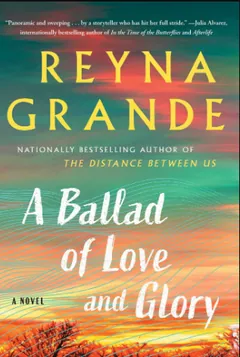
A Ballad of Love and Glory
Part Three: The Heart of Mexico
Part Three
The Heart of Mexico
31
July 1847
Mexico City
The Port of Vera Cruz had surrendered to the Yankees at the end of March, and in April, Santa Anna’s army col ided with Scott’s at the Battle of Cerro Gordo in the hil s of Vera Cruz. Though the Mexicans managed to in ict a good deal of damage, the Yankees stil bested them in battle, and Riley had found himself once again on the run with his men and his Mexican comrades-at-arms, leaving behind more than one thousand of their dead on the battle eld, thirty-three eld pieces, ammunition, and a chest with twenty thousand dol ars from which the soldiers’ wages were to be paid.
To Riley, Cerro Gordo had been a clearer defeat than Buena Vista—this time, there was no doubt that the Yanks had emerged victorious, forcing Santa Anna to abandon the battle eld at panic speed on horseback after his personal carriage was riddled with bul ets and his spare wooden leg fel into the enemy’s possession. Scattering in every direction in a disordered mass, Santa Anna’s forces had then made their way to Mexico City. Riley had no choice but to fol ow. As long as the Yankees had possession of Vera Cruz and its port, there was no way to get home but to keep on ghting.
In Mexico City, Santa Anna occupied himself with arrangements to defend the capital, but he faced the same obstacles as before—insu cient funds, limited supplies and munitions, and lack of support from the Mexican states and the clergy. After his disastrous defeat in Vera Cruz, he’d also lost the con dence of some of his fol owers, and his rivals, especial y Generals Ampudia and Valencia, wasted no time in renewing their intrigues and sowing dissent. Riley watched as
Santa Anna, undeterred by his subordinates’ plotting, took the reins of the presidency once again and made the defense of the capital his priority. Soon forti cations were being constructed and martial law imposed, forcing males between the ages of sixteen and sixty to report for military duty. Riley was not surprised when, in no time at al , Santa Anna had accumulated twenty- ve thousand soldiers under his command. Now he was focused on raising funds and support, invoking the patriotism and zeal of the city residents, urging them to devote their fortunes and their honor in defense of Mexico.
On his end, Riley welcomed more deserters into the Saint Patrick’s Battalion, including a few foreigners who’d been residing in the capital, but he needed more men. Aware that many of the prisoners of war in the Mexican prison cel s were Irish, Germans, Poles, and American deserters, he decided to seek them out and recruit them. At the Santiago Tlatelolco Prison, Riley and Patrick Dalton went from cel to cel , observing the men before addressing any of them. The Yankee prisoners would most likely not heed his cal ing, and though Santa Anna had given him a written order empowering him to take any American prisoner into the Saint Patrick’s Battalion, he wanted only men he could trust, who would become San Patricios of their own free wil .
Eighteen of the foreign-born prisoners had petitioned the British consul general in Mexico to help them. These were the ones Riley most wanted to talk to. Since the British consul would do nothing for them, joining the Mexican ranks was their only hope for now, and he would make sure they understood that.At the third cel, Patrick Dalton stopped and pointed to one of the men sitting on the ground. “That’s one of the eighteen,” he said as he pointed,
“Matthew Doyle. And there’s Patrick Casey over there, Henry Ockter, and Roger Hogan.”
After glancing at the men, Riley decided to address them. “Good afternoon, brave fel as,” he said in a deep, loud voice, so al the prisoners could hear. “I’m Captain John Riley, and this is my second-in-command, Lieutenant Patrick Dalton. We’re here to o er ye assistance.”
One of the Yankees spat on the ground. “I want nothing from the likes of you, traitors.”
Undaunted, Riley pressed on. “This is no place for ne soldiers such as yourselves. I can o er ye food, lodgin’, clothin’, and fair wages, but my best o er is this—a chance to live a life with honor and dignity, a life where ye’l be respected and recompensed for your skil s and bravery. Join the Saint Patrick’s Battalion, and I promise ye your merits shal be recognized. This isn’t like the Yankee army. Here with the Mexicans, ye’l be promoted for your skil s and your contribution to the war, as ye deserve.”
“Leave us be, John Riley. A bigger coward never set foot in this prison,” an Irishman said.
“Listen to me, fel as. The Americans wil soon be makin’ their way upon the National Highway. Ye al know what’s goin’ to happen to ye when they get here.
Al of ye are already doomed men. But if ye stand with us and ght for Mexico against the wicked invaders, the Mexican government wil reward ye—”
“That’s al very ne talk, Captain,” another prisoner said. “But how do we know to believe ya?”
Riley pul ed out the paper he’d brought with him and waved it before the men. “I have negotiated a contract with the Mexican government, signed by President Santa Anna himself. At the war’s end, they wil give you lands to cultivate. Or, if you do not wish to settle in this country, you shal be embarked for Europe at the expense of the Mexican government with al your pay.”
Riley saw some of the men nodding in approval. But others refused to look at him. He directed his words at them. “ ’Tis better to stand up and ght than to sit in a cel and wait for death to come to ye, brave fel as. There’s no honor or glory in that. Ye must decide if ye are goin’ to wait for the Yanks here, sitting helpless, or come and man one of my cannons.”
He let his words linger in the air, and he and Dalton waited for the men to make their choice. When they left the prison, they had twenty-three men enlisted in the battalion. Riley expected them to report the next day, and he put Dalton in charge of the new recruits.
After his errands, Riley made his way to the barracks up the wide principal streets, relishing the sights of the metropolis. Mexico City was unlike any city he’d ever seen. It was breathtaking. The capital boasted the nest houses, churches, and public buildings, especial y the Palacio Nacional, which stretched for an entire city block. Then there was the glorious beauty of the Catedral Metropolitana in Gothic style, with its interior decorated with gold, silver, and copper. At fourteen acres, the main square, the Plaza de la Constitución, was the largest in the country. The private residences nearby were two or three stories high, with terraces on their roofs and high windows and balconies decorated with intricate ironwork and bril iant owers.
He would have loved to have seen the city, with its population of one hundred and eighty thousand souls, with its normal hustle and bustle. Now, the movement in the streets was mostly that of the troops, priests, and monks, and the Indian vendors and their droning cries. In anticipation of the impending battle, little by little families were leaving the Val ey of Mexico to avoid the hostilities. Every day, Riley would see carriages or carts loaded with al manner of possessions, horses and mules packed with boxes and crates, men, women, and children making their way on foot with baskets and whatever else they could carry. Those who remained secluded themselves in their homes and emerged only to purchase their necessities from the shops that were stil open and from the ambulant peddlers with clay pots of charcoal, lard, cheese, or baskets of tortil as hanging from their backs.
There was a multitude of Indian beggars and lepers, bundles of rags and deformities and squalid misery. When he saw their arms stretching out for alms, asking him for “un tlaco, por favor, niño,” Riley handed out some copper coins and thought of the mendicants back home, and how Mexican and Irish poverty were not so di erent at al . Having this glimpse of another country’s misery made him feel less alone. What could he do to help the destitute escape their condition, this degrading poverty that seemed so similar in both lands?
When he passed by an old Indian woman sel ing herbs from a basket, she looked so much like Ximena’s grandmother that Riley thought he was seeing a ghost. She gave him a gap-toothed smile and handed him a bunch of epazote, which Nana Hortencia and Ximena used for cleansings. He bought the herbs
from the old woman and brought the bundle to his nose. For a moment, he was back in Ximena’s arms. He leaned against a wal , the yearning for her so intense his knees weakened, and he could not take another step. He buried his face in the herbs, reeling from the smel of her. He’d been an utter fool, he knew that now.
And he’d probably lost her forever. What if he went in search of her? She was perhaps back in the northern frontier, back on her beloved ranch and too busy restoring it to think about him. He wanted to imagine her happy. Even if he could never forgive himself for losing her, he prayed God would at least grant her some happiness.
When Riley nal y reached the battalion’s barracks, which were in an abandoned monastery near the Alameda in the outskirts of the city, the Mexican guard handed him a note. “Capitán Riley, this arrived for you while you were gone.”
“Who left this here for me?” Riley asked, his heart pounding as he read it.
Meet me in the Alameda, X. “¿Quién dejó la carta?”
“Una mujer, mi capitán,” the guard said. “No dio su nombre.”
He turned on his heel and took o running to the park. It couldn’t be. Had she truly come al this way? After al the su ering he’d put her through, could it be true that she was here and not where he’d imagined her? He hurried down the stone-paved sidewalk, sidestepping the peasant women sel ing pottery, wooden toys, and corn husk dol s, and the peddlers carrying bundles of colorful sarapes.
He nal y gained the Alameda and spotted her sitting in the shade on one of the stone benches by the large water fountain, feeding the pigeons. In the dappled light beneath the poplars, Riley paused for a moment, catching his breath and listening to the fal ing waters of the fountain. The sight of Ximena was like a sunbeam penetrating the dark brooding of his heart. He could scarcely trust his eyes to believe she was truly there. That he wasn’t just imagining her.
But then, he began worrying, uncertain as to what he should say. Forgive me…
He would start with that.
As soon as she saw him, she ran to him. He held her aloft and swung her around, his body thril ed at being able to embrace her once more. Then she cupped his face in her hands and kissed him, and he responded in complete surrender.
He bought her a lemonade from a peddler sel ing refreshments, and they strol ed around the verdant gardens on shady paths lined with owering shrubs, sharing what had transpired in their lives while they’d been apart. He concluded by tel ing her about the deserters he’d recruited at the prison that morning. “The Saint Patrick’s Battalion is stil strong,” he said. “When the Yanks get here, we’l be ready for them.”
“And our child wil be born in a country free of invaders,” she said, putting a hand on her bel y.
He stared at her, wondering if she was jesting. She hadn’t mentioned a babe, but then, he lowered his gaze and con rmed what she’d just said. Her skirt and petticoat nearly hid the swel of her bel y.
“I’m sorry, I should not have surprised you like this. I thought—” She put a hand to her mouth and bit the tender esh of her knuckles.
He gathered her into his arms and felt her body tremble.
“Should I not have come, John?” she whispered.
“Nay, lass, don’t say that,” he said. “I’ve dreamed of havin’ you back in my arms every night, though I was too much of a coward to seek you out. But just give me a minute to get over my shock, wil ya?”
He held on to her, afraid to let go, not knowing what to make of this news. A child. They were going to have a child. Would the con ict between Mexico and the United States be over before the birth? He wished to God it was so. He raised her chin so that she could look at him.
“I love you, Ximena, and I love our child. Have no doubt of that. But I loathe the thought of this innocent creature bein’ born in a country ravaged by war, you understand? Don’t I already have another child livin’ in a land scourged by hunger and misery? Is my lot in life to subject my children to such a sorrowful existence?”
She wiped her eyes and took a deep breath. “Do not think this way, John.
The Yanquis haven’t won. Not yet. When we win this war, our child shal be born in a new Mexico. One ready to be the great nation it is destined to be.”
He smiled and pul ed her against him, trying to share in her fancy for the future. “Aye, and we shal send for my son. And we can be a family. The four of us. Would that be al right, darlin’? He would make a ne brother, my Johnny…”
“I can’t wait to meet him,” she said, holding tight to him.
He kissed the top of her head and looked up at the cloudless sky. He wanted to believe in the future they envisioned, but hadn’t he learned by now that a windy day was not a day for thatching? The Yankees would soon be marching their way. The upcoming battle would be the de ning moment—the moment that could turn the tide of the war once and for al . He prayed with al his heart that the Mexican eagle would be the victor.