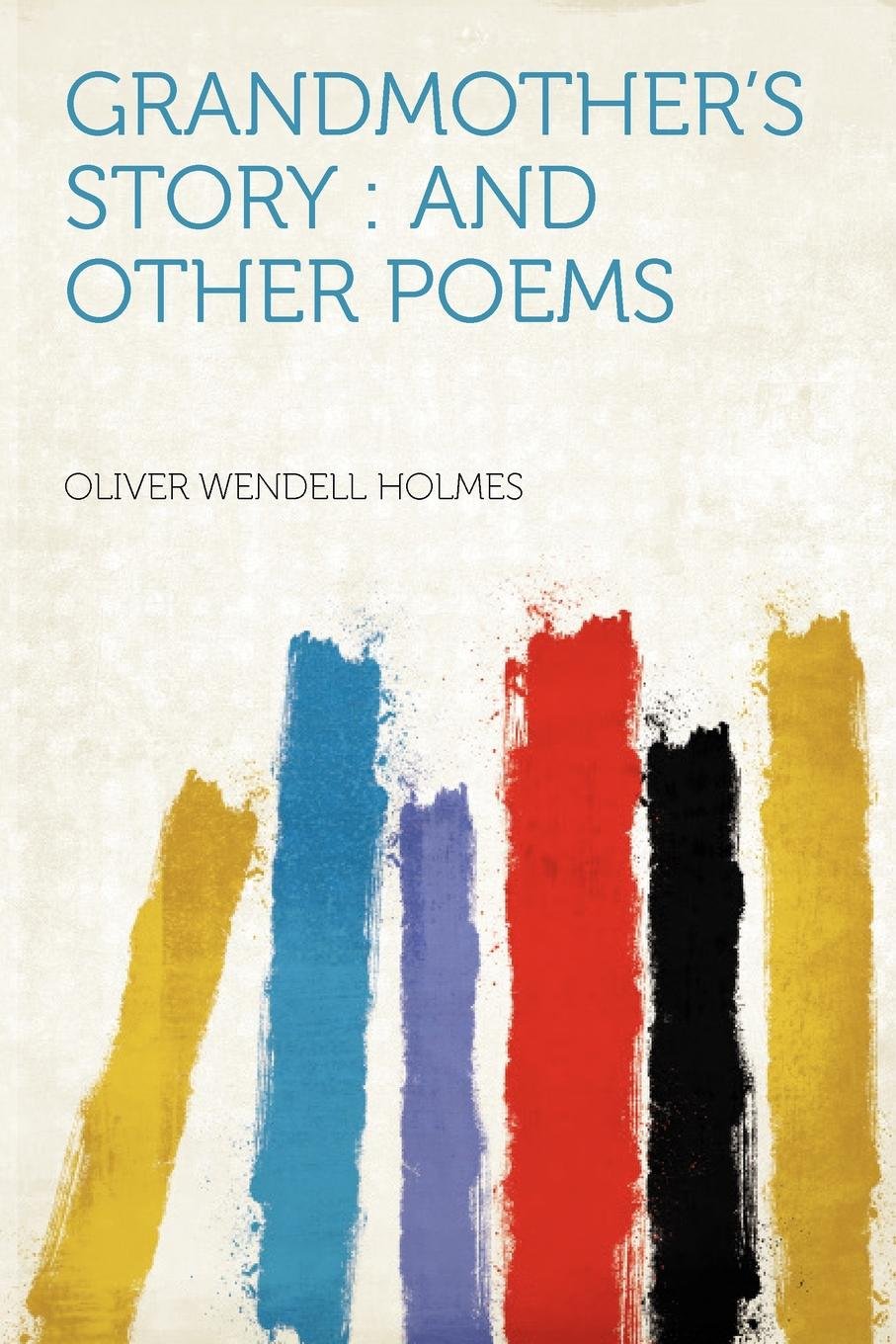
Grandmother’s Story
Grandmother’s Story is a sketch from Oliver Wendell Holmes Sr.’s long career as one of the most popular American essayists and poets of the nineteenth century. Holmes wore a lot of hats during his working life. Physician, professor at Harvard Medical School, essayist, and one of the most popular American poets of his era. He was part of the loose Boston circle that included Longfellow, Lowell, Emerson, and Hawthorne, and his prose pieces were widely read in the periodicals of his time and later collected into books.
The grandmother’s story format was a popular convention in nineteenth century American sentimental and reflective prose, with the older female voice carrying the moral weight of the piece and the framing device giving the writer room to work in a slightly different register from his usual essay voice. Holmes uses the form for the kind of reflective, sometimes humorous, sometimes pointed writing that he had been refining across his career. The sketch typically opens with a scene that frames the grandmother’s narrative, then moves into the older woman’s account of some event from her past that has implications for the contemporary reader, and closes with reflections that pull the historical material into the present.
Holmes had a real ear for conversation and his characters speak in voices that sound like the actual people he had spent years observing in Boston society and in the medical practice he ran. The sketches are funnier than some of his more formal essays, and the affection for older Boston traditions gives them a particular warmth.
For readers interested in nineteenth century American sentimental prose, in the wider catalogue of Oliver Wendell Holmes Sr. beyond his most famous Breakfast Table books, or in the long tradition of the framed narrative in American writing, Grandmother’s Story is worth knowing. The piece is short and well suited to a single sitting. Anyone reading their way through Holmes’s collected works will encounter it as one of many similar sketches that fill out the shorter pieces section of his published volumes. Modern readers may find the period assumptions and the sentimental register dated, but the prose itself remains readable.
About the Author
Oliver Wendell Holmes Sr. was a 19th-century American physician, poet, and essayist, and a leading figure among the New England writers. He is known for witty essays such as The Autocrat of the Breakfast-Table.
See all books by Oliver Wendell Holmes Sr. →