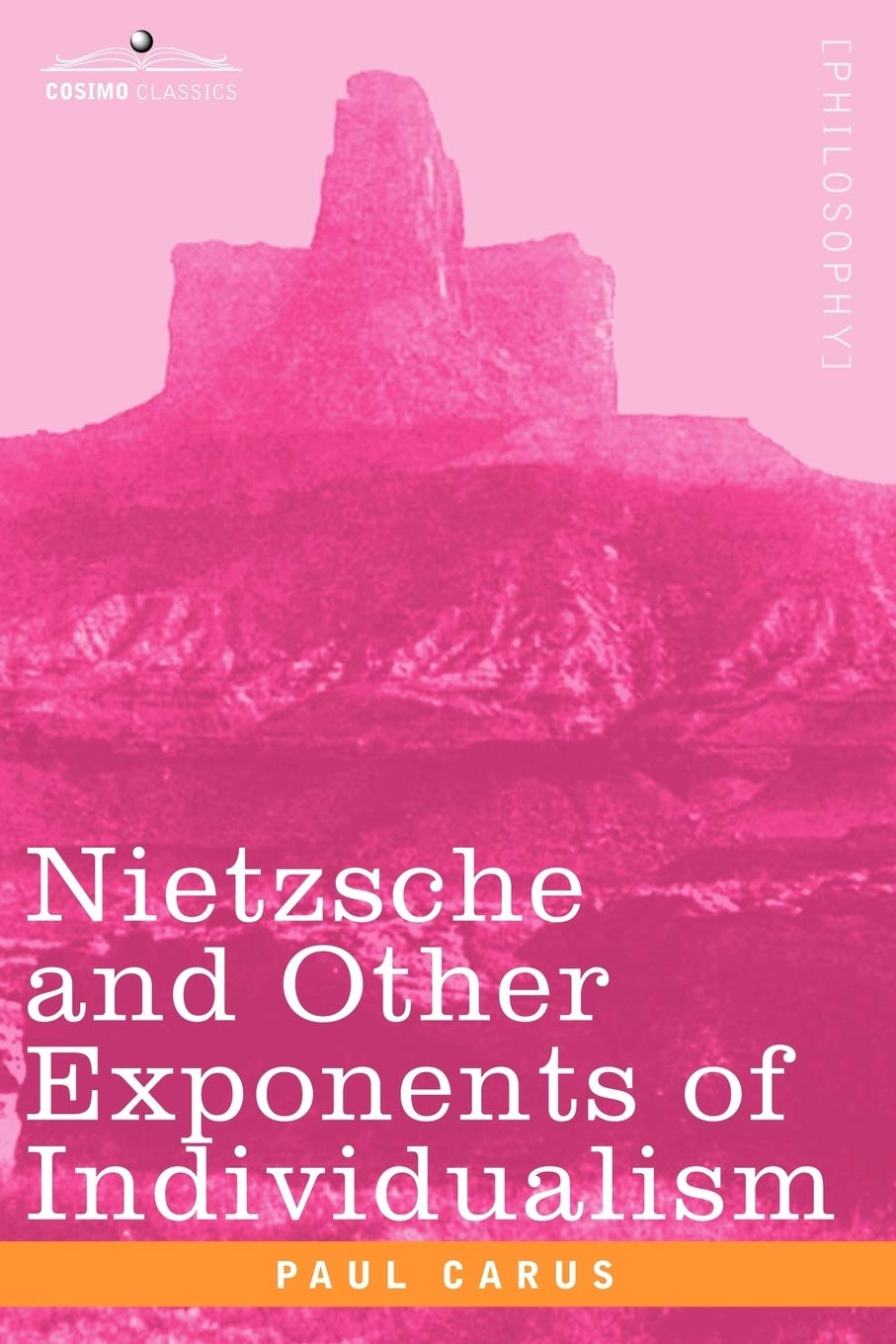
Nietzsche and Other Exponents of Individualism
Nietzsche and Other Exponents of Individualism is Paul Carus’s 1914 book length philosophical critique of Friedrich Nietzsche and the wider individualist philosophical tradition that Carus saw as one of the most dangerous intellectual currents of his era. Carus was a German born American philosopher and prolific author, best remembered as the long time editor of Open Court Publishing and of the journals The Open Court and The Monist, and his philosophical work emphasized the social and cooperative dimensions of human life against what he saw as the excessively individualist tendencies of late nineteenth and early twentieth century thought.
Nietzsche had become one of the most influential and controversial philosophers in the Western world by the early twentieth century, and his ideas about the will to power, the death of God, the master and slave moralities, and the eventual coming of the Ubermensch had begun to shape both serious philosophical discussion and popular intellectual culture in ways that Carus considered both intellectually mistaken and morally dangerous. The book works through Nietzsche’s major positions and connects them to the wider individualist tradition that Carus saw running from Max Stirner through Henrik Ibsen and into various contemporary expressions of philosophical egoism and aesthetic individualism.
What distinguishes the book from a lot of contemporary critiques of Nietzsche is the seriousness of Carus’s philosophical engagement. He does not simply dismiss Nietzsche or quote alarming passages out of context. He works through the philosophical positions, acknowledges the genuine insights, and develops his counter argument from a coherent position of his own that combines elements from Stoic ethics, Buddhist social philosophy, and the cooperative individualism that Carus had been developing across his career. The result is a book that takes both Nietzsche and the response to him seriously in ways that more polemical treatments of the era often did not.
Carus was writing on the eve of the First World War, and the book has additional historical interest as a snapshot of one philosophical attempt to confront the intellectual currents that some observers, including Carus himself, suspected were contributing to the catastrophe that Europe was about to experience. For students of philosophy, of Nietzsche reception history, or of early twentieth century American philosophical thought, the book is a useful primary source.
About the Author
Download free books by Paul Carus on BDeBooks. Read Paul Carus’s works online or download as PDF/EPUB · part of our growing free eBook collection.
See all books by Paul Carus →