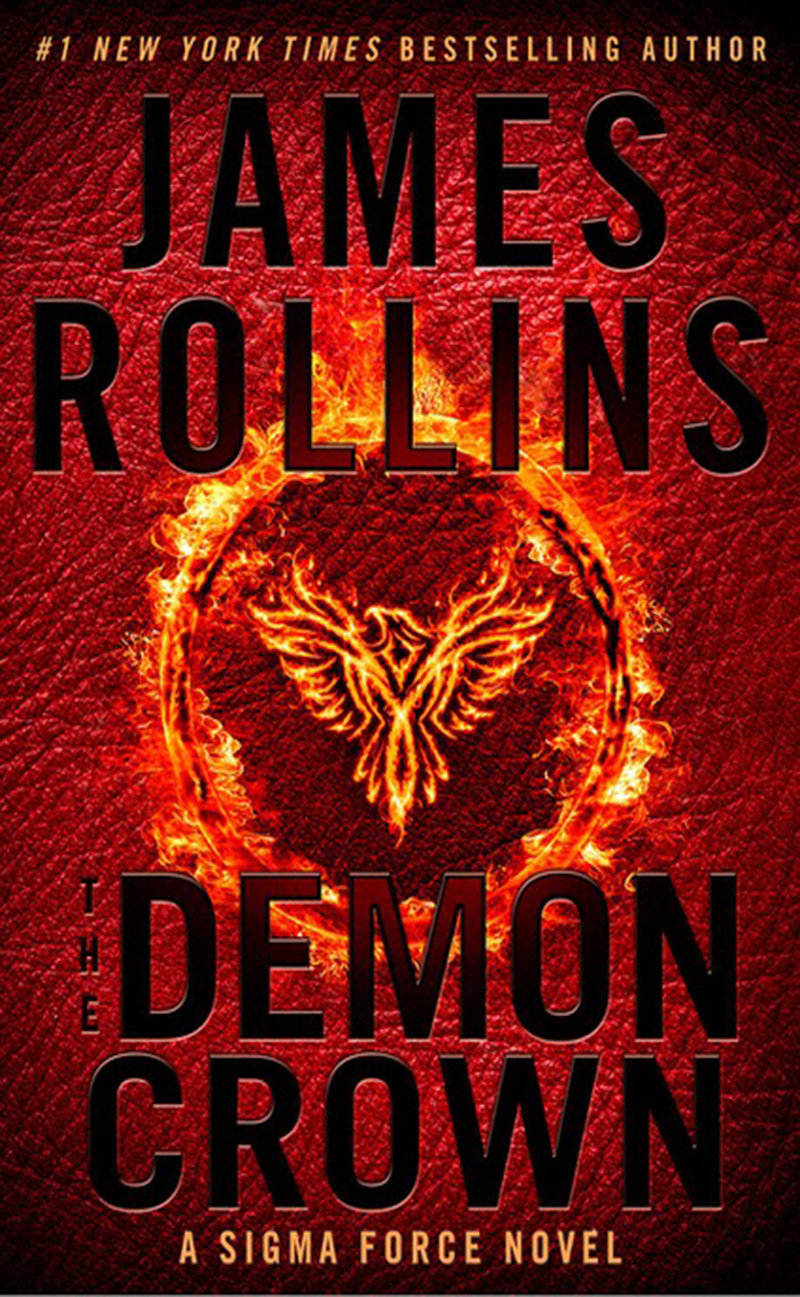
The Demon Crown
James Rollins

The Demon Crown is the thirteenth Sigma Force novel from James Rollins, published in 2017. The premise weaves together natural history, ancient artifacts, and biological warfare in the way Rollins’s readers have come to expect. Father Bailey, a Vatican specialist last seen in earlier Sigma novels, has discovered a sealed chamber inside an old Italian church that may contain a relic dating back to the Roman emperor Constantine. When the chamber is opened, something is released that turns out to be far more dangerous than anyone expected, and the modern Sigma team has to figure out what was being kept hidden and why.
The central scientific hook of the novel involves a swarm of genetically engineered insects with a particularly horrifying biology, and Rollins draws on real entomological research to make the threat plausible enough to land. The plot moves through Italy, Hawaii, Brazil, and the United States as the Sigma team races to contain the spreading crisis while the antagonist organization, an ancient cult with its own interest in the released creature, tries to use it as a weapon. Painter Crowe coordinates from headquarters as he usually does. The field team, primarily Gray Pierce, Seichan, Kowalski, and several supporting cast members, handles the active leads.
What Rollins does well in books like this is balance. The science is real enough to ground the speculation. The history, including the Constantine material and the various ancient orders that connect to it, is solid enough to support the plot. And the action sequences move at the pace Sigma Force readers expect, with set pieces that are memorable individually and that build to a satisfying climax. Rollins documents his sources at the end of each book and goes out of his way to mark where the speculation begins.
For longtime fans of the series, The Demon Crown is one of the stronger middle period entries. New readers can pick this up as a standalone, though some of the team dynamics and the recurring antagonist threads will land harder for those who have followed Sigma from earlier in the series.