
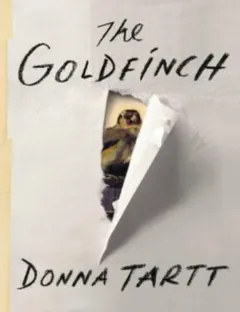
The Goldfinch
Chapter II
This chapter is long, so it is split into 4 parts.
When we are strongest—who draws back?
Most merry—who fal s down laughing?
When we are very bad,—what can they do to us?
—ARTHUR RIMBAUD
Chapter 5.
Badr al-Dine
i.
THOUGH I HAD DECIDED to leave the suitcase in the package room of my old building, where I felt sure Jose and Goldie would look after it, I grew more and more nervous as the date approached until, at the last minute, I determined to go back for what now seems a fairly dumb reason: in my haste to get the painting out of the apartment, I’d thrown a lot of random things in the bag with it, including most of my summer clothes. So the day before my dad was supposed to pick me up at the Barbours’, I hurried back over to Fifty-Seventh Street with the idea of unzipping the suitcase and taking a couple of the better shirts off the top.
Jose wasn’t there, but a new, thick-shouldered guy (Marco V, according to his nametag) stepped in front of me and cut me off with a blocky, obstinate stance less like a doorman’s than a security guard’s. “Sorry, can I help you?” he said.
I explained about the suitcase. But after perusing the log—
running a heavy forefinger down the column of dates—he didn’t seem inclined to go in and get it off the shelf for me. “An’ you left this here why?” he said doubtful y, scratching his nose.
“Jose said I could.”
“You got a receipt?”
“No,” I said, after a confused pause.
“Wel , I can’t help you. We got no record. Besides, we don’t store packages for non-tenants.”
I’d lived in the building long enough to know that this wasn’t true, but I wasn’t about to argue the point. “Look,” I said, “I used to live here. I know Goldie and Carlos and everybody. I mean—come on,” I said, after a frigid, il -defined pause, during which I felt his attention drifting. “If you take me back there, I can show you which one.”
“Sorry. Nobody but staff and tenants al owed in back.”
“It’s canvas with ribbon on the handle. My name’s on it, see?
Decker?” I was pointing out the label stil on our old mailbox for proof when Goldie strol ed in from his break.
“Hey! look who’s back! This one’s my kid,” he said to Marco V.
“I’ve known him since he was this high. What’s up, Theo my friend?”
“Nothing. I mean—wel , I’m leaving town.”
“Oh, yeah? Out to Vegas already?” said Goldie. At his voice, his hand on my shoulder, everything had become easy and comfortable.
“Some crazy place to live out there, am I right?”
“I guess so,” I said doubtful y. People kept tel ing me how crazy things were going to be for me in Vegas although I didn’t understand why, as I was unlikely to be spending much time in casinos or clubs.
“You guess? ” Goldie rol ed his eyes up and shook his head, with a drol ery that my mother in moments of mischief had been apt to imitate. “Oh my God, I’m tel ing you. That city? The unions they got… I mean, restaurant work, hotel work… very good money, anywhere you look. And the weather? Sun—every day of the year.
You’re going to love it out there, my friend. When did you say you’re leaving?”
“Um, today. I mean tomorrow. That’s why I wanted to—”
“Oh, you came for your bag? Hey, sure thing.” Goldie said something sharp-sounding in Spanish to Marco V, who shrugged blandly and headed back into the package room.
“He’s al right, Marco,” said Goldie to me in an undertone. “But, he don’t know anything about your bag here because me and Jose didn’t enter it down in the book, you know what I’m saying?”
I did know what he was saying. Al packages had to be logged in and out of the building. By not tagging the suitcase, or entering it into the official record, they had been protecting me from the possibility that somebody else might show up and try to claim it.
“Hey,” I said awkwardly, “thanks for looking out for me…”
“No problemo,” said Goldie. “Hey, thanks, man,” he said loudly to Marco as he took the bag. “Like I said,” he continued in a low voice; I had to walk close beside him in order to hear—“Marco’s a good guy, but we had a lot of tenants complaining because the building was understaffed during the, you know.” He threw me a significant
glance. “I mean, like Carlos couldn’t get in to work for his shift that day, I guess it wasn’t his fault, but they fired him.”
“Carlos?” Carlos was the oldest and most reserved of the doormen, like an aging Mexican matinee idol with his pencil moustache and greying temples, his black shoes polished to a high gloss and his white gloves whiter than everyone else’s. “They fired Carlos?”
“I know—unbelievable. Thirty-four years and—” Goldie jerked a thumb over his shoulder—“pfft. And now—management’s al like security-conscious, new staff, new rules, sign everybody in and out and like that—
“Anyway,” he said, as he backed into the front door, pushing it open. “Let me get you a cab, my friend. You’re going straight to the airport?”
“No—” I said, putting out a hand to stop him—I’d been so preoccupied, I hadn’t real y noticed what he was doing—but he brushed me aside with a naah motion.
“No, no,” he said—hauling the bag to the curb—“it’s al right, my friend, I got it,” and I realized, in consternation, that he thought I was trying to stop him taking the bag outside because I didn’t have money to tip.
“Hey, wait up,” I said—but at the same instant, Goldie whistled and charged into the street with his hand up. “Here! Taxi!” he shouted.
I stopped in the doorway, dismayed, as the cab swooped in from the curb. “Bingo!” said Goldie, opening the back door. “How’s that for timing?” Before I could quite think how to stop him without looking like a jerk, I was being ushered into the back seat as the suitcase was hoisted into the trunk, and Goldie was slapping the roof, the friendly way he did.
“Have a good trip, amigo,” he said—looking at me, then up at the sky. “Enjoy the sunshine out there for me. You know how I am about the sunshine—I’m a tropical bird, you know? I can’t wait to go home to Puerto Rico and talk to the bees. Hmmn…” he sang, closing his eyes and putting his head to the side. “My sister has a hive of tame bees and I sing them to sleep. Do they got bees in Vegas?”
“I don’t know,” I said, feeling quietly in my pockets to see if I could tel how much money I had.
“Wel if you see any bees, tel ’em Goldie says hi. Tel ’em I’m coming.”
“¡Hey! ¡Espera! ” It was Jose, hand up—stil dressed in his soccer-playing clothes, coming to work straight from his game in the park—
swaying towards me with his head-bobbing, athletic walk.
“Hey, manito, you taking off?” he said, leaning down and sticking his head in the window of the cab. “You gotta send us a picture for downstairs!” Down in the basement, where the doormen changed into their uniforms, there was a wal papered with postcards and Polaroids from Miami and Cancun, Puerto Rico and Portugal, which tenants and doormen had sent home to East Fifty-Seventh Street over the years.
“That’s right!” said Goldie. “Send us a picture! Don’t forget!”
“I—” I was going to miss them, but it seemed gay to come out and say so. So al I said was: “Okay. Take it easy.”
“You too,” said Jose, backing away with his hand up. “Stay away from them blackjack tables.”
“Hey, kid,” the cabdriver said, “you want me to take you somewhere or what?”
“Hey, hey, hold your horses, it’s cool,” said Goldie to him. To me he said: “You gonna be fine, Theo.” He gave the cab one last slap.
“Good luck, man. See you around. God bless.”
i .
“DON’T TELL ME,” MY dad said, when he arrived at the Barbours’ the next morning to pick me up in the taxi, “that you’re carrying al that shit on the plane.” For I had another suitcase beside the one with the painting, the one I’d original y planned to take.
“I think you’re going to be over your baggage al owance,” said Xandra a bit hysterical y. In the poisonous heat of the sidewalk, I
could smel her hair spray even where I was standing. “They only let you carry a certain amount.”
Mrs. Barbour, who had come down to the curb with me, said smoothly: “Oh, he’l be fine with those two. I go over my limit al the time.”
“Yes, but it costs money.”
“Actual y, I think you’l find it quite reasonable,” said Mrs. Barbour.
Though it was early and she was without jewelry or lipstick, somehow even in her sandals and simple cotton dress she stil managed to give the impression of being immaculately turned out.
“You might have to pay twenty dol ars extra at the counter, but that shouldn’t be a problem, should it?”
She and my dad stared each other down like two cats. Then my father looked away. I was a little ashamed of his sports coat, which made me think of guys pictured in the Daily News under suspicion of racketeering.
“You should have told me you had two bags,” he said, sul enly, in the silence (welcome to me) that fol owed her helpful remark. “I don’t know if al this stuff is going to fit in the trunk.”
Standing at the curb, with the trunk of the cab open, I almost considered leaving the suitcase with Mrs. Barbour and phoning later to tel her what it contained. But before I could make up my mind to say anything, the broad-backed Russian cab driver had taken Xandra’s bag from the trunk and hoisted my second suitcase in, which—with some banging and mashing around—he made to fit.
“See, not very heavy!” he said, slamming the trunk shut, wiping his forehead. “Soft sides!”
“But my carry-on!” said Xandra, looking panicked.
“Not a problem, madame. It can ride in front seat with me. Or in the back with you, if you prefer.”
“Al sorted, then,” said Mrs. Barbour—leaning to give me a quick kiss, the first of my visit, a ladies-who-lunch air kiss that smel ed of mint and gardenias. “Toodle-oo, you al ,” she said. “Have a fantastic trip, won’t you?” Andy and I had said our goodbyes the day before; though I knew he was sad to see me go, stil my feelings were hurt that he hadn’t stayed to see me off but instead had gone with the rest of the family up to the supposedly detested house in Maine. As
for Mrs. Barbour: she didn’t seem particularly upset to see the last of me, though in truth I felt sick to be leaving.
Her gray eyes, on mine, were clear and cool. “Thank you so much, Mrs. Barbour,” I said. “For everything. Tel Andy I said goodbye.”
“Certainly I wil ,” she said. “You were an awful y good guest, Theo.” Out in the steamy morning heat haze on Park Avenue, I stood holding her hand for a moment longer—slightly hoping that she would tel me to get in touch with her if I needed anything—but she only said, “Good luck, then,” and gave me another cool little kiss before she pul ed away.
i i.
I COULDN’T QUITE FATHOM that I was leaving New York. I’d never been out of the city in my life longer than eight days. On the way to the airport, staring out the window at bil boards for strip clubs and personal-injury lawyers that I wasn’t likely to see for a while, a chil ing thought settled over me. What about the security check? I hadn’t flown much (only twice, once when I was in kindergarten) and I wasn’t even sure what a security check involved: x-rays? A luggage search?
“Do they open up everything in the airport?” I asked, in a timid voice—and then asked again, because nobody seemed to hear me. I was sitting in the front seat in order to ensure Dad and Xandra’s romantic privacy.
“Oh, sure,” said the cab driver. He was a beefy, big-shouldered Soviet: coarse features, sweaty red-apple cheeks, like a weightlifter gone to fat. “And if they don’t open, they x-ray.”
“Even if I check it?”
“Oh, yes,” he said reassuringly. “They are wiping for explosives, everything. Very safe.”
“But—” I tried to think of some way to formulate what I needed to ask, without betraying myself, and couldn’t.
“Not to worry,” said the driver. “Lots of police at airport. And three-four days ago? Roadblocks. ”
“Wel , al I can say is, I can’t fucking wait to get out of here,”
Xandra said in her husky voice. For a perplexed moment, I thought she was talking to me, but when I looked back, she was turned toward my father.
My dad put his hand on her knee and said something too low for me to hear. He was wearing his tinted glasses, leaning with his head lol ed back on the rear seat, and there was something loose and young-sounding in the flatness of his voice, the secret something that passed between them as he squeezed Xandra’s knee. I turned away from them and looked out at the no-man’s-land rushing past: long low buildings, bodegas and body shops, car lots simmering in the morning heat.
“See, I don’t mind sevens in the flight number,” Xandra was saying quietly. “It’s eights freak me out.”
“Yeah, but eight’s a lucky number in China. Take a look at the international board when we get to McCarran. Al the incoming flights from Beijing? Eight eight eight.”
“You and your Wisdom of the Chinese.”
“Number pattern. It’s al energy. Meeting of heaven and earth.”
“ ‘Heaven and earth.’ You make it sound like magic.”
“It is.”
“Oh yeah?”
They were whispering. In the rear view mirror, their faces were goofy, and too close together; when I realized they were about to kiss (something that stil shocked me, no matter how often I saw them do it), I turned to stare straight ahead. It occurred to me that if I didn’t already know how my mother had died, no power on earth could have convinced me they hadn’t murdered her.
iv.
WHILE WE WERE WAITING to get our boarding passes I was stiff with fear, ful y expecting Security to open my suitcase and discover the painting right then, in the check-in line. But the grumpy woman with the shag haircut whose face I stil remember (I’d been praying we wouldn’t have to go to her when it was our turn) hoisted my suitcase on the belt with hardly a glance.
As I watched it wobble away, towards personnel and procedures unknown, I felt closed-in and terrified in the bright press of strangers
—conspicuous too, as if everyone was staring at me. I hadn’t been in such a dense mob or seen so many cops in one place since the day my mother died. National Guardsmen with rifles stood by the metal detectors, steady in fatigue gear, cold eyes passing over the crowd.
Backpacks, briefcases, shopping bags and strol ers, heads bobbing down the terminal as far as I could see. Shuffling through the security line, I heard a shout—of my name, as I thought. I froze.
“Come on, come on, ” said my dad, hopping behind me on one foot, trying to get his loafer off, elbowing me in the back, “don’t just stand there, you’re holding up the whole damn line—”
Going through the metal detector, I kept my eyes on the carpet—
rigid with fear, expecting any moment a hand to fal on my shoulder.
Babies cried. Old people puttered by in motorized carts. What would they do to me? Could I make them understand it wasn’t quite how it looked? I imagined some cinder-block room like in the movies, slammed doors, angry cops in shirtsleeves, forget about it, you’re not going anywhere, kid.
Once out of security, in the echoing corridor, I heard distinct, purposeful steps fol owing close behind me. Again I stopped.
“Don’t tel me,” said my dad—turning back with an exasperated rol of his eyes. “You left something.”
“No,” I said, looking around. “I—” There was no one behind me.
Passengers coursed around me on every side.
“Jeez, he’s white as a fucking sheet,” said Xandra. To my father, she said: “Is he al right?”
“Oh, he’l be fine,” said my father as he started down the corridor again. “Once he’s on the plane. It’s been a tough week for everybody.”
“Hel , if I was him, I’d be freaked about getting on a plane too,”
said Xandra bluntly. “After what he’s been through.”
My father—tugging his rol ing carry-on behind him, a bag my mother had bought him for his birthday several years before—
stopped again.
“Poor kid,” he said—surprising me by his look of sympathy.
“You’re not scared, are you?”
“No,” I said, far too fast. The last thing I wanted to do was attract anybody’s attention or look like I was even one quarter as wigged-out as I was.
He knit his brows at me, then turned away. “Xandra?” he said to her, lifting his chin. “Why don’t you give him one of those, you know.”
“Got it,” said Xandra smartly, stopping to fish in her purse, producing two large white bul et-shaped pil s. One she dropped in my father’s outstretched palm, and the other she gave to me.
“Thanks,” said my dad, slipping it into the pocket of his jacket.
“Let’s go get something to wash these down with, shal we? Put that away,” he said to me as I held the pil up between thumb and forefinger to marvel at how big it was.
“He doesn’t need a whole,” Xandra said, grasping my dad’s arm as she leaned sideways to adjust the strap of her platform sandal.
“Right,” said my dad. He took the pil from me, snapped it expertly in half, and dropped the other half in the pocket of his sports coat as they strol ed ahead of me, tugging their luggage behind them.
v.
THE PILL WASN’T STRONG enough to knock me out, but it kept me high and happy and somersaulting in and out of air-conditioned dreams.
Passengers whispered in the seats around me as a disembodied air hostess announced the results of the in-flight promotional raffle: dinner and drinks for two at Treasure Island. Her hushed promise sent me down into a dream where I swam deep in greenish-black water, some torchlit competition with Japanese children diving for a
pil owcase of pink pearls. Throughout it al the plane roared bright and white and constant like the sea, though at some strange point—
wrapped deep in my royal-blue blanket, dreaming somewhere high over the desert—the engines seemed to shut off and go silent and I found myself floating chest upward in zero gravity while stil buckled into my chair, which had somehow drifted loose from the other seats to float freely around the cabin.
I fel back into my body with a jolt as the plane hit the runway and bounced, screaming to a stop.
“And… welcome to Lost Wages, Nevada,” the pilot was saying over the intercom. “Our local time in Sin City is 11:47 a.m.”
Half-blind in the glare, plate glass and reflecting surfaces, I trailed after Dad and Xandra through the terminal, stunned by the chatter and flash of slot machines and by the music blaring loud and incongruous so early in the day. The airport was like a mal -sized version of Times Square: towering palms, movie screens with fireworks and gondolas and showgirls and singers and acrobats.
It took a long time for my second bag to come off the carousel.
Chewing my fingernails, I stared fixedly at a bil board of a grinning Komodo dragon, an ad for some casino attraction: “Over 2,000
reptiles await you.” The baggage-claim crowd was like a group of colorful stragglers in front of some third-rate nightclub: sunburns, disco shirts, tiny bejeweled Asian ladies with giant logo sunglasses.
The belt was circling around mostly empty and my dad (itching for a cigarette, I could tel ) was starting to stretch and pace and rub his knuckles against his cheek like he did when he wanted a drink when there it came, the last one, khaki canvas with the red label and the multicolored ribbon my mother had tied around the handle.
My dad, in one long step, lunged forward and grabbed it before I could get to it. “About time,” he said jauntily, tossing it onto the baggage cart. “Come on, let’s get the hel out of here.”
Out we rol ed through the automatic doors and into a wal of breathtaking heat. Miles of parked cars stretched around us in al directions, hooded and stil . Rigidly I stared straight ahead—chrome knives glinting, horizon shimmering like wavy glass—as if looking back, or hesitating, might invite some uniformed party to step in front
of us. Yet no one col ared me or shouted at us to stop. No one even looked at us.
I was so disoriented in the glare that when my dad stopped in front of a new silver Lexus and said: “Okay, this is us,” I tripped and nearly fel on the curb.
“This is yours?” I said, looking between them.
“What?” said Xandra coquettishly, clumping around to the passenger side in her high shoes as my dad beeped the lock open.
“You don’t like it?”
A Lexus? Every day, I was struck by al sorts of matters large and smal that I urgently needed to tel my mother and as I stood dumbly watching my dad hoist the bags in the trunk my first thought was: wow, wait until she hears about this. No wonder he hadn’t sent money home.
My dad threw aside his half-smoked Viceroy with a flourish.
“Okay,” he said, “hop in.” The desert air had magnetized him. Back in New York, he had looked a bit worn-out and seedy but out in the rippling heat his white sportcoat and his cult-leader sunglasses made sense.
The car—which started with the push of a button—was so quiet that at first I didn’t realize we were moving. Away we glided, into depthlessness and space. Accustomed as I was to jolting around in the backs of taxis, the smoothness and chil of the ride was sealed off, eerie: brown sand, vicious glare, trance and silence, blown trash whipping at the chain-link fence. I stil felt numbed and weightless from the pil , and the crazy façades and superstructures of the Strip, the violent shimmer where the dunes met sky, made me feel as if we had touched down on another planet.
Xandra and my dad had been talking quietly in the front seat.
Now she turned to me—snapping gum, robust and sunny, her jewelry blazing in the strong light. “So, whaddaya think?” she said, exhaling a strong breath of Juicy Fruit.
“It’s wild,” I said—watching a pyramid sail past my window, the Eiffel Tower, too overwhelmed to take it in.
“You think it’s wild now?” said my dad, tapping his fingernail on the steering wheel in a manner I associated with frayed nerves and
late-night quarrels after he got home from the office. “Just wait until you see it lit up at night.”
“See there—check it out,” said Xandra, reaching over to point out the window on my dad’s side. “There’s the volcano. It real y works.”
“Actual y, I think they’re renovating it. But in theory, yeah. Hot lava. On the hour, every hour.”
“Exit to the left in point two miles,” said a woman’s computerized voice.
Carnival colors, giant clown heads and XXX signs: the strangeness exhilarated me, and also frightened me a little. In New York, everything reminded me of my mother—every taxi, every street corner, every cloud that passed over the sun—but out in this hot mineral emptiness, it was as if she had never existed; I could not even imagine her spirit looking down on me. Al trace of her seemed burned away in the thin desert air.
As we drove, the improbable skyline dwindled into a wilderness of parking lots and outlet mal s, loop after faceless loop of shopping plazas, Circuit City, Toys “R” Us, supermarkets and drugstores, Open Twenty-Four Hours, no saying where it ended or began. The sky was wide and trackless, like the sky over the sea. As I fought to stay awake—blinking against the glare—I was ruminating in a dazed way over the expensive-smel ing leather interior of the car and thinking of a story I’d often heard my mother tel : of how, when she and my dad were dating, he’d turned up in a Porsche he’d borrowed from a friend to impress her. Only after they were married had she learned that the car wasn’t real y his. She’d seemed to think this was funny—
although given other, less amusing facts that came to light after their marriage (such as his arrest record, as a juvenile, on charges unknown), I wondered that she was able to find anything very entertaining about the story.
“Um, you’ve had this car how long?” I said, speaking up over their conversation in front.
“Oh—gosh—little over a year now, isn’t that right, Xan?”
A year? I was stil chewing this over—this figure meant my dad had acquired the car (and Xandra) before he’d disappeared—when I looked up and saw that the strip mal s had given way to an endless-seeming grid of smal stucco homes. Despite the air of boxed,
bleached sameness—row on row, like stones in a cemetery—some of the houses were painted in festive pastels (mint green, rancho pink, milky desert blue) and there was something excitingly foreign about the sharp shadows, the spiked desert plants. Having grown up in the city, where there was never enough space, I was if anything pleasantly surprised. It would be something new to live in a house with a yard, even if the yard was only brown rocks and cactus.
“Is this stil Las Vegas?” As a game, I was trying to pick out what made the houses different from each other: an arched doorway here, a swimming pool or a palm tree there.
“You’re seeing a whole different part now,” my dad said—exhaling sharply, stubbing out his third Viceroy. “This is what tourists never see.”
Though we’d been driving a while, there were no landmarks, and it was impossible to say where we were going or in which direction.
The skyline was monotonous and unchanging and I was fearful that we might drive through the pastel houses altogether and out into the alkali waste beyond, into some sun-beaten trailer park from the movies. But instead—to my surprise—the houses began to grow larger: with second stories, with cactus gardens, with fences and pools and multi-car garages.
“Okay, this is us,” said my dad, turning into a road that had an imposing granite sign with copper letters: The Ranches at Canyon Shadows.
“You live here? ” I said, impressed. “Is there a canyon?”
“No, that’s just the name of it,” said Xandra.
“See, they have a bunch of different developments out here,” said my dad, pinching the bridge of his nose. I could tel by his tone—his scratchy old needing-a-drink voice—that he was tired and not in a very good mood.
“Ranch communities is what they cal them,” said Xandra.
“Right. Whatever. Oh, shut the fuck up,” snapped my dad, reaching over to turn the volume down as the lady on the navigation system piped up with instructions again.
“They al have different themes, sort of,” said Xandra, who was dabbing on lip gloss with the pad of her little finger. “There’s Pueblo Breeze, Ghost Ridge, Dancing Deer Vil as. Spirit Flag is the golf
community? And Encantada is the fanciest, lots of investment properties—Hey, turn here, sweet pea,” she said, clutching his arm.
My dad kept driving straight and did not answer.
“Shit!” Xandra turned in her seat to look at the road receding behind us. “Why do you always have to go the long way?”
“Don’t start with the shortcuts. You’re as bad as the Lexus lady.”
“Yeah, but it’s faster. By fifteen minutes. Now we’re going to have to drive al the way around Dancing Deer.”
My dad blew out an exasperated breath. “Look—”
“What’s so hard about cutting over to Gitana Trails and making two lefts and a right? Because that’s al it is. If you get off on Desatoya—”
“Look. You want to drive the car? Or you want to let me drive the fucking car?”
I knew better than to chal enge my dad when he took that tone, and apparently Xandra did too. She flounced around in her seat and
—in a deliberate manner that seemed calculated to annoy him—
turned up the radio very loud and started punching through static and commercials.
The stereo was so powerful I could feel it thumping through the back of my white leather seat. Vacation, al I ever wanted… Light climbed and burst through the wild desert clouds—never-ending sky, acid blue, like a computer game or a test pilot’s hal ucination.
“Vegas 99, serving up the Eighties and Nineties,” said the fast, excited voice on the radio. “And here’s Pat Benatar coming up for you, in our Ladies of the Eighties Lapdance lunch.”
In Desatoya Ranch Estates, on 6219 Desert End Road, where lumber was stacked in some of the yards and sand blew in the streets, we turned into the driveway of a large Spanish-looking house, or maybe it was Moorish, shuttered beige stucco with arched gables and a clay-tiled roof pitched at various startling angles. I was impressed by the aimlessness and sprawl of it, its cornices and columns, the elaborate ironwork door with its sense of a stage set, like a house from one of the Telemundo soap operas the doormen always had going in the package room.
We got out of the car and were circling around to the garage entrance with our suitcases when I heard an eerie, distressing noise:
screaming, or crying, from inside the house.
“Gosh, what’s that?” I said, dropping my bags, unnerved.
Xandra was leaning sideways, stumbling a bit in her high shoes and grappling for her key. “Oh, shut up, shut up, shutthefuckup,” she was muttering under her breath. Before she’d opened the door al the way, a hysterical stringy mop shot out, shrieking, and began to hop and dance and caper al around us.
“Get down!” Xandra was yel ing. Through the half-opened door, safari music (trumpeting elephants, chattering monkeys) was playing so loud that I could hear it al the way out in the garage.
“Wow,” I said, peering inside. The air inside smel ed hot and stale: old cigarette smoke, new carpet, and—no question about it—dog shit.
“For the zookeeper, big cats pose a unique series of chal enges,”
the voice on the television boomed. “Why don’t we fol ow Andrea and her staff on their morning rounds.”
“Hey,” I said, stopping in the door with my bag, “you left the television on.”
“Yes,” said Xandra—brushing past me—“that’s Animal Planet, I left it on for him. For Popper. I said get down!” she snapped at the dog, who was scrabbling at her knees with his claws as she hobbled in on her platforms and switched the television off.
“He stayed by himself?” I said, over the dog’s shrieks. He was one of those long-haired girly dogs who would have been white and fluffy if he was clean.
“Oh, he’s got a drinking fountain from Petco,” said Xandra, wiping her forehead with the back of her hand as she stepped over the dog.
“And one of those big feeder things?”
“What kind is he?”
“Maltese. Pure bred. I won him in a raffle. I mean, I know he needs a bath, it’s a pain to keep them groomed. That’s right, just look what you did to my pants,” she said to the dog. “White jeans.”
We were standing in a large, open room with high ceilings and a staircase that ran up to a sort of railed mezzanine on one side—a room almost as big as the entire apartment I’d grown up in. But when my eyes adjusted from the bright sun, I was taken aback by how bare it was. Bone-white wal s. Stone fireplace, with sort of a fake
hunting-lodge feel. Sofa like something from a hospital waiting room.
Across from the glass patio doors stretched a wal of built-in shelves, mostly empty.
My dad creaked in, and dropped the suitcases on the carpet.
“Jesus, Xan, it smel s like shit in here.”
Xandra—leaning over to set down her purse—winced as the dog began to jump and climb and claw al over her. “Wel , Janet was supposed to come and let him out,” she said over his high-pitched screams. “She had the key and everything. God, Popper,” she said, wrinkling her nose, turning her head away, “you stink.”
The emptiness of the place stunned me. Until that moment, I had never questioned the necessity of sel ing my mother’s books and rugs and antiques, or the need of sending almost everything else to Goodwil or the garbage. I had grown up in a four-room apartment where closets were packed to overflowing, where every bed had boxes beneath it and pots and pans were hung from the ceiling because there wasn’t room in the cupboards. But—how easy it would have been to bring some of her things, like the silver box that had been her mother’s, or the painting of a chestnut mare that looked like a Stubbs, or even her childhood copy of Black Beauty! It wasn’t as if he couldn’t have used a few good pictures or some of the furniture she’d inherited from her parents. He had gotten rid of her things because he hated her.
“Jesus Christ,” my father was saying, his voice raised angrily over the shril barks. “This dog has destroyed the place. Quite honestly.”
“Wel , I don’t know—I mean, I know it’s a mess but Janet said—”
“I told you, you should have kennel ed this dog. Or, I don’t know, taken him to the pound. I don’t like having him in the house.
Outdoors is the place for him. Didn’t I tel you this was going to be a problem? Janet is such a fucking flake—”
“So he went on the rug a few times? So what? And—what the hel are you looking at?” said Xandra angrily, stepping over the shrieking dog—and with a bit of a start, I realized it was me she was glaring at.
vi.
MY NEW ROOM FELT so bare and lonely that, after I unpacked my bags, I left the sliding door of the closet open so I could see my clothes hanging inside. From downstairs, I could stil hear Dad shouting about the carpet. Unfortunately, Xandra was shouting too, getting him more wound up, which (I could have told her, if she’d asked) was exactly the wrong way to handle him. At home, my mother had known how to suffocate my dad’s anger by growing silent, a low, unwavering flame of contempt that sucked al the oxygen out of the room and made everything he said and did seem ridiculous.
Eventual y he would whoosh out with a thunderous slam of the front door and when he returned—hours later, with a quiet click of the key in the lock—he would walk around the apartment as if nothing had happened: going to the refrigerator for a beer, asking in a perfectly normal voice where his mail was.
Of the three empty rooms upstairs I’d chosen the largest, which like a hotel room had its own tiny bathroom to the side. Floor heavily carpeted in steel blue plush. Bare mattress, with a plastic package of bedsheets at the foot. Legends Percale. Twenty percent off. A gentle mechanical hum emanated from the wal s, like the hum of an aquarium filter. It seemed like the kind of room where a cal girl or a stewardess would be murdered on television.
With an ear out for Dad and Xandra, I sat on the mattress with the wrapped painting on my knees. Even with the door locked, I was hesitant to take the paper off in case they came upstairs, and yet the desire to look at it was irresistible. Careful y, careful y, I scratched the tape with my thumbnail and peeled it up by the edges.
The painting slid out more easily than I’d expected, and I found myself biting back a gasp of pleasure. It was the first time I’d seen the painting in the light of day. In the arid room—al sheetrock and whiteness—the muted colors bloomed with life; and even though the surface of the painting was ghosted ever so slightly with dust, the atmosphere it breathed was like the light-rinsed airiness of a wal opposite an open window. Was this why people like Mrs. Swanson went on about the desert light? She had loved to warble on about what she cal ed her “sojourn” in New Mexico—wide horizons, empty
skies, spiritual clarity. Yet as if by some trick of the light the painting seemed transfigured, as the dark roofline view of water tanks from my mother’s bedroom window sometimes stood gilded and electrified for a few strange moments in the stormlight of late afternoon, right before a summer cloudburst.
“Theo?” My dad, knocking briskly at the door. “You hungry?”
I stood up, hoping he wouldn’t try the door and find it locked. My new room was as bare as a jail cel ; but the closet had high shelves, wel above my dad’s eye level, very deep.
“I’m going to pick up some Chinese. Want me to get you something?”
Would my dad know what the painting was, if he saw it? I hadn’t thought so—but looking at it in the light, the glow it threw off, I realized that any fool would. “Um, be right there,” I cal ed, my voice false-sounding and hoarse, slipping the painting into an extra pil owcase and hiding it under the bed before hurrying out of the room.
vi .
IN THE WEEKS IN Las Vegas before school started, loitering around downstairs with the earphones of my iPod in but the sound off, I learned a number of interesting facts. For starters: my dad’s former job had not involved nearly as much business travel to Chicago and Phoenix as he had led us to believe. Unbeknownst to my mother and me, he had actual y been flying out to Vegas for some months, and it was in Vegas—in an Asian-themed bar at the Bel agio—that he and Xandra had met. They had been seeing each other for a while before my dad vanished—a bit over a year, as I gathered; it seemed that they had celebrated their “anniversary” not long before my mother died, with dinner at Delmonico Steakhouse and the Jon Bon Jovi concert at the MGM Grand. (Bon Jovi! Of al the many things I was dying to tel my mother—and there were thousands of them, if not
mil ions—it seemed terrible that she would never know this hilarious fact.)
Another thing I figured out, after a few days in the house on Desert End Road: what Xandra and my dad real y meant when they said my dad had “stopped drinking” was that he’d switched from Scotch (his beverage of choice) to Corona Lights and Vicodin. I had been puzzled by how frequently the peace sign, or V for Victory, was flashed between them, in al sorts of incongruous contexts, and it might have gone on being a mystery for a lot longer if my dad hadn’t just come out and asked Xandra for a Vicodin when he thought I wasn’t listening.
I didn’t know anything about Vicodin except that it was something that a wild movie actress I liked was always getting her picture in the tabloids about: stumbling from her Mercedes as police lights flashed in the background. Several days later, I came across a plastic bag with what looked like about three hundred pil s in it—sitting on the kitchen counter, alongside a bottle of my dad’s Propecia and a stack of unpaid bil s—which Xandra snatched up and threw in her purse.
“What are those?” I said.
“Um, vitamins.”
“Why are they in that baggie like that?”
“I get them from this bodybuilder guy at work.”
The weird thing was—and this was something else I wished I could have discussed with my mother—the new, drugged-out Dad was a much more pleasant and predictable companion than the Dad of old. When my father drank, he was a twist of nerves—al inappropriate jokes and aggressive bursts of energy, right up until the moment he passed out—but when he stopped drinking, he was worse. He blasted along ten paces ahead of my mother and me on the sidewalk, talking to himself and patting his suit pockets as if for a weapon. He brought home stuff we didn’t want and couldn’t afford, like crocodile Manolos for my mother (who hated high heels) and not even in the right size. He lugged piles of paper home from the office and sat up past midnight drinking iced coffee and punching in numbers on the calculator, sweat pouring off him like he’d just done forty minutes on the StairMaster. Or else he would make a big deal of going to some party way the hel over in Brooklyn (“What do you
mean, ‘maybe I shouldn’t go’? You think I should live like a fucking hermit, is that it?”) and then—after dragging my mother there—storm out ten minutes later after insulting someone or mocking them to their face.
This was a different, more affable energy, with the pil s: a combination of sluggishness and brightness, a bemused, goofy, floating quality. His walk was looser. He napped more, nodded agreeably, lost the thread of his arguments, ambled about barefoot with his bathrobe halfway open. From his genial cursing, his infrequent shaving, the relaxed way he talked around the cigarette in the corner of his mouth, it was almost as if he were playing a character: some cool guy from a fifties noir or maybe Ocean’s Eleven, a lazy, sated gangster with not much to lose. Yet even in the midst of his new laid-backness he stil had that crazed and slightly heroic look of schoolboy insolence, al the more stirring since it was drifting towards autumn, half-ruined and careless of itself.
In the house on Desert End Road, which had the super-expensive cable television package my mother would never let us get, he drew the blinds against the glare and sat smoking in front of the television, glassy as an opium addict, watching ESPN with the sound off, no sport in particular, anything and everything that came on: cricket, jai alai, badminton, croquet. The air was overly chil ed, with a stale, refrigerated smel ; sitting motionless for hours, the filament of smoke from his Viceroy floating to the ceiling like a thread of incense, he might as wel have been contemplating the Buddha, the Dharma, and the Sangha as the leaderboard at the PGA or whatever.
What wasn’t clear was if my dad had a job—or, if he did, what kind of job it was. The phone rang al hours of the day and night. My dad went in the hal way with the handset, his back to me, bracing his arm against the wal and staring at the carpet as he talked, something in his posture suggesting the attitude of a coach at the end of a tough game. Usual y he kept his voice wel down but even when he didn’t, it was tough to understand his end of the conversation: vig, moneyline, odds-on favorite, straight up and against the spread. He was gone much of the time, on unexplained errands, and a lot of nights he and Xandra didn’t come home at al .