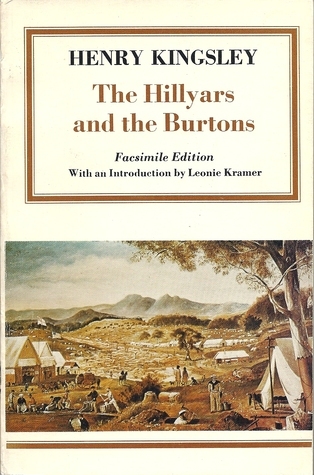
The Hillyars and the Burtons
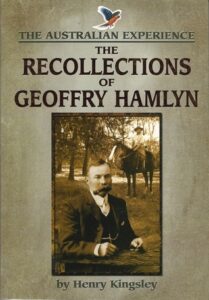
The Hillyars and the Burtons is a novel by Henry Kingsley, published in 1865. It is his second Australian novel after The Recollections of Geoffry Hamlyn and is one of his more ambitious attempts at the social novel form, mixing English and Australian settings to tell the parallel stories of two families across a generation.
The Hillyars are an English landed family of long standing, settled in a country house in Cornwall. The Burtons are a Chelsea family of metal workers and small artisans, also of long standing in their own neighbourhood but of much lower social rank. The novel cuts between the two families, showing the very different lives of their members, and gradually brings the two stories together through a sequence of events that takes characters from both families out to Australia. The Australian sections are set in the same general territory as Geoffry Hamlyn but a generation later, when the goldfields had transformed the colony and the older pastoral society was changing.
The parallel structure is the most interesting thing about the book. Kingsley clearly meant to make a point about the way emigration could disrupt the old fixed English social ranks and how the same family relations might be experienced quite differently by a Cornish gentleman and a London craftsman. The Burton chapters are some of the best writing Kingsley did about working class English life, with detailed observation of the Chelsea metal trades and of the small daily life of an artisan family. The Australian sections show the colony in transition, with the older settled pastoral country giving way to the mining and commercial society that the gold discoveries had created.
The novel runs about five hundred pages and is one of the more rewarding Kingsley books for readers who have already worked through Ravenshoe and Geoffry Hamlyn. The plot is sometimes loose and the narrative voice occasionally wanders, but the overall ambition and the sympathy for the wider range of social material give the book a reach that some of his other novels lacked. It pairs naturally with The Recollections of Geoffry Hamlyn for the Australian material and with Austin Elliot for the English social novel.
About the Author
Read and download 4 free books by Henry Kingsley on BDeBooks. Browse the complete collection of Henry Kingsley’s works available as free PDF and EPUB downloads. Discover novels, fiction, and other writings by Henry Kingsley in our online eBook library.
See all books by Henry Kingsley →