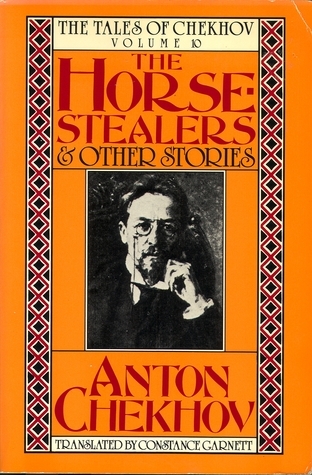
The Horse-Stealers and Other Stories
The Horse Stealers and Other Stories is a collection of short fiction by Anton Chekhov in English translation, titled after one of the pieces in the gathering. The collection was published in the early twentieth century as part of the Constance Garnett translations of Chekhov that introduced his short stories to a wide English speaking audience. Chekhov had written hundreds of short stories during his brief working life from the early 1880s to his death from tuberculosis in 1904, and English language editors typically arranged them in selection volumes of varying themes.
The title story is one of Chekhov’s strangely concentrated pieces about ordinary criminal life in provincial Russia. A young horse thief named Yergunov is involved in a long night of activity that mixes drinking, traveling, and the slow working out of various small betrayals and accommodations among a group of horse thieves operating in the steppe country. The story is short, perhaps twenty pages, and follows the kind of method Chekhov had developed by his maturity. There is no clear moral framing. The characters do what they do, and the story ends when the night ends, and the reader is left to make of it what can be made.
The other stories in the collection vary widely in setting and subject. Chekhov wrote about peasants, doctors, schoolteachers, civil servants, landowners, priests, students, soldiers, and most of the other ordinary types of late nineteenth century Russian life. He brought to all of them the same clinical sympathy and the same refusal to make the easy moral judgement. The stories in this collection give a fair sample of that range. There are peasant stories, professional class stories, several pieces with religious themes, and one or two of the later more openly psychological tales that anticipate his major late stories.
The book runs about three hundred pages and is best read a few stories at a time. The Garnett translations have been criticised by later translators for various reasons but they remain the way most English readers first encountered Chekhov, and they have the virtue of presenting his work in a consistent English voice across hundreds of stories. For readers who want a single volume that will give them a representative selection, this is one of the better choices. It pairs naturally with The Lady With the Dog and The Schoolmaster, two other Garnett selection volumes.
About the Author
Read and download 2 free books by Anton Chekhov on BDeBooks. Browse the complete collection of Anton Chekhov’s works available as free PDF and EPUB downloads. Discover novels, fiction, and other writings by Anton Chekhov in our online eBook library.
See all books by Anton Chekhov →