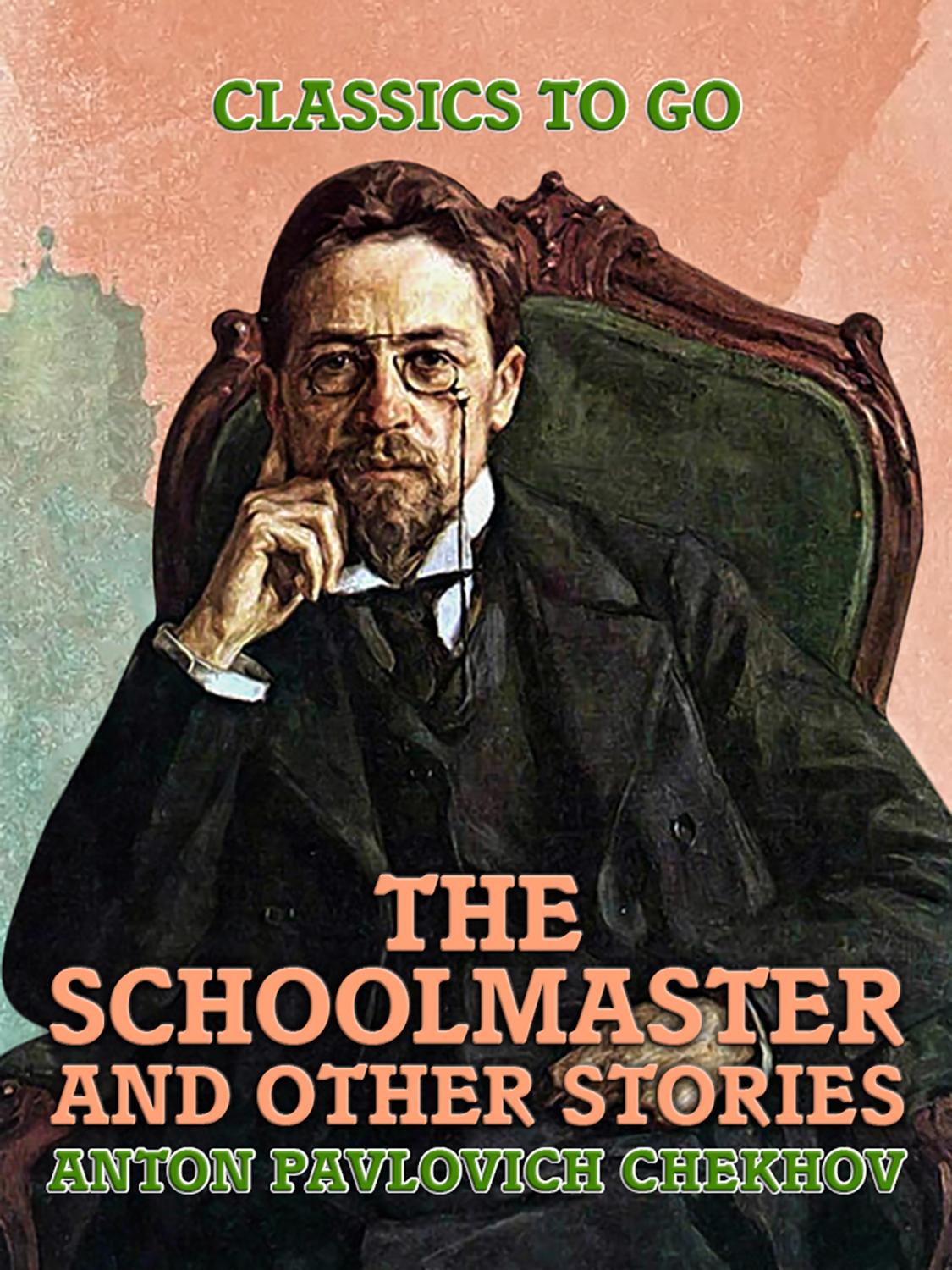
The Schoolmaster
The Schoolmaster is a short story collection by Anton Chekhov, titled after one of the pieces it contains. Chekhov wrote something like several hundred short stories during his brief working life from the early 1880s to his death from tuberculosis in 1904, and English collections of his work are typically organised around either a thematic principle or simply named after one of the stronger pieces in the gathering. The Schoolmaster volume falls into the second category and brings together a selection of his middle and late stories.
The title piece is a short story about a provincial Russian schoolmaster, a familiar Chekhov type. The schoolmaster lives in a small town somewhere in the south of Russia, teaches at a modest gymnasium, and is dying of tuberculosis. The story follows him through a period of declining health and through the small adjustments he makes to the knowledge that his life is ending, including his complicated relations with the headmaster, the other teachers, and the families of his students. The disease was one Chekhov knew intimately, since he was himself a doctor and was himself dying of it, and the medical and emotional details of the schoolmaster’s experience are observed with the unusual combination of clinical accuracy and quiet tenderness that ran through Chekhov’s work.
The other stories in the collection vary in length and subject but share the characteristic Chekhov method. He typically takes an ordinary situation involving ordinary people, often of the provincial Russian middle class he knew best, and works it through to a moment of small recognition that changes the meaning of everything that came before. There is no melodrama. The stories usually end without anything dramatic happening on the surface, and the meaning sits in the gap between what the characters have done and what they cannot quite admit to themselves about why they have done it.
The book is best read a story or two at a time rather than straight through, since the cumulative effect of Chekhov’s compressed endings can become overwhelming. For readers new to Chekhov, this kind of selection volume is the friendliest entry point. It pairs naturally with The Lady With the Dog and Other Stories and with the Constance Garnett collected translations that introduced English readers to most of Chekhov in the early twentieth century.
About the Author
Read and download 2 free books by Anton Chekhov on BDeBooks. Browse the complete collection of Anton Chekhov’s works available as free PDF and EPUB downloads. Discover novels, fiction, and other writings by Anton Chekhov in our online eBook library.
See all books by Anton Chekhov →