The Sign of Four
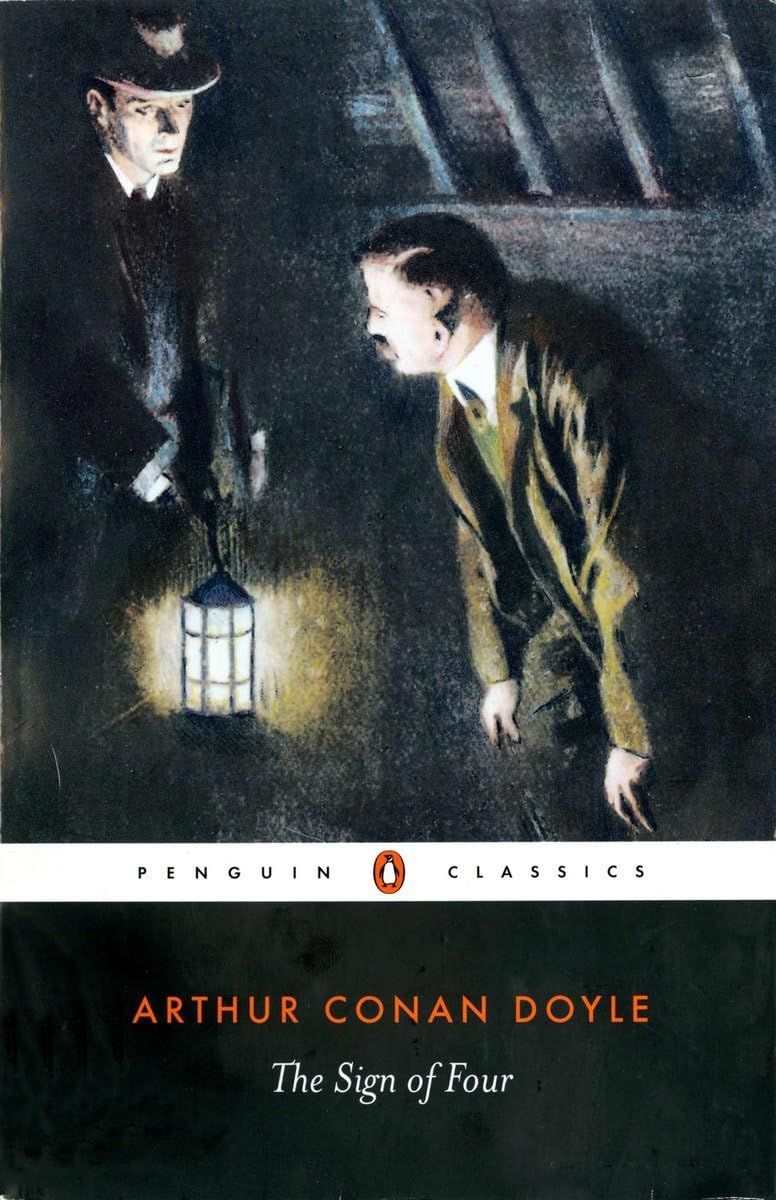
Doyle wrote the second Holmes novel in 1890, and it is sharper than A Study in Scarlet in almost every way. The case is a strange one. Mary Morstan, a young governess, comes to Baker Street with a story. Her father vanished years ago. Every year since, she has received an unsigned package containing a single large pearl. Now she has been asked to meet her anonymous benefactor in person. Holmes and Watson agree to come along.
What follows is one of the cleanest plots in the canon. A locked-room murder. A stolen Indian treasure with a curse on it. A wooden-legged pursuer named Jonathan Small. A small-island connection to the British colonial occupation of India. A boat chase down the Thames that still works as an action scene. And Watson falls hard for Mary Morstan, which sets up the romantic subplot that will quietly run beneath the rest of the early stories. Doyle was hitting his stride here. The book is short, the prose is tight, and the case is properly Holmesian. Read it right after A Study in Scarlet for the natural sequel pacing.
About the Author
Arthur Ignatius Conan Doyle was born in 1859 in Edinburgh into an Irish-Catholic family that was both artistically gifted and chronically unstable. His father was an alcoholic artist who eventually had to be institutionalized. His mother, by all accounts, was the steady center of his…
See all books by Arthur Conan Doyle →