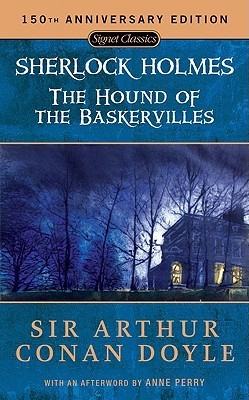
The Hound of the Baskervilles
The Hound of the Baskervilles appeared in 1902, set chronologically before Holmes’s death at Reichenbach Falls and giving Doyle a way to write a Holmes novel without resurrecting his hero. It worked. The book is widely considered the best Holmes novel and one of the best gothic mysteries ever written.
The setup is irresistible. Sir Charles Baskerville has died on the moors of Devon, his face frozen in terror. The family legend speaks of a demonic hound that has haunted the Baskervilles for centuries. The next heir, Sir Henry, has just arrived from Canada to take possession of the estate. Someone wants him dead. Holmes sends Watson to Dartmoor first, ostensibly to keep watch, while Holmes himself works the case from London. Watson narrates most of the book on his own, which gives the middle stretch a different rhythm than the short stories. The moor itself is the real co-star. Doyle fills it with fog, escaped convicts, ancient stone huts, and a sense that the supernatural explanation might actually be true. The reveal at the end is rational, the way Holmes always wanted, but the dread along the way is genuine.
About the Author
Arthur Ignatius Conan Doyle was born in 1859 in Edinburgh into an Irish-Catholic family that was both artistically gifted and chronically unstable. His father was an alcoholic artist who eventually had to be institutionalized. His mother, by all accounts, was the steady center of his…
See all books by Arthur Conan Doyle →