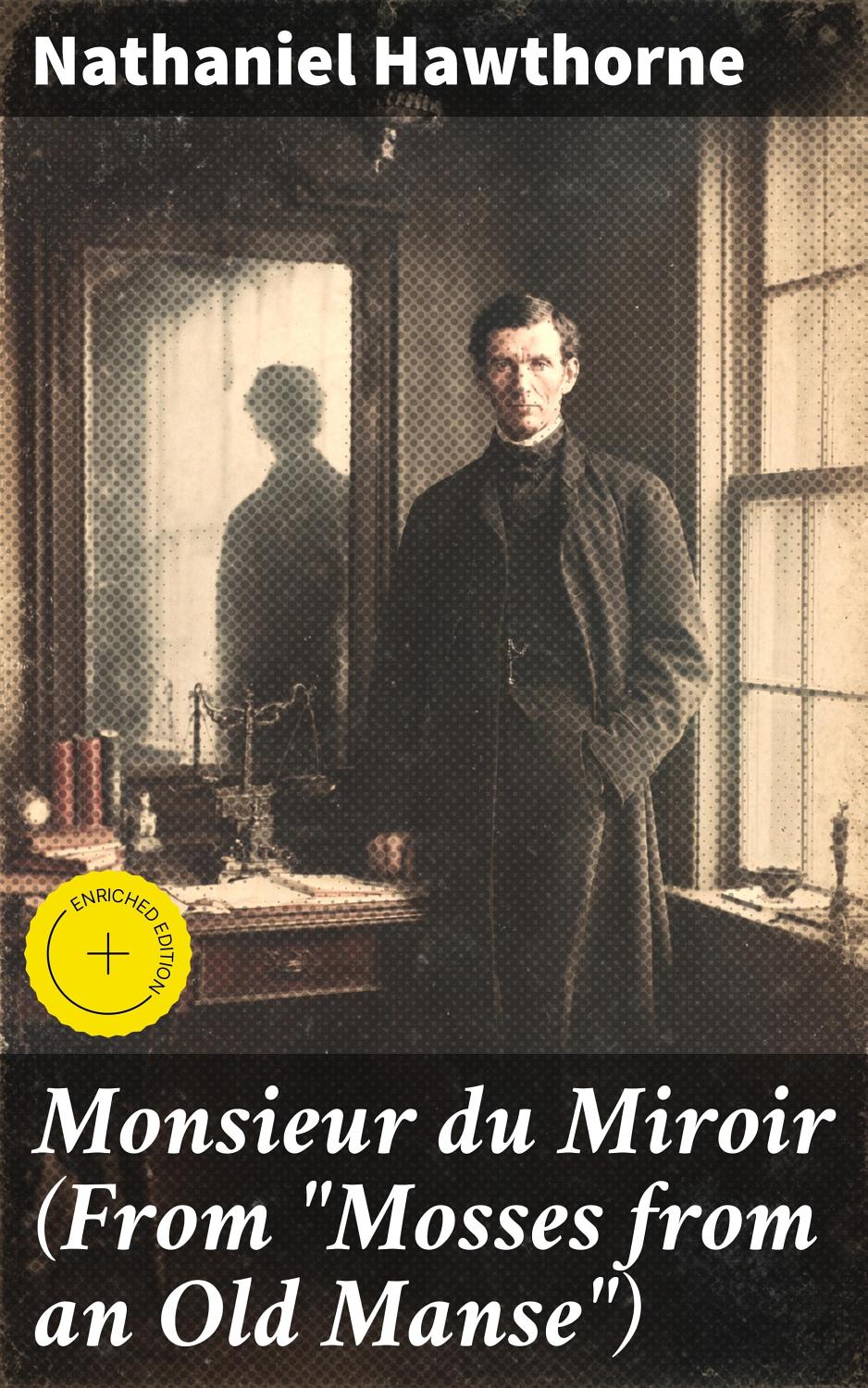
Monsieur du Miroir
Monsieur du Miroir is a short sketch by Nathaniel Hawthorne, first published in the Knickerbocker magazine in January 1837 and later collected in Mosses from an Old Manse in 1846. It is one of the strangest things he ever wrote, and one of the most unsettling.
The whole sketch is an extended meditation on the figure the narrator sees every morning in his shaving mirror. Hawthorne treats this reflection as a separate person, a silent companion who has followed him since childhood, who shares every meal, who has aged at the same rate, and who has never once spoken. The piece works through the various places this Monsieur du Miroir appears, in shop windows, in still water, in the eyes of other people, always present and always exactly mirroring the narrator without ever giving any sign of an independent life.
The writing is comic in places, with Hawthorne making jokes about the gentleman’s lack of conversation and his refusal to take off his hat first. But underneath the comedy is something darker. The figure in the mirror is the only one who knows everything about the narrator and cannot tell. He is the perfect witness and the perfect stranger. By the end of the sketch the relationship has the slow chill of something Hawthorne would do at greater length in his late unfinished romance The Dolliver Romance, where reflections and doubles keep appearing.
The piece runs only a few pages and works best read in a single sitting. It anticipates much later writing on the uncanny, including Poe at his weirdest and certain late nineteenth century French stories about doubles. For readers who think of Hawthorne as primarily a writer of Puritan New England, this is a piece that shows how strange he could be when he turned away from history entirely. It pairs naturally with The Haunted Mind and Wakefield, two other sketches where Hawthorne lets a small idea become something quietly disturbing.
About the Author
Nathaniel Hawthorne was a 19th-century American novelist and short-story writer central to the Dark Romantic movement. He is best known for The Scarlet Letter and The House of the Seven Gables, with their themes of sin, guilt, and Puritan New England.
See all books by Nathaniel Hawthorne →