Vine and Olive
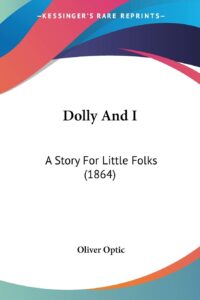
Vine and Olive is one of Oliver Optic’s many novels for boys, working in the kind of adventure and moral instruction territory that earned the author one of the largest readerships in mid to late nineteenth century American children’s fiction. Oliver Optic was the pen name of William Taylor Adams, a Massachusetts writer who became one of the most prolific producers of boys’ fiction in the period, with a total output running into more than a hundred novels.
The vine and olive premise often pointed in nineteenth century American writing to the historical settlement attempted by exiled French Bonapartists in Alabama in the years after Napoleon’s fall, when several hundred former officers of the Grand Army received a federal land grant on the Tombigbee River for the cultivation of grapes and olives. The settlement failed within a decade for various reasons, but it became the basis for various nineteenth and early twentieth century novels and stories that romanticized the experience. Whether Optic’s novel deals directly with this historical material or uses the vine and olive figure for a different setting, the title points to the kind of agricultural and pioneering subject matter that his readers responded to.
Optic’s prose is brisk and his action sequences move at the pace his young readers expected. The moral lessons are delivered through the narrative rather than imposed in lectures. Modern readers should be aware that the period assumptions about race, class, and gender are very much present in Optic’s fiction in ways that have not aged well. His books were so popular in their time that he was eventually censured by the Boston Public Library and other respectable institutions for being too exciting and not sufficiently improving, with critics arguing that his adventure focused stories did not deliver the explicit moral instruction that some other writers of children’s books were considered to provide. The fact that boys preferred Optic to many of his more decorous competitors is now part of the historical interest of his work.
For scholars of nineteenth century American children’s literature, of the dime novel and story paper traditions, or of the wider print culture that shaped American boyhood in the post Civil War decades, Optic’s work is essential. Many of his books are now in the public domain.
About the Author
Oliver Optic was the pen name of William Taylor Adams, a hugely popular 19th-century American author of adventure and travel stories for young readers, who wrote well over a hundred books and edited several children’s magazines.
See all books by Oliver Optic →