
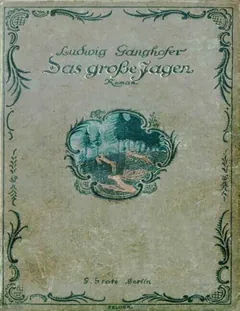
Das große Jagen
Grote'sche Sammlung v. Werken zeitgenöss. Schriftsteller
Grote'sche Sammlung v. Werken zeitgenöss.
Schriftsteller
Charitas Bischoff, Amalie Dietrich. Ein Leben. Mit 8 Bildnissen.
Achtundvierzigstes Tausend. Geb. 5,50 M.
– –, Bilder aus meinem Leben. Mit sechzehn Vollbildern und fünf
Textillustrationen. Zwanzigstes Tausend. Geb. 5,50 M.
Victor Blüthgen, Gedichte. Neue, verm. Ausgabe. Geb. 4,50 M. Walther Burk, Der versunkene Herrgott. Roman. Geb. 4,50 M. Gustaf Dickhuth, Wie der Leutnant Hubertus von Barnim sich verloben
wollte und anderes. Novellen. Geb. 4 M.
Ernst Eckstein, Murillo. Dritte Auflage. Geb. 3 M. – –, Hertha. Roman. Dritte Auflage. Geb. 8 M. – –, Themis. Roman. Zwei Bände. Geb. 9,60 M. – –, Der Mönch vom Aventin. Novelle. Vierte Auflage. Geb. 4 M. – –, Familie Hartwig. Roman. Zweite Auflage. Geb. 8 M. – –, Kyparissos. Roman. Zweite Auflage. Geb. 8 M. – –, Roderich Löhr. Roman. Zweite Auflage. Geb. 8 M. – –, Adotja. Novellen. Geb. 6,50 M. – –, Die Hexe von Glaustädt. Roman. Dritte Auflage. Geb. 8 M. A. von der Elbe, Der Bürgermeistersturm. Ein Roman aus dem
fünfzehnten Jahrhundert. Zweite Auflage. Geb. 7 M.
– –, In seinen Fußstapfen. Roman aus Lüneburgs Vorzeit. Zweite Auflage.
Geb. 5,50 M.
Gustav Falke, Die Stadt mit den goldenen Türmen. Die Geschichte
meines Lebens. Fünfzehntes Tausend. Geb. 5,50 M.
Heinrich Federer, Lachweiler Geschichten. Fünf Erzählungen.
Siebzehntes Tausend. Geb. 5 M.
– –, Berge und Menschen. Roman. Zweiundvierzigstes Tausend. Geb. 6,50 M. – –, Pilatus. Eine Erzählung aus den Bergen. Neunzehntes Tausend. Geb. 4,50
M.
– –, Jungfer Therese. Eine Erzählung aus Lachweiler. Achtzehntes Tausend.
Geb. 5 M.
– –, Das Mätteliseppi. Eine Schweizer Erzählung. Fünfundzwanzigstes
Tausend. Geb. 6,50 M.
Gustav Frenssen, Die Sandgräfin. Roman. Achtundsiebzigstes Tausend.
Geb. 5,50 M.
– –, Die drei Getreuen. Roman. Hunderteinundzwanzigstes Tausend. Geb. 5,50
M.
– –, Jörn Uhl. Roman. Zweihundertneunundvierzigstes Tausend. Geb. 5,50 M. – –, Hilligenlei. Roman. Hundertneunundvierzigstes Tausend. Geb. 6,50 M. – –, Peter Moors Fahrt nach Südwest. Ein Feldzugsbericht.
Hundertsechsundachtzigstes Tausend. Geb. 3,50 M.
– –, Klaus Hinrich Haas. Roman. Neunundachtzigstes Tausend. Geb. 6,50 M. – –, Der Untergang der Anna Hollmann. Eine Erzählung.
Sechsundsechzigstes Tausend. Geb. 3,50 M.
– –, Bismarck. Epische Erzählung. Geb. 5 M. – –, Die Brüder. Eine Erzählung. Fünfundachtzigstes Tausend. Geb. 6,50 M. Ludwig Ganghofer, Doppelte Wahrheit. Neue Novellen. Sechstes
Tausend. Geb. 5,50 M.
– –, Fliegender Sommer. Novellen. Einundzwanzigstes Tausend. Geb. 5 M. – –, Das Schweigen im Walde. Roman. Neue Ausgabe. Einundsechzigstes
Tausend. Geb. 6,50 M.
– –, Die Trutze von Trutzberg. Eine Geschichte aus Anno Domini 1445.
Sechsundvierzigstes Tausend. Geb. 5,50 M.
– –, Das große Jagen. Roman aus dem 18. Jahrh. Geb. 7,50 M. Hans Ferdinand Gerhard, In der Jodutenstraße. Roman. Drittes
Tausend. Geb. 4,50 M.
Ola Hansson, Der Schutzengel. Roman. Geb. 4 M. Hermann Heiberg, Reiche Leute von einst. Roman. Geb. 4 M. Hans Hopfen, Gotthard Lingens Fahrt nach dem Glück. Roman. Geb.
5,50 M.
F. Hugin, Durch den Nebel. Roman. Viertes Tausend. Geb. 4,50 M. Johannes Jegerlehner, Marignans. Eine Erzählung. Fünftes Tausend.
Geb. 4,50 M.
– –, Petronella. Roman aus dem Hochgebirge. Fünftes Tausend. Geb. 4,50 M. – –, Grenzwacht der Schweizer. Eine Erzählung. Siebentes Tausend. Geb. 2,50
M.
Wilhelm Jordan, Zwei Wiegen. Ein Roman. Neue Ausgabe. Zwei Bände.
Fünftes Tausend. Geb. 7 M.
Adam Karrillon, Michael Hely. Roman. Neuntes Tausend. Geb. 5,50 M. – –, Die Mühle zu Husterloh. Roman. Siebentes Taus. Geb. 5,50 M. – –, O domina mea. Roman. Sechstes Tausend. Geb. 5.50 M. – –, Im Lande unserer Urenkel. Drittes Tausend. Geb. 5 M. – –, Bauerngeselchtes. Sechzehn Novellen aus dem Chattenlande. Drittes
Tausend. Geb. 4,50 M.
– –, Adams Großvater. Roman. Siebentes Tausend. Geb. 5,50 M. Joseph von Lauff, Kärrekiek. Roman. Zehntes Taus. Geb. 5,50 M. – –, Pittje Pittjewitt. Ein Roman vom Niederrhein. Zwanzigstes Tausend. Geb.
5,50 M.
– –, Frau Aleit. Roman. Siebzehntes Tausend. Geb. 5,50 M. – –, Die Tanzmamsell. Roman. Siebzehntes Tausend. Geb. 5,50 M. – –, Sankt Anne. Roman. Fünfzehntes Tausend. Geb. 5,50 M. – –, Revelaer. Roman. Sechzehntes Tausend. Geb. 5,50 M. – –, Lux aeterna. Roman. Elftes Tausend. Geb. 5,50 M. – –, Die Brinkschulte. Roman. Zwölftes Tausend. Geb. 5,50 M. – –, Anne-Susanne. Roman. Zweiundzwanzigstes Tausend. Geb. 5,50 M. – –, Sergeant Feuerstein. Ein Roman aus großer Zeit. Vierundzwanzigstes
Tausend. Geb. 6 M.
Hermann Lingg, Schlußsteine. Neue Gedichte. Geb. 4 M. Fritz Philippi, Adam Notmann. Ein Leben in der Zelle. Roman. Geb. 4,50
M.
Wilhelm Rabe, Die Chronik der Sperlingsgasse. Achtundneunzigste
Auflage. Geb. 4 M.
– –, Horacker. Zweiunddreißigstes Tausend. Geb. 4 M. – –, Unruhige Gäste. Ein Roman aus dem Säkulum. Siebente Auflage. Geb. 4
M.
– –, Im alten Eisen. Eine Erzählung. Siebente Auflage. Geb. 4 M. – –, Nach dem großen Kriege. Eine Geschichte in zwölf Briefen. Fünfte
Auflage. Geb. 3,50 M.
– –, Die Kinder von Finkenrode. Achte Auflage. Geb. 4 M. – –, Halb Mär, halb mehr. Erzählungen, Skizzen, Reime. Zweite Auflage.
Geb. 4 M.
Otto Rodehorst, Und wenn die Welt voll Teufel wär! Eine Erzählung.
Achtes Tausend. Geb. 2,50 M.
Erich Scheurmann, Ein Weg. Roman. Geb. 5 M. – –, Abseits. Sechs Erzählungen. Geb. 3 M. Gustav Schröer, Die Flucht von der Murmanbahn. Eine Erzählung.
Achtes Tausend. Geb. 2,50 M.
– –, Der Heiland vom Binsenhof. Roman. Geb. 5,50 M. Ernst Schudert, Ruhm. Ein Novellenkranz um Friedrich den Großen.
Fünfzehn Novellen. Drittes Tausend. Geb. 4,50 M.
– –, Der Sturmwind Gottes. Zwei Erzählungen. Geb. 5 M. Heinrich Wolfgang Seidel, Der Vogel Tolidan. Neun Erzählungen. Geb.
4,50 M.
– –, Die Varnholzer. Ein Buch der Heimat. Geb. 5,50 M. Heinrich Steinhausen, Heinrich Zwiesels Ängste. Eine Spießhagener
Geschichte. Geb. 5,50 M.
Konrad Telmann, Bohémiens. Roman. Geb. 6,50 M. Johannes Trojan, Auf der anderen Seite. Streifzüge am Ontario-See. Geb.
3 M.
– –, Berliner Bilder. Hundert Momentaufnahmen. Zweite Auflage. Geb. 4 M. Ernst von Wildenbruch, Das schwarze Holz. Roman. Sechzehntes
Tauend. Geb. 5.50 M.
– –, Lukrezia. Roman. Siebzehntes Tausend. Geb. 6,50 M. Julius Wolff, Till Eulenspiegel redivivus. Ein Schelmenlied.
Sechsundzwanzigstes Tausend. Geb. 4,80 M.
– –, Der Rattenfänger von Hameln. Eine Aventiure. Siebenundsiebzigstes
Tausend. Geb. 4 M. 80 Pf.
– –, Der wilde Jäger. Eine Weidmannsmär. Hundertundachtes Tausend. Geb. 4
M. 80 Pf.
– –, Tannhäuser. Ein Minnesang. Zwei Bände. Vierundvierzigstes Tausend.
Geb. 8 M.
– –, Lurici. Eine Romanze. Einundsiebzigstes Tausend. Geb. 6 M. – –, Die Pappenheimer. Ein Reiterlied. Fünfundzwanzigstes Tausend. Geb. 6 M.
– –, Renata. Eine Dichtung. Dreiunddreißigstes Taus. Geb. 6 M. – –, Der fliegende Holländer. Eine Seemannssage. Siebenunddreißigstes
Tausend. Geb. 5 M.
– –, Assalide. Dichtung aus der Zeit der provençalischen Troubadours.
Siebzehntes Tausend. Geb. 6 M.
– –, Der Landsknecht von Cochem. Ein Sang von der Mosel.
Dreiundzwanzigstes Tausend. Geb. 6 M.
– –, Der fahrende Schüler. Eine Dichtung. Vierzehntes Tausend. Geb. 6 M. – –, Der Sülfmeister. Eine alte Stadtgeschichte. Zwei Bände.
Vierundsechzigstes Tausend. Geb. 8 M.
– –, Der Raubgraf. Eine Geschichte aus dem Harzgau. Dreiundsiebzigstes
Tausend. Geb. 7 M.
– –, Das Recht der Hagestolze. Eine Heiratsgeschichte aus dem Neckartal.
Vierundvierzigstes Tausend. Geb. 7 M.
– –, Das schwarze Weib. Roman aus dem Bauernkriege. Sechsundzwanzigstes
Tausend. Geb. 7 M.
– –, Die Hohkönigsburg. Eine Fehdegeschichte aus dem Wasgau.
Vierunddreißigstes Tausend. Geb. 6 M.
– –, Zweifel der Liebe. Roman aus der Gegenwart. Einundzwanzigstes
Tausend. Geb. 6 M.
– –, Das Wildfangrecht. Eine pfälzische Geschichte. Neunzehntes Tausend.
Geb. 6 M.
– –, Der Sachsenspiegel. Eine Geschichte aus der Hohenstaufenzeit.
Achtzehntes Tausend. Geb. 6 M.
– –, Singuf. Rattenfängerlieder. Siebzehntes Tausend. Geb. 4 M. 80 Pf. – – Aus dem Felde. Gedichte. Vierte, vermehrte Auflage. Geb. 2 M. 50 Pf.
Heinrich Federer, Das Mätteliseppi. Eine Erzählung. 25. Tausend. Geh. 5 M., geb. 6.50 M.
Vor zwölf Jahren habe ich diese unvergeßliche Figur in einer Novelle behandeln
wollen, und damals entstanden die Kapitel in der Webstube und im Pfarrexamen in einem mehr humoristischen Fadenschlag. Ich legte jedoch den unbefriedigenden Entwurf in die Schublade. Aber im Herbst 1915, im Süden und im Heimweh nach den Buchen und Äpfeln und Herzlichkeiten meines lieben Nordens, nahm ich die Papiere wieder vor und arbeitete sie nun zu einem ... ach freilich so dicken! ... Romane aus ... In die Schicksale des Ländleins und besonders der Spichtigerfamilie ist nun das Mätteliseppi so verstrickt und hält den Faden so stramm in der Faust, daß ich statt des ersten Titels »Die Spichtiger« lieber seinen klassischen Namen »Das Mätteliseppi« setzte. Es stört die Einheit der Erzählung keineswegs, stärkt sie eher und gleicht in seiner rauhen und massiven Gewalt einem Berge, in dessen wechselndem Schatten sich eine kleine Menschheit und Menschheitsgeschichte entwickelt und bald behindert, bald gehoben ans ordentliche Ziel gelangt.
So hat es denn wirklich ein solches Mättelisepi gegeben? Seinen Webstuhl und
harten Flachsscheitel, seinen langen Stecken, sein Unterrichtsgenie und seinen mörderlichen Kleiderkasten als Arrest? Seine Helgen und Mären? wie? ... Ich antworte: all das auf den letzten Tupf! Viele hundert Obwaldner werden euch das mit einem aus Respekt und Schalkheit gemischten Lächeln bestätigen und noch reichlich glossieren können. Und auf dem Friedhof von Sachseln findest du die Horat und Molin und Herri und Tonoli, indessen der damalige Helfer Ludowig noch heute, im Silber von fünfundsiebzig Jahren, als geistliche Spitze des Kantons tapfer seines Amtes waltet ... Von all den vielen Knaben und Mädchen, dem seltsamen Josef Tonoli zum Beispiel, der kalten, eitlen Orla, dem kühnen, wilden Herri und dem glücklichern von Aar bis zum Trunzibub hinauf und zur Botin Trunz selber und den Spichtigerleuten als den Hauptpersonen des Romanes, von all dem ist keine Faser eitle Phantasie dabei. Sie alle sind genau so in Fleisch und Blut und starken Knochen an mir vorbeigegangen. Ich habe nur Namen geändert und Örtlichkeiten verschoben. Viele leben noch, die meisten ruhen.
Soll ich sagen, ob auch die tiefen Leiden und Zweifel und seelischen
Erhebungen im Buche historisch sind? Da erlasset mir das Wort. Das sollet nun ihr sagen, die ihr das Buch leset!
Heinrich Federer (in Grote's Weihnachtsalmanach 1916).
Ludwig Ganghofer, Die Trutze von Trutzberg. Eine Geschichte aus anno Domini 1445. 46. Tausend. Geh. 4 M., geb. 5,50 M.
Ganghofer hat mit seinem neuesten Roman dem deutschen Volke eine prächtige
Gabe beschert. Er führt seine Leser um ein paar Jahrhunderte zurück in jene Zeit, da politische Forderungen die schöne Agnes Bernauerin von der Seite des Bayernherzogs rissen. Wie ein düsterer, unheimlicher Ton klingt dieses Ereignis durch die Wirrnisse der Fehde, die die Trutze von Trutzberg mit ihren Burgnachbarn auszufechten haben. Gleichzeitig beleuchtet es die Liebesgeschichte des Romans, die sich zwischen dem Fräulein von Puechstein und dem Schäfer Lienhart abspinnt. Hierbei ist Ganghofer die schwierige Aufgabe restlos zu lösen gelungen, seine Leser für das ungleiche Liebespaar einzunehmen. Von der ersten Bekanntschaft mit dem Schäfer Lienhart an muß man diesem Naturburschen gut sein, so kernfest und treu-deutsch ist der junge Träumer und Held gezeichnet. Deshalb versteht man das junge Edelfräulein, wenn es sein Herz an den verachteten Schäfer verliert und einem verderbten Junker den Laufpaß gibt. In treffenden Gegensätzen entrollt der Dichter ein Bild vom Leben und Treiben in der vom Feinde belagerten Burg. Sein köstlicher, echter Humor kommt dabei in vollem Umfang zur Geltung. – Ganghofers Buch kommt gerade zur rechten Zeit. Es wird vielen, unter der Gegenwart Mühseligen und Beladenen, eine rechte Erquickung sein, denn der Quell, der es genährt hat, heißt Gesundheit.
Dresdner Nachrichten.
Ludwig Ganghofer, Das Schweigen im Walde. Roman. Neue Ausgabe. 60. Tausend. Geh. 5 M., geb. 6,50 M.
Hinauf auf die Berge und in den Hochwald führt der Dichter seinen im Getriebe
der Großstadt flügellahm gewordenen Helden und läßt ihn gesunden am immer frischen Born reiner, hehrer Gottesnatur und inmitten ihrer kernfesten, urwüchsigen Menschen. Charakteristisch und scharf gezeichnet treten sämtliche Gestalten der interessanten, reichbewegten Handlung gleichsam leibhaftig vor uns und erregen unsere warme Sympathie bei allen ihren Leiden und Freuden. Den Mittel- und Glanzpunkt der Dichtung aber bildet die herrliche Gebirgsnatur der Tiroler Alpen, deren äußere Erscheinungen in edler, von poetischem Zauber durchwobener Sprache mit einer plastischen Anschaulichkeit geschildert sind, die Herz und Sinn des Lesers unwiderstehlich gefangen nimmt.
Adam Karrillon, Adams Großvater. Roman. 7. Tausend. Geh. 4 M., geb. 5.50 M.
Adam Karrillon gehört zu den im deutschen Schrifttum nicht seltenen Dichtern,
die erst im gereiften Mannesalter aus einem im vollen Leben tätigen Beruf in die Literatur gekommen sind. Im Odenwald, in einem kleinen Waldnest geboren, war er von Jugend an mit Land und Leuten seiner Heimat vertraut, später als Landarzt hatte er in jahrzehntelanger Praxis im näheren und weiteren Bezirk Gelegenheit, Herz und Nieren zu prüfen, seine Menschenkenntnis zu erweitern und zu vertiefen. Als Karrillon als 47jähriger seinen ersten Roman herausgab, merkte man gleich, daß da ein Eigener auftrat, einer, der aus dem vollen schöpfte, der nicht in der Schreibstube nach einer landläufigen Mode oder den Geboten einer »Richtung« einen Roman zusammenbastelte, sondern die Erfahrungen eines Lebens vor uns ausbreitete, mit einem grimmigen Humor, mit innerer Heiterkeit, oft mit Wehmut, knorrig, kraus, sehr deutsch von Leben und Schicksalen seiner Leute erzählte. So gab er in seinem ersten Buche, dem »Michael Hely«, ein Bild des Odenwälder und Schwarzwälder Bauernvolkes, nicht verschönert und verniedlicht, wie weiland Auerbach und Defregger es taten, auch nicht so einseitig verzerrt und verroht, wie viele Moderne, sondern etwa so wie Leibl gemalt hat, so stark, so wahr, so unerbittlich und doch liebevoll. Dann kam die »Mühle zu Husterloh«, ein bei aller Komik tiefernstes Buch, das die Erwürgung eines patriarchalischen ländlichen Mühlenbetriebes durch ein modernes »Etablissement« zum Gegenstand hat, endlich der Roman »O domina mea«, welcher mit einem heiteren, einem nassen Auge das Geschick und die Liebe eines Bauernarztes erzählt. Viel eigenes Leben und Leid des Dichters klingt hier schon auf. Nach zwei kleineren Büchern, der launigen Schilderung einer Afrikafahrt und einem Bande lustiger Bauernhistörchen tritt Karrillon nun wieder mit einem größeren Bauernroman hervor, in dem er sein eigenes Geschlecht, sein eigenes Jugendland darstellt. Ganz unverfälscht ist wieder das Bauernvolk vorgeführt, der echte urwüchsige Bauer, das noch ungebrochene deutsche Volkstum. Gestalten, wie den hartschädeligen, auf seinen ererbten und mühsam vergrößerten Besitz stolzen Großvater, den sie wegen seines Reichtums den »Kurfürsten« nennen, seinen windigen, arbeitsscheuen Sohn, der jeder Schürze nachläuft und das väterliche Erbe in Saus und Braus durchbringt, vergißt man nicht. Wieder leuchtet Karrillons herzhafter Humor mildernd und versöhnend durch Leid und Leidenschaft, wieder erfreut eine markige, in ihrer Bilderpracht oft an Shakespeare gemahnende Sprache.
Gustav Schröer, Der Heiland vom Binsenhofe. Roman. Geh. 4 M., geb. 5,50 M.
Ein starkes, gutes und schönes Werk, aus der Tiefe und Fülle menschlicher
Empfindung und Erkenntnis geschöpft, edel im Gegenstand, frei und maßvoll in der Gesinnung, geradlinig in der Führung, einheitlich und geschlossen in der Erfindung und Darstellung, ohne bilderreichen Überschwang und doch dichterisch beseelt, lebendige Menschen und wirkende Natur, überzeugend und ergreifend. Es ist nur eine einfache Bauerngeschichte, aber sie umspannt in ihrer kleinen Welt den ganzen ewigen Kampf der Schwachen gegen die Mächtigen, der Vernunft gegen den Aberglauben, der Güte gegen die Gemeinheit, der Selbstlosigkeit gegen die Leidenschaft. Und als symbolischer Vertreter dieses Kampfes erscheint der Schicksalsmensch, dem gerade seine besten Eigenschaften einen tragischen Untergang bereiten und dem, wie seinem göttlichen Vorgänger, im Leben zum Spott, im Tode zum Ruhm der Name des »Heilands« zuteil wird.
Gustav Schröer hat bereits durch die im vorigen Jahre in unserer »Sammlung«
erschienene Erzählung »Die Flucht von der Murmanbahn« und andere Werke starke Talentproben abgelegt; durch dies neue Werk, das einen bedeutenden Stoff in bedeutender Weise behandelt und in seinen Folgerungen eine ernste Mahnung für vielleicht bevorstehende Tage ist, hat er Anspruch, in weitesten Kreisen des deutschen Volkes gehört zu werden.
Gustav Schröer, Die Flucht von der Murmanbahn. Nach den Berichten eines Torgauer Husaren. 8. Tausend. Geh. 2 M., in Pappband geb. 2,50 M.
»Dieser Roman eines Torgauer Husaren ist wahrhaftig die beste
Abenteuergeschichte, die ich kenne: ganz einfach erzählt und dabei doch fabelhaft eindrucksvoll.«
Fedor v. Zobeltitz.
»Das schöne Buch hat alle Anwartschaft, ein Volksbuch zu werden.«
Carl Busse.
»Am herrlichsten seit langem dünkt mich ‚Die Flucht von der Murmanbahn‘.
Wie frisch, wahr, tüchtig! wie ist man dabei und leidet und hofft und bangt mit! Und wie ist einem das Fensterlicht tief unten an der norwegischen Küste dann selbst eine wahre Erlösung! Eine ähnliche Natürlichkeit in Nerv und Seele findet man fast nie in den ähnlichen abenteuerlichen Werken.«
Heinrich Federer.
Heinrich Wolfgang Seidel, Die Varnholzer. Ein Buch der Heimat. Geh. 4 M., geb. 5,50 M.
Heinrich Wolfgang Seidel, der Sohn des Leberecht Hühnchen-Dichters, der sich
durch seine Novellen »Der Vogel Tolidan« und »Ameisenberg« bereits einen anerkannten Namen in der Literatur erworben hat, tritt hiermit mit seinem ersten Roman hervor, einem sehr liebenswürdigen Buche, voll von Reizen der Stimmung und dichterischer Anschauung, voll Witz und Laune und liebevollem Eingehen auf das Seelenleben der betrachteten Menschen.
Die Varnholzer sind der Freundeskreis des Anwaltes Varnholz, der mit seiner
Frau und seinen beiden Kindern im Mittelpunkt dieses Buches steht. Er zieht in den Kampf gegen Rußland, wird gefangen und gewinnt nach abenteuerlicher Irrfahrt die Heimat aufs neue. Dennoch ist die Erzählung weniger eine Darstellung kriegerischer Vorgänge, als der Versuch, in anschaulichen Bildern die Erlebnisse der deutschen Seele widerzuspiegeln. Eine Fülle von Gestalten erlebt Frieden und Krieg, und jede offenbart ein Stück deutschen Wesens. Heitere und tragische Züge sind miteinander ausgeglichen, der Schauplatz wechselt vielfach, und der Leser wird geführt durch Weltstadt und ländliche Gemeinschaft, nach Weimar ebenso wie in die polnische Öde. Das Erleben der Kleinstadtbürger und der Künstler, der dumpfen Masse und des einzelnen Kulturträgers, der Wagemut des Mannes und die betende Geduld der Frau, Kinder-Weihnachten und die Irrwege der in Selbstsucht Strauchelnden, die grenzenlose Liebe zum Vaterland, aber auch die Vision Christi, dessen Erbarmen den Menschen sucht, – alles das vereinigt sich in einem Akkord und läßt doch jeder Erscheinung ihre eigene leidvolle oder triumphierende Stimme.
Heinrich Wolfgang Seidel, Der Vogel Tolidan. Neun Novellen. Geh. 3 M., geb. 4,50 M.
Inhalt: Der Vogel Tolidan – Engelmann – Advent – Die Königsprobe – Arm
Wendelin und die schöne Susanne – Die Bibliothek des möblierten Herrn – Ein Ferientag – Herrn Honolts Abenteuer – Die Ballspielerin.
Heinrich Wolfgang Seidel, Ameisenberg. Die spanische Jacht. Zwei Novellen. Kart. 1,80 M., geb. 2 M.
Bei der Transkription vorgenommene Änderungen und weitere
Anmerkungen:
Der Abschnitt "Bücher von Ludwig Ganghofer:" wurde vom
Anfang des Buchs an das Ende verlegt, vor die sonstigen Verlagsanzeigen.
In "Sonst hätt ich doch nit die zwei weißen Fähnlein deiner
Torheit aufgesteckt, wo du sie sehen hast müssen auf den ersten Blick." stand "Fähnlen" statt Fähnlein.
In "Ihr wollt doch wohl nicht sagen: ‚In der ersten‘?" fehlte das
schließende einfache Anführungszeichen. Dies wurde nach Sinnzusammenhang hinter "ersten" ergänzt.
Im Abschnitt "Grote'sche Sammlung v. Werken zeitgenöss.
Schriftsteller" stand im Original, wenn die Liste der Werke eines Schriftstellers über einen Seitenumbruch ging, am Anfang der neuen Seite noch einmal dessen Name. Dies wurde ersetzt durch die Form "– –," welche auch sonst anzeigt, dass das nächste Werk von demselben Autor stammt.
Sie haben Das große Jagen zu Ende gelesen
Ludwig Ganghofer
Bücher wie dieses
Hinweis von Project Gutenberg
End of the Project Gutenberg EBook of Das große Jagen, by Ludwig Ganghofer *** END OF THIS PROJECT GUTENBERG EBOOK DAS GROßE JAGEN *** ***** This file should be named 58219-h.htm or 58219-h.zip ***** This and all associated files of various formats will be found in:
http://www.gutenberg.org/5/8/2/1/58219/
Produced by Heike Leichsenring and the Online Distributed Proofreading Team at http://www.pgdp.net
Updated editions will replace the previous one--the old editions will be renamed.
Creating the works from print editions not protected by U.S. copyright law means that no one owns a United States copyright in these works, so the Foundation (and you!) can copy and distribute it in the United States without permission and without paying copyright royalties. Special rules, set forth in the General Terms of Use part of this license, apply to copying and distributing Project Gutenberg-tm electronic works to protect the PROJECT GUTENBERG-tm concept and trademark. Project Gutenberg is a registered trademark, and may not be used if you charge for the eBooks, unless you receive specific permission. If you do not charge anything for copies of this eBook, complying with the rules is very easy. You may use this eBook for nearly any purpose such as creation of derivative works, reports, performances and research. They may be modified and printed and given away--you may do practically ANYTHING in the United States with eBooks not protected by U.S. copyright law. Redistribution is subject to the trademark license, especially commercial redistribution.
START: FULL LICENSE
THE FULL PROJECT GUTENBERG LICENSE
PLEASE READ THIS BEFORE YOU DISTRIBUTE OR USE THIS WORK
To protect the Project Gutenberg-tm mission of promoting the free distribution of electronic works, by using or distributing this work (or any other work associated in any way with the phrase "Project Gutenberg"), you agree to comply with all the terms of the Full Project Gutenberg-tm License available with this file or online at www.gutenberg.org/license.
Section 1. General Terms of Use and Redistributing Project Gutenberg-tm electronic works
1.A. By reading or using any part of this Project Gutenberg-tm electronic work, you indicate that you have read, understand, agree to and accept all the terms of this license and intellectual property (trademark/copyright) agreement. If you do not agree to abide by all the terms of this agreement, you must cease using and return or destroy all copies of Project Gutenberg-tm electronic works in your possession. If you paid a fee for obtaining a copy of or access to a Project Gutenberg-tm electronic work and you do not agree to be bound by the terms of this agreement, you may obtain a refund from the person or entity to whom you paid the fee as set forth in paragraph 1.E.8.
1.B. "Project Gutenberg" is a registered trademark. It may only be used on or associated in any way with an electronic work by people who agree to be bound by the terms of this agreement. There are a few things that you can do with most Project Gutenberg-tm electronic works even without complying with the full terms of this agreement. See paragraph 1.C below. There are a lot of things you can do with Project Gutenberg-tm electronic works if you follow the terms of this agreement and help preserve free future access to Project Gutenberg-tm electronic works. See paragraph 1.E below.
1.C. The Project Gutenberg Literary Archive Foundation ("the Foundation" or PGLAF), owns a compilation copyright in the collection of Project Gutenberg-tm electronic works. Nearly all the individual works in the collection are in the public domain in the United States. If an individual work is unprotected by copyright law in the United States and you are located in the United States, we do not claim a right to prevent you from copying, distributing, performing, displaying or creating derivative works based on the work as long as all references to Project Gutenberg are removed. Of course, we hope that you will support the Project Gutenberg-tm mission of promoting free access to electronic works by freely sharing Project Gutenberg-tm works in compliance with the terms of this agreement for keeping the Project Gutenberg-tm name associated with the work. You can easily comply with the terms of this agreement by keeping this work in the same format with its attached full Project Gutenberg-tm License when you share it without charge with others.
1.D. The copyright laws of the place where you are located also govern what you can do with this work. Copyright laws in most countries are in a constant state of change. If you are outside the United States, check the laws of your country in addition to the terms of this agreement before downloading, copying, displaying, performing, distributing or creating derivative works based on this work or any other Project Gutenberg-tm work. The Foundation makes no representations concerning the copyright status of any work in any country outside the United States.
1.E. Unless you have removed all references to Project Gutenberg: 1.E.1. The following sentence, with active links to, or other immediate access to, the full Project Gutenberg-tm License must appear prominently whenever any copy of a Project Gutenberg-tm work (any work on which the phrase "Project Gutenberg" appears, or with which the phrase "Project Gutenberg" is associated) is accessed, displayed, performed, viewed, copied or distributed:
This eBook is for the use of anyone anywhere in the United States and most other parts of the world at no cost and with almost no restrictions whatsoever. You may copy it, give it away or re-use it under the terms of the Project Gutenberg License included with this eBook or online at www.gutenberg.org. If you are not located in the United States, you'll have to check the laws of the country where you are located before using this ebook.
1.E.2. If an individual Project Gutenberg-tm electronic work is derived from texts not protected by U.S. copyright law (does not contain a notice indicating that it is posted with permission of the copyright holder), the work can be copied and distributed to anyone in the United States without paying any fees or charges. If you are redistributing or providing access to a work with the phrase "Project Gutenberg" associated with or appearing on the work, you must comply either with the requirements of paragraphs 1.E.1 through 1.E.7 or obtain permission for the use of the work and the Project Gutenberg-tm trademark as set forth in paragraphs 1.E.8 or 1.E.9.
1.E.3. If an individual Project Gutenberg-tm electronic work is posted with the permission of the copyright holder, your use and distribution must comply with both paragraphs 1.E.1 through 1.E.7 and any additional terms imposed by the copyright holder. Additional terms will be linked to the Project Gutenberg-tm License for all works posted with the permission of the copyright holder found at the beginning of this work.
1.E.4. Do not unlink or detach or remove the full Project Gutenberg-tm License terms from this work, or any files containing a part of this work or any other work associated with Project Gutenberg-tm. 1.E.5. Do not copy, display, perform, distribute or redistribute this electronic work, or any part of this electronic work, without prominently displaying the sentence set forth in paragraph 1.E.1 with active links or immediate access to the full terms of the Project Gutenberg-tm License.
1.E.6. You may convert to and distribute this work in any binary, compressed, marked up, nonproprietary or proprietary form, including any word processing or hypertext form. However, if you provide access to or distribute copies of a Project Gutenberg-tm work in a format other than "Plain Vanilla ASCII" or other format used in the official version posted on the official Project Gutenberg-tm web site (www.gutenberg.org), you must, at no additional cost, fee or expense to the user, provide a copy, a means of exporting a copy, or a means of obtaining a copy upon request, of the work in its original "Plain Vanilla ASCII" or other form. Any alternate format must include the full Project Gutenberg-tm License as specified in paragraph 1.E.1. 1.E.7. Do not charge a fee for access to, viewing, displaying, performing, copying or distributing any Project Gutenberg-tm works unless you comply with paragraph 1.E.8 or 1.E.9.
1.E.8. You may charge a reasonable fee for copies of or providing access to or distributing Project Gutenberg-tm electronic works provided that
* You pay a royalty fee of 20% of the gross profits you derive from the use of Project Gutenberg-tm works calculated using the method you already use to calculate your applicable taxes. The fee is owed to the owner of the Project Gutenberg-tm trademark, but he has agreed to donate royalties under this paragraph to the Project Gutenberg Literary Archive Foundation. Royalty payments must be paid within 60 days following each date on which you prepare (or are legally required to prepare) your periodic tax returns. Royalty payments should be clearly marked as such and sent to the Project Gutenberg Literary Archive Foundation at the address specified in Section 4, "Information about donations to the Project Gutenberg Literary Archive Foundation."
* You provide a full refund of any money paid by a user who notifies you in writing (or by e-mail) within 30 days of receipt that s/he does not agree to the terms of the full Project Gutenberg-tm License. You must require such a user to return or destroy all copies of the works possessed in a physical medium and discontinue all use of and all access to other copies of Project Gutenberg-tm works.
* You provide, in accordance with paragraph 1.F.3, a full refund of any money paid for a work or a replacement copy, if a defect in the electronic work is discovered and reported to you within 90 days of receipt of the work.
* You comply with all other terms of this agreement for free distribution of Project Gutenberg-tm works.
1.E.9. If you wish to charge a fee or distribute a Project Gutenberg-tm electronic work or group of works on different terms than are set forth in this agreement, you must obtain permission in writing from both the Project Gutenberg Literary Archive Foundation and The Project Gutenberg Trademark LLC, the owner of the Project Gutenberg-tm trademark. Contact the Foundation as set forth in Section 3 below. 1.F.
1.F.1. Project Gutenberg volunteers and employees expend considerable effort to identify, do copyright research on, transcribe and proofread works not protected by U.S. copyright law in creating the Project Gutenberg-tm collection. Despite these efforts, Project Gutenberg-tm electronic works, and the medium on which they may be stored, may contain "Defects," such as, but not limited to, incomplete, inaccurate or corrupt data, transcription errors, a copyright or other intellectual property infringement, a defective or damaged disk or other medium, a computer virus, or computer codes that damage or cannot be read by your equipment.
1.F.2. LIMITED WARRANTY, DISCLAIMER OF DAMAGES - Except for the "Right of Replacement or Refund" described in paragraph 1.F.3, the Project Gutenberg Literary Archive Foundation, the owner of the Project Gutenberg-tm trademark, and any other party distributing a Project Gutenberg-tm electronic work under this agreement, disclaim all liability to you for damages, costs and expenses, including legal fees. YOU AGREE THAT YOU HAVE NO REMEDIES FOR NEGLIGENCE, STRICT LIABILITY, BREACH OF WARRANTY OR BREACH OF CONTRACT EXCEPT THOSE PROVIDED IN PARAGRAPH 1.F.3. YOU AGREE THAT THE FOUNDATION, THE TRADEMARK OWNER, AND ANY DISTRIBUTOR UNDER THIS AGREEMENT WILL NOT BE LIABLE TO YOU FOR ACTUAL, DIRECT, INDIRECT, CONSEQUENTIAL, PUNITIVE OR INCIDENTAL DAMAGES EVEN IF YOU GIVE NOTICE OF THE POSSIBILITY OF SUCH DAMAGE.
1.F.3. LIMITED RIGHT OF REPLACEMENT OR REFUND - If you discover a defect in this electronic work within 90 days of receiving it, you can receive a refund of the money (if any) you paid for it by sending a written explanation to the person you received the work from. If you received the work on a physical medium, you must return the medium with your written explanation. The person or entity that provided you with the defective work may elect to provide a replacement copy in lieu of a refund. If you received the work electronically, the person or entity providing it to you may choose to give you a second opportunity to receive the work electronically in lieu of a refund. If the second copy is also defective, you may demand a refund in writing without further opportunities to fix the problem.
1.F.4. Except for the limited right of replacement or refund set forth in paragraph 1.F.3, this work is provided to you 'AS-IS', WITH NO OTHER WARRANTIES OF ANY KIND, EXPRESS OR IMPLIED, INCLUDING BUT NOT LIMITED TO WARRANTIES OF MERCHANTABILITY OR FITNESS FOR ANY PURPOSE.
1.F.5. Some states do not allow disclaimers of certain implied warranties or the exclusion or limitation of certain types of damages. If any disclaimer or limitation set forth in this agreement violates the law of the state applicable to this agreement, the agreement shall be interpreted to make the maximum disclaimer or limitation permitted by the applicable state law. The invalidity or unenforceability of any provision of this agreement shall not void the remaining provisions.
1.F.6. INDEMNITY - You agree to indemnify and hold the Foundation, the trademark owner, any agent or employee of the Foundation, anyone providing copies of Project Gutenberg-tm electronic works in accordance with this agreement, and any volunteers associated with the production, promotion and distribution of Project Gutenberg-tm electronic works, harmless from all liability, costs and expenses, including legal fees, that arise directly or indirectly from any of the following which you do or cause to occur: (a) distribution of this or any Project Gutenberg-tm work, (b) alteration, modification, or additions or deletions to any Project Gutenberg-tm work, and (c) any Defect you cause.
Section 2. Information about the Mission of Project Gutenberg-tm Project Gutenberg-tm is synonymous with the free distribution of electronic works in formats readable by the widest variety of computers including obsolete, old, middle-aged and new computers. It exists because of the efforts of hundreds of volunteers and donations from people in all walks of life.
Volunteers and financial support to provide volunteers with the assistance they need are critical to reaching Project Gutenberg-tm's goals and ensuring that the Project Gutenberg-tm collection will remain freely available for generations to come. In 2001, the Project Gutenberg Literary Archive Foundation was created to provide a secure and permanent future for Project Gutenberg-tm and future generations. To learn more about the Project Gutenberg Literary Archive Foundation and how your efforts and donations can help, see Sections 3 and 4 and the Foundation information page at www.gutenberg.org
Section 3. Information about the Project Gutenberg Literary Archive Foundation The Project Gutenberg Literary Archive Foundation is a non profit 501(c)(3) educational corporation organized under the laws of the state of Mississippi and granted tax exempt status by the Internal Revenue Service. The Foundation's EIN or federal tax identification number is 64-6221541. Contributions to the Project Gutenberg Literary Archive Foundation are tax deductible to the full extent permitted by U.S. federal laws and your state's laws.
The Foundation's principal office is in Fairbanks, Alaska, with the mailing address: PO Box 750175, Fairbanks, AK 99775, but its volunteers and employees are scattered throughout numerous locations. Its business office is located at 809 North 1500 West, Salt Lake City, UT 84116, (801) 596-1887. Email contact links and up to date contact information can be found at the Foundation's web site and official page at www.gutenberg.org/contact
For additional contact information:
Dr. Gregory B. Newby
Chief Executive and Director
gbnewby@pglaf.org
Section 4. Information about Donations to the Project Gutenberg Literary Archive Foundation
Project Gutenberg-tm depends upon and cannot survive without wide spread public support and donations to carry out its mission of increasing the number of public domain and licensed works that can be freely distributed in machine readable form accessible by the widest array of equipment including outdated equipment. Many small donations ($1 to $5,000) are particularly important to maintaining tax exempt status with the IRS.
The Foundation is committed to complying with the laws regulating charities and charitable donations in all 50 states of the United States. Compliance requirements are not uniform and it takes a considerable effort, much paperwork and many fees to meet and keep up with these requirements. We do not solicit donations in locations where we have not received written confirmation of compliance. To SEND DONATIONS or determine the status of compliance for any particular state visit www.gutenberg.org/donate
While we cannot and do not solicit contributions from states where we have not met the solicitation requirements, we know of no prohibition against accepting unsolicited donations from donors in such states who approach us with offers to donate.
International donations are gratefully accepted, but we cannot make any statements concerning tax treatment of donations received from outside the United States. U.S. laws alone swamp our small staff. Please check the Project Gutenberg Web pages for current donation methods and addresses. Donations are accepted in a number of other ways including checks, online payments and credit card donations. To donate, please visit: www.gutenberg.org/donate
Section 5. General Information About Project Gutenberg-tm electronic works. Professor Michael S. Hart was the originator of the Project Gutenberg-tm concept of a library of electronic works that could be freely shared with anyone. For forty years, he produced and distributed Project Gutenberg-tm eBooks with only a loose network of volunteer support.
Project Gutenberg-tm eBooks are often created from several printed editions, all of which are confirmed as not protected by copyright in the U.S. unless a copyright notice is included. Thus, we do not necessarily keep eBooks in compliance with any particular paper edition.
Most people start at our Web site which has the main PG search facility: www.gutenberg.org
This Web site includes information about Project Gutenberg-tm, including how to make donations to the Project Gutenberg Literary Archive Foundation, how to help produce our new eBooks, and how to subscribe to our email newsletter to hear about new eBooks.