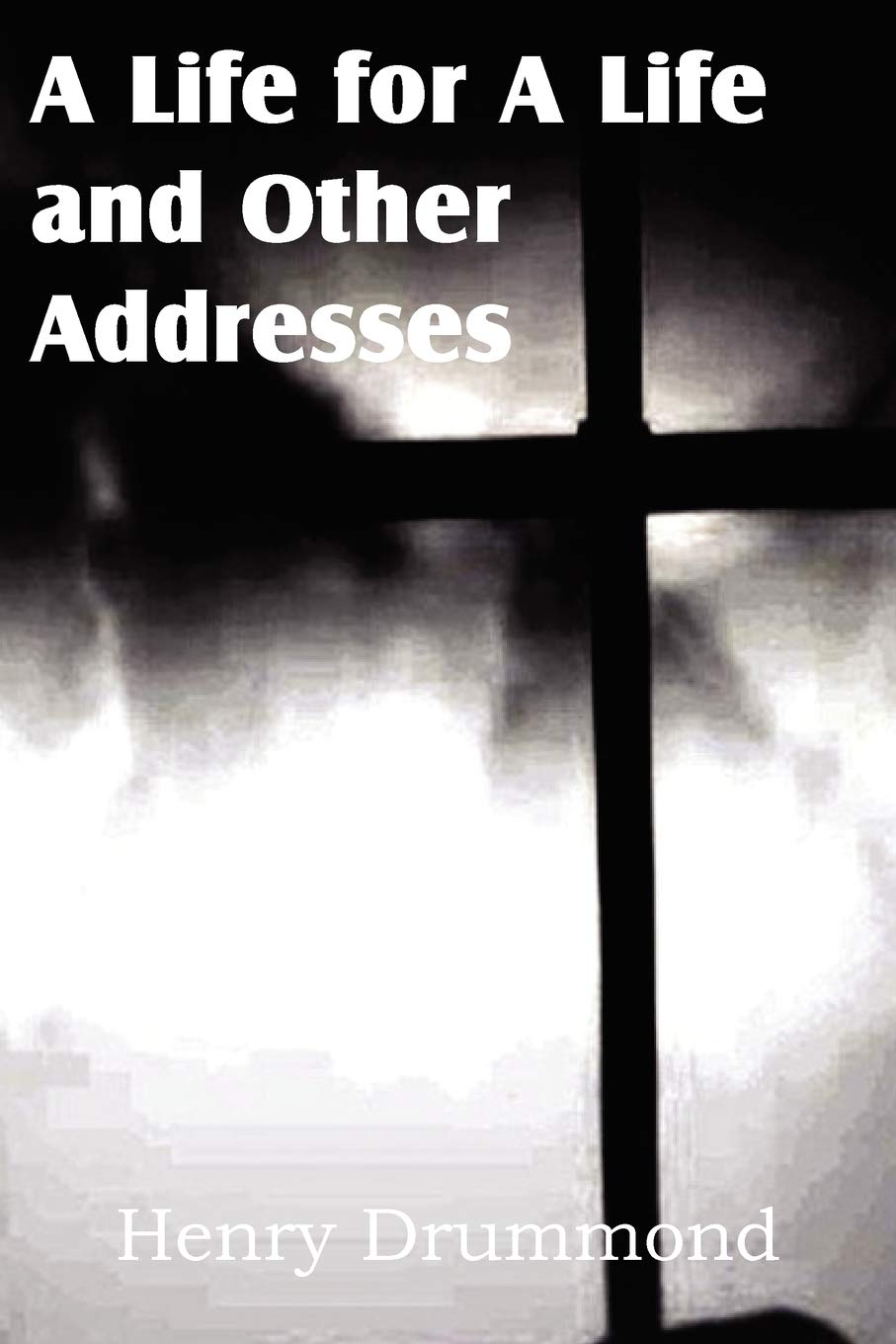
A Life for a Life and Other Addresses
A Life for a Life, and Other Addresses is a collection of religious addresses by Henry Drummond, the Scottish evangelical biologist who lived from 1851 to 1897. The collection was published in 1894 and gathers a number of his shorter addresses delivered to various audiences during his years of active lecturing in Britain and the United States. Drummond was by this point a famous figure on the religious lecture circuit and his short addresses had a wider influence than most published sermons of the period.
The title address takes its starting point from the Mosaic law of strict requital, a life for a life, and turns the phrase around. Drummond argues that the true Christian use of a human life is to give it for the service of others, and the address develops this position with the combination of biblical reference, natural history illustration, and practical example that ran through all his best work. The other addresses in the volume cover similar ground. There is a piece on temptation, one on the nature of religion in modern life, an address to young men, and several others.
What held audiences during these addresses was Drummond’s tone. He had been trained as a geologist and biologist and he carried into his religious work a habit of using examples from natural science to illustrate his points. The growth of plants, the behaviour of animals, the slow processes of geological change, all turn up in his addresses as analogies for spiritual development. This was unusual in the religious speaking of the period and gave Drummond his particular appeal at universities and to the new educated audiences who could not always follow the older theological language.
The book runs about two hundred and fifty pages and is best read a single address at a time. For readers who want more Drummond after The Greatest Thing in the World and Pax Vobiscum, this collection extends the range. It pairs naturally with The Ideal Life, his other major posthumous collection, and with the more substantial Natural Law in the Spiritual World, the long book that first established his reputation.
About the Author
Henry Drummond was a 19th-century Scottish evangelist, writer, and lecturer. He is best remembered for his essay The Greatest Thing in the World, a meditation on love.
See all books by Henry Drummond →