Leighton Court, a Country House Story
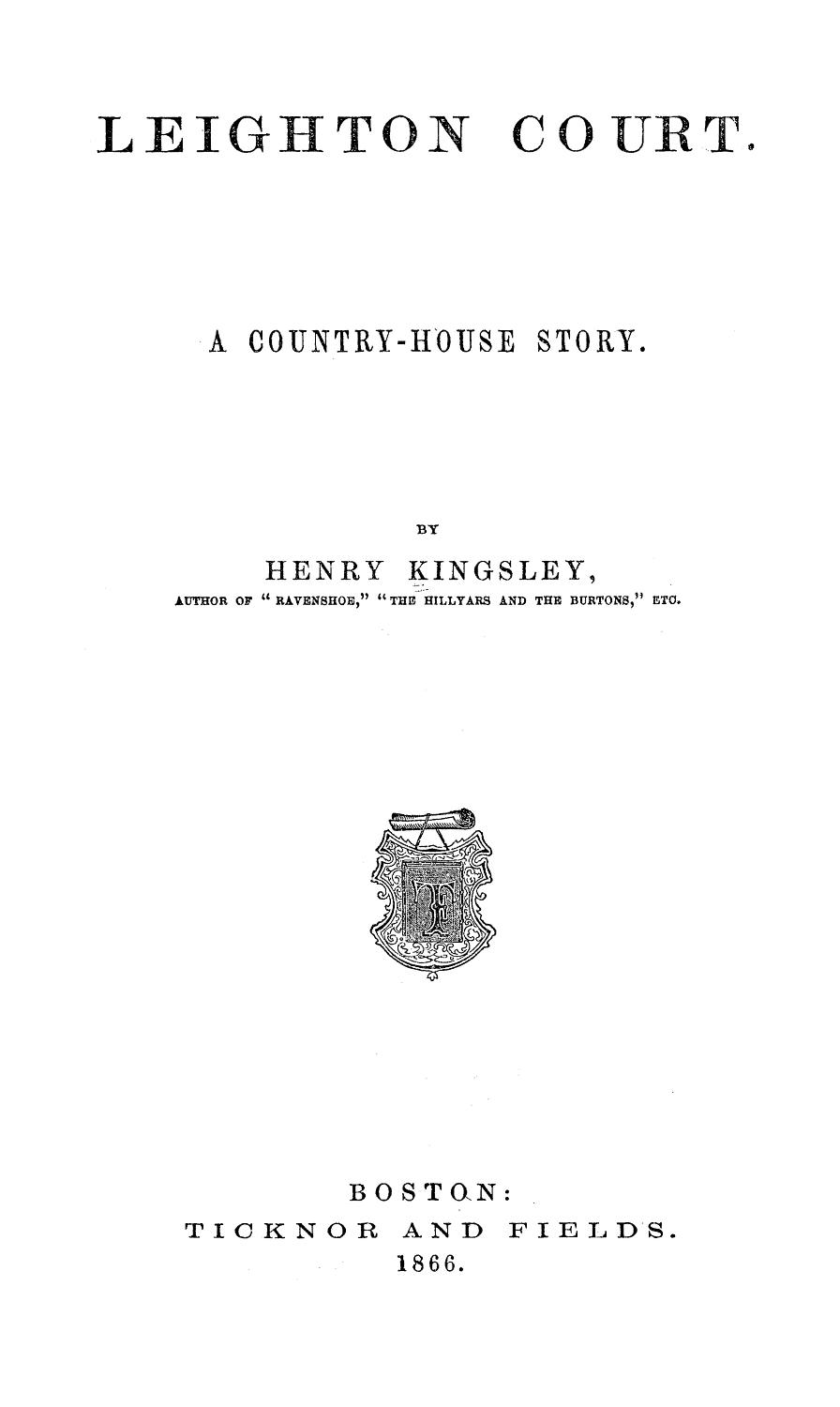
Leighton Court, a Country House Story is a short novel by Henry Kingsley, published in 1866. It is one of his lesser known books and one of the most directly conventional in its plotting. The subtitle gives the genre away. This is a country house story in the well established mid Victorian sense, set among the gentry of a single rural English estate over the course of a season, with a handful of romantic complications, a few comic minor characters, and a generally cheerful resolution.
The main action revolves around the family at Leighton Court and their various guests. There are sons and daughters of marriageable age, suitors from neighbouring families, an inheritance question that complicates several proposals, a vicar with his own private interests in the household, and a London friend who arrives unexpectedly and disrupts the careful local arrangements. Kingsley moves the characters through walks in the park, dinners at the great house, visits to neighbouring squires, and the small social events of a country season, in a way that requires no great originality but that works as competent middle range fiction of the period.
Kingsley is good on the texture of country life. He had grown up in country rectories and around country houses, and the small details of horses, dogs, gardens, and household routine are observed with affection and accuracy. The characters are mostly types rather than full individuals, but the types are handled with a light hand and the dialogue moves naturally. The romantic resolutions follow the conventions of the period without much surprise, but the small comic scenes between the minor characters are often the most enjoyable parts of the book.
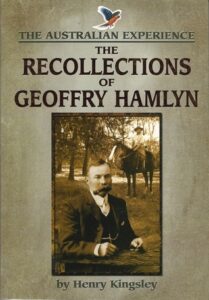
The novel is short by Kingsley’s standards, around two hundred and fifty pages, and reads quickly. It is not in the same class as Ravenshoe or The Recollections of Geoffry Hamlyn and Kingsley himself thought of it as a piece of middle range work. For readers who want a relaxed Victorian country house novel without the heavier moral apparatus of George Eliot or Trollope, this is a pleasant and undemanding read. It pairs naturally with Trollope’s shorter novels of the same period and with the cheerful comedies of Margaret Oliphant.
About the Author
Read and download 4 free books by Henry Kingsley on BDeBooks. Browse the complete collection of Henry Kingsley’s works available as free PDF and EPUB downloads. Discover novels, fiction, and other writings by Henry Kingsley in our online eBook library.
See all books by Henry Kingsley →