
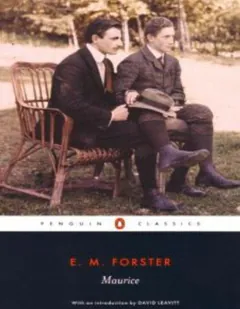
Maurice
Part
This chapter is long, so it is split into 2 parts.
12 Clive had suffered little from bewilderment as a boy. His sincere mind, with its keen sense of right and wrong, had brought him the belief that he was damned instead. Deeply religious, with a living desire to reach God and to please Him, he found himself crossed at an early age by this other desire, obviously from Sodom. He had no doubt as to what it was: his emotion, more compact than Maurice's, was not split into the brutal and the ideal, nor did he waste years in bridging the gulf. He had in him the impulse that destroyed the City of the Plain. It should not ever become carnal, but why had he out of all Christians been punished with it?
At first he thought God must be trying him, and if he did not blaspheme would recompense him like Job. He therefore bowed his head, fasted, and kept away from anyone whom he found himself inclined to like. His sixteenth year was ceaseless torture. He told no one, and finally broke down and had to be removed from school.
During the convalescence he found himself falling in love with a cousin who walked by his bath chair, a young married man. It was hopeless, he was damned.
These terrors had visited Maurice, but dimly: to Clive they were definite, continuous, and not more insistent at the Eucharist than elsewhere. He never mistook them, in spite of the rein he kept on grossness. He could control the body; it was the tainted soul that mocked his prayers.
The boy had always been a scholar, awake to the printed word, and the horrors the Bible had evoked for him were to be laid by Plato.
Never could he forget his emotion at first reading the Fhaedrus. He saw there his malady described exquisitely, calmly, as a passion
which we can direct, like any other, towards good or bad. Here was no invitation to licence. He could not believe his good fortune at first
—thought there must be some misunderstanding and that he and Plato were thinking of different things. Then he saw that the temperate pagan really did comprehend him, and, slipping past the Bible rather than opposing it, was offering a new guide for life. "To make the most of what I have." Not to crush it down, not vainly to wish that it was something else, but to cultivate it in such ways as will not vex either God or Man.
He was obliged however to throw over Christianity. Those who base their conduct upon what they are rather than upon what they ought to be, always must throw it over in the end, and besides, between Clive's temperament and that religion there is a secular feud. No clear-headed man can combine them. The temperament, to quote the legal formula, is "not to be mentioned among Christians", and a legend tells that all who shared it died on the morning of the Nativity.
Clive regretted this. He came of a family of lawyers and squires, good and able men for the most part, and he did not wish to depart from their tradition. He wished Christianity would compromise with him a little and searched the Scriptures for support. There was David and Jonathan; there was even the "disciple that Jesus loved." But the Church's interpretation was against him; he could not find any rest for his soul in her without crippling it, and withdrew higher into the classics yearly.
By eighteen he was unusually mature, and so well under control that he could allow himself to be friendly with anyone who
attracted him. Harmony had succeeded asceticism. At Cambridge he cultivated tender emotions for other undergraduates, and his life, hitherto gray, became slightly tinged with delicate hues. Cautious and sane, he advanced, nor was there anything petty in his caution.
He was ready to go further should he consider it right.
In his second year he met Risley, himself "that way." Clive did not return the confidence which was given rather freely, nor did he like Risley and his set. But he was stimulated. He was glad to know that
there were more of his sort about, and their frankness braced him into telling his mother about his agnosticism; it was all he could tell her. Mrs Durham, a worldly woman, made little protest. It was at Christmas the trouble came. Being the only gentry in the parish, the Durhams communicated sepa-ately, and to have the whole village looking on while she and her daughters knelt without Clive in the middle of that long footstool cut her with shame and stung her into anger. They quarrelled. He saw her for what she really was—
withered, unsympathetic, empty—and in his disillusion found himself thinking vividly of Hall.
Hall: he was only one of several men whom he rather liked. True he, also, had a mother and two sisters, but Clive was too level-headed to pretend this was the only bond between them. He must like Hall more than he realized—must be a little in love with him. And as soon as they met he had a rush of emotion that carried him into intimacy.
The man was bourgeois, unfinished and stupid—the worst of confidants. Yet he told about his home troubles, touched out of all proportion by his dismissal of Chapman. When Hall started teasing he was charmed. Others held off, regarding him as sedate, and he liked being thrown about by a powerful and handsome boy. It was delightful too when Hall stroked his hair: the
faces of the two people in the room would fade: he leant back till his cheek brushed the flannel of the trousers and felt the warmth strike through. He was under no illusion on these occasions. He knew what kind of pleasure he was receiving, and received it honestly, certain that it brought no harm to either of them. Hall was a man who only liked women—
one could tell that at a glance.
Towards the end of the term he noticed that Hall had acquired a peculiar and beautiful expression. It came only now and then, was subtle and lay far down; he noticed it first when they were squabbling about theology. It was affectionate, kindly, and to that extent a natural expression, but there was mixed in it something that he had not observed in the man, a touch of— impudence? He was not sure, but liked it. It recurred when they met suddenly or had been silent. It beckoned to him across intellect, saying, "This is all very well, you're clever, we know—but come!" It haunted him so that he watched for it while his brain and tongue were busy, and when it came he felt himself replying, "I'll come—I didn't know."
"You can't help yourself now. You must come."
"I don't want to help myself."
"Come then."
He did come. He flung down all the barriers—not at once, for he did not live in a house that can be destroyed in a day. All that term and through letters afterwards he made the path clear. Once certain that Hall loved him, he unloosed his own love. Hitherto it had been dalliance, a passing pleasure for body and mind. How he despised that now. Love was harmonious, immense. He poured into it the dignity as well as the richness of his being, and indeed in that well-tempered soul the two were one. There was nothing humble about Clive.
He knew his own worth, and, when he had expected to go through life without love, he had blamed circumstances rather than himself. Hall,
though attractive and beautiful, had not condescended. They would meet on an equality next term.
But books meant so much for him he forgot that they were a bewilderment to others. Had he trusted the body there would have been no disaster, but by linking their love to the past he linked it to the present, and roused in his friend's mind the conventions and the fear of the law. He realized nothing of this. What Hall said he must mean. Otherwise why should he say it? Hall loathed him—had said so, "Oh, rot"—the words hurt more than any abuse, and rang in his ears for days. Hall was the healthy normal Englishman, who had never had a glimmer of what was up.
Great was the pain, great the mortification, but worse followed. So deeply had Clive become one with the beloved that he began to loathe himself. His whole philosophy of life broke down, and the sense of sin was reborn in its ruins, and crawled along corridors. Hall had said he was a criminal, and must know. He was damned. He dare never be friends with a young man again, for fear of corrupting him. Had he not lost Hall his faith in Christianity and attempted his purity besides?
During those three weeks Clive altered immensely, and was beyond the reach of argument when Hall—good, blundering creature—came to his room to comfort him, tried this and that without success, and vanished in a gust of temper. "Oh, go to Hell, it's all you're fit for."
Never a truer word but hard to accept from the beloved. Clive's defeat increased: his life had been blown to pieces, and he felt no inward strength to rebuild it and clear out evil. His conclusion was
"Ridiculous boy! I never loved him. I only had an image I made up in my polluted mind, and may God help me to get rid of it."
But it was this image that visited his sleep, and caused him to whisper its name.
"Maurice..."
"Clive..."
"Hall!" he gasped, fully awake. Warmth was upon him. "Maurice, Maurice, Maurice___Oh Maurice—"
"I know."
"Maurice, I love you."
"I you."
They kissed, scarcely wishing it. Then Maurice vanished as he had come, through the window.
13 "I've missed two lectures already," remarked Maurice, who was breakfasting in his pyjamas.
"Cut them all—he'll only gate you."
"Will you come out in the side-car?"
"Yes, but a long way," said Clive, lighting a cigarette. "I can't stick Cambridge in this weather. Let's get right outside it ever so far and bathe. I can work as we go along—Oh damnation!"— for there were
steps on the stairs. Joey Fetherstonhaugh looked in and asked one or other of them to play tennis with him that afternoon. Maurice accepted.
"Maurice! What did you do that for, you fool?"
"Cleared him out quickest. Clive, meet me at the garage in twenty minutes, bring your putrid books, and borrow Joey's goggles. I must dress. Bring some lunch too."
"What about horses instead?"
"Too slow."
They met as arranged. Joey's goggles had offered no difficulty, as he had been out. But as they threaded Jesus Lane they were hailed by the Dean.
"Hall, haven't you a lecture?"
"I overslept," called Maurice contemptuously.
"Hall! Hall! Stop when I speak."
Maurice went on. "No good arguing," he observed.
"Not the least."
They swirled across the bridge and into the Ely road. Maurice said,
"Now we'll go to Hell." The machine was powerful, he reckless naturally. It leapt forward into the fens and the receding dome of die sky. They became a cloud of dust, a stench, and a roar to the world, but the air they breathed was pure, and all the noise they heard was the long drawn cheer of the wind. They cared for no one, they were outside humanity, and death, had it come, would only have continued their pursuit of a retreating horizon. A tower, a town—it had been Ely—were behind them, in front the same sky, paling at last as though heralding the sea. "Right turn," again, then "left,"
"right," until all sense of direction was gone. There was a rip, a grate.
Maurice took no notice. A noise arose as of a thousand pebbles being shaken together between his legs. No accident occurred, but the machine came to a standstill among the dark black fields. The song of the lark was heard, the trail of dust began to settle behind them. They were alone.
"Let's eat," said Clive.
They ate on a grassy embankment. Above them the waters of a dyke moved imperceptibly, and reflected interminable willow trees. Man, who had created the whole landscape, was nowhere to be seen.
After lunch Clive thought he ought to work. He spread out his books and was asleep in ten minutes. Maurice lay up by the water, smoking. A farmer's cart appeared, and it did occur to him to ask which county they were in. But he said nothing, nor did the farmer appear to notice him. When Clive awoke it was past three. "We shall want some tea soon," was his contribution.
"All right. Can you mend that bloody bike?"
"Oh yes, didn't something jam?" He yawned and walked down to the machine. "No, I can't, Maurice, can you?"
"Rather not."
They laid their cheeks together and began laughing. The smash struck them as extraordinarily funny. Grandpapa's present too! He had given it to Maurice against his coming of age in August. Clive said, "How if we left it and walked?"
"Yes, who'd do it any harm? Leave the coats and things inside it.
Likewise Joey's goggles."
"What about my books?"
"Leave 'em too."
"I shan't want them after hall?"
"Oh, I don't know. Tea's more important than hall. It stands to reason
—well what are you giggling at?—that if we follow a dyke long enough we must come to a pub."
"Why, they use it to water their beer!"
Maurice smote him on the ribs, and for ten minutes they played up amongst the trees, too silly for speech. Pensive again, they stood close together, then hid the bicycle behind dog roses, and started.
Clive took his notebook away with him, but it did not survive in any useful form, for the dyke they were following branched.
"We must wade this," he said. "We can't go round or we shall never get anywhere. Maurice, look—we must keep in a bee line south."
"All right."
It did not matter which of them suggested what that day; the other always agreed. Clive took off his shoes and socks and rolled his trousers up. Then he stepped upon the brown surface of the dyke and vanished. He reappeared swimming.
"All that deep!" he spluttered, climbing out. "Maurice, no idea! Had you?"
Maurice cried, "I say, I must bathe properly." He did so, while Clive carried his clothes. The light grew radiant. Presently they came to a farm.
The farmer's wife was inhospitable and ungracious, but they spoke of her afterwards as "absolutely ripping." She did in the end give them tea and allow Clive to dry near her kitchen fire. She "left payment to them," and, when they overpaid her, grumbled. Nothing checked their spirits. They transmuted everything.
"Goodbye, we're greatly obliged," said Clive. "And if any of your men come across the bike: I wish we could describe where we left it better. Anyhow I'll give you my friend's card. Tie it on the bike if they
will be so kind, and bring it down to the nearest station. Something of the sort, I don't know. The station master will wire to us."
The station was five miles on. When they reached it the sun was low, and they were not back in Cambridge till after hall. All this last part of the day was perfect. The train, for some unknown reason, was full, and they sat close together, talking quietly under the hubbub, and smiling. When they parted it was in the ordinary way: neither had an impulse to say anything special. The whole day had been ordinary.
Yet it had never come before to either of them, nor was it to be repeated.
14 The Dean sent Maurice down. Mr Cornwallis was not a severe official, and the boy had a tolerable record, but he could not overlook so gross a breach of discipline. "And why did you not stop when I called you, Hall?" Hall made no answer, did not even look sorry. He had a smouldering eye, and Mr Cornwallis, though much annoyed, realized that he was confronted with a man. In a dead, bloodless way, he even guessed what had happened.
"Yesterday you cut chapel, four lectures, including my own translation class, and hall. You have done this sort of thing before. It's unnecessary to add impertinence, don't you think?
Well? No reply? You will go down and inform your mother of the reason. I shall inform her too. Until you write me a letter of apology, I shall not recommend your readmission to the college in October. Catch the twelve o'clock."
"All right."
Mr Cornwallis motioned him out.
No punishment was inflicted on Durham. He had been let off all lectures in view of his Tripos, and even if he had been remiss the Dean would not have worried him; the best classical scholar of his year, he had won special treatment. A good thing he would no longer be distracted by Hall. Mr Cornwallis always suspected such friendships. It was not natural that men of different characters and tastes should be intimate, and although undergraduates, unlike schoolboys, are officially normal, the dons exercised a certain amount of watchfulness, and felt it right to spoil a love affair when they could.
Clive helped him pack, and saw him off. He said little, lest he depressed his friend, who was still in the heroics, but his heart sank.
It was his last term, for his mother would not let him stay up a fourth year, which meant that he and Maurice would never meet in Cambridge again. Their love belonged to it, and particularly to their rooms, so that he could not conceive of their meeting anywhere else.
He wished that Maurice had not taken up a strong line with the Dean, but it was too late now, and that the side-car had not been lost. He connected that side-car with intensities—the agony of the tennis court, the joy of yesterday. Bound in a single motion, they seemed there closer to one another than elsewhere; the machine took on a life of its own, in which they met and realized the unity preached by Plato. It had gone, and when Maurice's train went also, actually tearing hand from hand, he broke down, and returning to his room wrote passionate sheets of despair.
Maurice received the letter the next morning. It completed what his family had begun, and he had his first explosion of rage against the world.
15 "I can`t apologize, mother—I explained last night there's nothing to apologize about. They had no right to send me down when everyone cuts lectures. It's pure spite, and you can ask anyone—
Ada, do try turning on the coffee instead of the salt water."
She sobbed, "Maurice, you've upset mother: how can you be so unkind and brutal?"
"I'm sure I don't mean to be. I don't see I've been unkind. I shall go straight into the business now, like father did, without taking one of their rotten degrees. I see no harm in that."
"You might have kept your poor father out, he never had any unpleasantness," said Mrs Hall. "Oh Morrie, my darling—and we did so look forward to Cambridge."
"All this crying's a mistake," announced Kitty, who aspired to the functions of a tonic. "It only makes Maurice tfunk he's important,
which he isn't: he'll write to the Dean as soon as no one wants him to."
"I shan't. It's unsuitable," replied her brother, hard as iron.
"I don't see that."
"Little girls don't see a good deal."
"I'm not so sure!"
He glanced at her. But she only said that she saw a good deal more than some little boys who thought themselves little men. She was merely maundering, and the fear, tinged with respect,
i
that had arisen in him died down. No, he couldn't apologize. He had done nothing wrong and wouldn't say he had, it was the first taste of honesty he had known for years, and honesty is like blood. In his unbending mood the boy thought it would be possible to live without compromise, and ignore all that didn't yield to himself and Clive!
Clive's letter had maddened him. No doubt he is stupid—the sensible lover would apologize and get back to comfort his friend—
but it was the stupidity of passion, which would rather have nothing than a little.
They continued talking and weeping. At last he rose, said, "I can't eat to this accompaniment," and went into the garden. His mother followed with a tray. Her very softness enraged him, for love develops the athlete. It cost her nothing to muck about with tender words and toast: she only wanted to make him soft too.
She wanted to know whether she had heard rightly, was he refusing to apologize? She wondered what her father would say, and incidentally learnt that the birthday gift was lying beside some East Anglian drove. She grew seriously concerned, for its loss was more intelligible to her than the loss of a degree. The girls minded too.
They mourned the bicycle for the rest of the morning, and, though Maurice could always silence them or send them out of earshot, he felt that their pliancy might sap his strength again, as in the Easter vacation.
In the afternoon he had a collapse. He remembered that Clive and he had only been together one day! And they had spent it careering about like fools—instead of in one another's arms! Maurice did not know that they had thus spent it perfectly—he was too young to detect the triviality of contact for contact's sake. Though restrained by his friend, he would have surfeited passion. Later on, when his love took second strength, he realized how well Fate had served him. The one embrace in the
darkness, the one long day in the light and the wind, were twin columns, each useless without the other. And all the agony of separation that he went through now, instead of destroying, was to fulfil.
He tried to answer Clive's letter. Already he feared to ring false. In the evening he received another, composed of the words "Maurice! I love you." He answered, "Clive, I love you." Then they wrote every day and for all their care created new images in each other's hearts.
Letters distort even more quickly than silence. A terror seized Clive that something was going wrong, and just before his exam he got leave to run down to town. Maurice lunched with him. It was horrible.
Both were tired, and they had chosen a restaurant where they could not hear themselves speak. "I haven't enjoyed it," said Clive when he wished goodbye. Maurice felt relieved. He had pretended to himself that he had enjoyed it, and thus increased his misery. They agreed that they would confine themselves to facts in their letters, and only write when anything was urgent. The emotional strain relaxed, and Maurice, nearer to brain fever than he supposed, had several dreamless nights that healed him. But daily life remained a poor business.
His position at home was anomalous: Mrs Hall wished that someone would decide it for her. He looked like a man and had turned out the
Howells last Easter; but on the other hand he had been sent down from Cambridge and was not yet twenty-one. What was his place in her house? Instigated by Kitty, she tried to assert herself, but Maurice, after a genuine look of surprise, laid back his ears. Mrs Hall wavered, and, though fond of her son, took the unwise step of appealing to Dr Barry. Maurice was asked to go round one evening to be talked to.
"Well, Maurice, and how goes the career? Not quite as you expected, eh?"
Maurice was still afraid of their neighbour.
"Not quite as your mother expected, which is more to the point."
"Not quite as anyone expected," said Maurice, looking at his hands.
Dr Barry then said, "Oh, it's all for the best. What do you want with a University Degree? It was never intended for the suburban classes.
You're not going to be either a parson or a barrister or a pedagogue.
And you are not a county gentleman. Sheer waste of time. Get into harness at once. Quite right to insult the Dean. The city's your place.
Your mother—" He paused and lit a cigar, the boy had been offered nothing. "Your mother doesn't understand this, Worrying because you don't apologize. For my own part I think these things right themselves. You got into an atmosphere for which you are not suited, and you've very properly taken the first opportunity to get out of it."
"How do you mean, sir?"
"Oh. Not sufficiently clear? I mean that the county gentleman would apologize by instinct if he found he had behaved like a cad. You've a different tradition."
"I think I must be getting home now," said Maurice, not without dignity.
"Yes, I think you must. I didn't invite you to have a pleasant evening, as I hope you have realized."
"You've spoken straight—perhaps some day I shall too. I know I'd like to."
This set the Doctor off, and he cried:
"How dare you bully your mother, Maurice. You ought to be horsewhipped. You young puppy! Swaggering about instead of asking her to forgive you! I know all about it. She came here with tears in her eyes and asked me to speak. She and your sisters are my respected neighbours, and as long as a woman calls me I'm at her service. Don't answer me, sir, don't answer, I want none of your speech, straight or otherwise. You are a disgrace to chivalry. I don't know what the world is coming to. I dont know what the world—I'm disappointed and disgusted with you."
Maurice, outside at last, mopped his forehead. He was ashamed in a way. He knew he had behaved badly to his mother, and all the snob in him had been touched to the raw. But somehow he could not retract, could not alter. Once out of the rut, he seemed out of it for ever. "A disgrace to chivalry." He considered the accusation. If a woman had been in that side-car, if then he had refused to stop at the Dean's bidding, would Dr Barry have required an apology from him? Surely not. He followed out this train of thought with difficulty.
His brain was still feeble. But he was obliged to use it, for so much in current speech and ideas needed translation before he could understand them.
His mother met him, looking ashamed herself; she felt, as he did, that she ought to have done her own scolding. Maurice had grown up, she complained to Kitty; the children went from one; it was all very sad. Kitty asserted her brother was still nothing but a boy, but all these women had a sense of some change in his mouth and eyes and voice since he had faced Dr Barry.
16 The Durhams lived in a remote part of England on the Wilts and Somerset border. Though not an old family they had held land for four generations, and its influence had passed into them. Clive's great-great-uncle had been Lord Chief Justice in the reign of George IV, and the nest he had feathered was Penge. The feathers were inclined to blow about now. A hundred years had nibbled into the fortune, which no wealthy bride had replenished, and both house and estate were marked, not indeed with decay, but with the immobility that precedes it.
The house lay among woods. A park, still ridged with the lines of vanished hedges, stretched around, giving light and air and pasture to horses and Alderney cows. Beyond it the trees began, most planted by old Sir Edwin, who had annexed the common lands.
There were two entrances to the park, one up by the village, the other on the clayey road that went to the station. There had been no station in the old days, and the approach from it, which was undignified and led by the back premises, typified an afterthought of England's.
Maurice arrived in the evening. He had travelled straight from his grandfather's at Birmingham, where, rather tepidly, he had come of age. Though in disgrace, he had not been mulcted of his presents, but they were given and received without enthusiasm. He had looked forward so much to being
twenty-one. Kitty implied that he did not enjoy it because he had gone to the bad. Quite nicely he pinched her ear for this and kissed her, which annoyed her a good deal. "You have no sense of things,"
she said crossly. He smiled.
From Alfriston Gardens, with its cousins and meat teas, the change to Penge was immense. County families, even when intelligent, have something alarming about them, and Maurice approached any seat with awe. True, Clive had met him and was with him in the brougham, but then so was a Mrs Sheepshanks, who had arrived by his train. Mrs Sheepshanks had a maid, following behind with her luggage and his in a cab, and he wondered whether he ought to
have brought a servant too. The lodge gate was held by a little girl.
Mrs Sheepshanks wished everyone curtsied. Clive trod on his foot when she said this, but he wasn't sure whether accidentally. He was sure of nothing. When they approached he mistook the back for the front, and prepared to open the door. Mrs Sheepshanks said, "Oh, but that's complimentary." Besides, there was a butler to open the door.
Tea, very bitter, was awaiting them, and Mrs Durham looked one way while she poured out the other. People stood about, all looking distinguished or there for some distinguished reason. They were doing things or causing others to do them: Miss Durham booked him to canvass tomorrow for Tariff Reform. They agreed politically; but the cry with which she greeted his alliance did not please him.
"Mother, Mr Hall is sound." Major Western, a cousin also stopping in the house, would ask him about Cambridge. Did Army men mind one being sent down? . . . No, it was worse than the restaurant, for there Clive had been out of his element too.
"Pippa, does Mr Hall know his room?"
'The Blue Room, mama."
"The one with no fireplace," called Clive. "Show him up." He was seeing off some callers.
Miss Durham passed Maurice on to the butler. They went up a side staircase. Maurice saw the main flight to the right, and wondered whether he was being slighted. His room was small, furnished cheaply. It had no outlook. As he knelt down to unpack, a feeling of Sunnington came over him, and he determined, while he was at Penge, to work through all his clothes. They shouldn't suppose he was unfashionable; he was as good as anyone. But he had scarcely reached this conclusion when Clive rushed in with the sunlight behind him. "Maurice, I shall kiss you," he said, and did so.
"Where—what's through there?"
"Our study—" He was laughing, his expression wild and radiant.
"Oh, so that's why—"
"Maurice! Maurice! you've actually come. You're here. This place'll never seem the same again, I shall love it at last."
"It's jolly for me coming," said Maurice chokily: the sudden rush of joy made his head swim.
"Go on unpacking. So I arranged it on purpose. We're up this staircase by ourselves. It's as like college as I could manage."
"It's better."
"I really feel it will be."
There was a knock on the passage door. Maurice started, but Clive though still sitting on his shoulder said, "Come in!" indifferently. A housemaid entered with hot water.
"Except for meals we need never be in the other part of the house,"
he continued. "Either here or out of doors. Jolly, eh? I've a piano." He drew him into the study. "Look at the view. You may shoot rabbits out of this window. By the way, if my mother or Pippa tells you at dinner that they want you to do
this or that tomorrow, you needn't worry. Say 'yes' to them if you like.
You're actually going to ride with me, and they know it. It's only their ritual. On Sunday, when you haven't been to church they'll pretend afterwards you were there."
"But I've no proper riding breeches."
"I can't associate with you in that case," said Clive and bounded off.
When Maurice returned to the drawing-room he felt he had a greater right to be there than anyone. He walked up to Mrs Sheepshanks, opened his mouth before she could open hers, and was encouraging
to her. He took his place in the absurd octet that was forming to go in
—Clive and Mrs Sheepshanks, Major Western and another woman, another man and Pippa, himself and his hostess. She apologized for the smallness of the party.
"Not at all," said Maurice, and saw Clive glance at him maliciously: he had used the wrong tag. Mrs Durham then put him. through his paces, but he did not care a damn whether he satisfied her or not.
She had her son's features and seemed equally able, though not equally sincere. He understood why Clive should have come to despise her.
After dinner the men smoked, then joined the ladies. It was a suburban evening, but with a difference; these people had the air of settling something: they either just had arranged or soon would rearrange England. Yet the gate posts, the roads—he had noticed them on the way up—were in bad repair, and the timber wasn't kept properly, the windows stuck, the boards creaked. He was less impressed than he had expected by Penge.
When the ladies retired Clive said, "Maurice, you look sleepy too."
Maurice took the hint, and five minutes afterwards they met again in the study, with all the night to talk into. They lit their pipes. It was the first time they had experienced full tran—
quillity together, and exquisite words would be spoken. They knew this, yet scarcely wanted to begin.
"I'll tell you my latest now," said Clive. "As soon as I got home I had a row with mother and told her I should stop up a fourth year."
Maurice gave a cry.
"What's wrong?"
"I've been sent down."
"But you're coming back in October."
"I'm not. Cornwallis said I must apologize, and I wouldn't— I thought you wouldn't be up, so I didn't care."
"And I settled to stop because I thought you would be up. Comedy of Errors."
Maurice stared gloomily before him.
"Comedy of Errors, not Tragedy. You can apologize now."
"It's too late."
Clive laughed. "Why too late? It makes it simpler. You didn't like to apologize until the term in which your offence was committed had come to an end. 'Dear Mr Cornwallis: Now that the term is over, I venture to write to you.' I'll draft the letter tomorrow."
Maurice pondered and finally exclaimed, "Clive, you're a devil."
"I'm a bit of an outlaw, I grant, but it serves these people right. As long as they talk of the unspeakable vice of the Greeks they can't expect fair play. It served my mother right when I slipped up to kiss you before dinner. She would have no mercy if she knew, she wouldn't attempt, wouldn't want to attempt to understand that I feel to you as Pippa to her fiance, only far more nobly, far more deeply, body and soul, no starved medievalism of course, only a—a particular harmony of body and soul that I don't think women have even guessed. But you know."
"Yes. I'll apologize."
There was a long interval: they discussed the motor bicycle, which had never been heard of again. Clive made coffee.
"Tell me, what made you wake me that night after the Debating Society. Describe."
"I kept on thinking of something to say, and couldn't, so at last I couldn't even think, so I just came."
"Sort of thing you would do."
"Are you ragging?" asked Maurice shyly.
"My God!" There was a silence. "Tell me now about the night I first came up. Why did you make us both so unhappy?"
"I don't know, I say. I can't explain anything. Why did you mislead me with that rotten Plato? I was still in a muddle. A lot of things hadn't joined up in me that since have."
"But hadn't you been getting hold of me for months? Since first you saw me at Risley's, in fact."
"Don't ask me."
"It's a queer business, any way."
"It's that."
Clive laughed delightedly, and wriggled in his chair. "Maurice, the more I think it over the more certain I am that it's you who are the devil."
"Oh, all right."
"I should have gone through life half awake if you'd had the decency to leave me alone. Awake intellectually, yes, and emotionally in a way; but here—" He pointed with his pipe stem to his heart; and both smiled. "Perhaps we woke up one another. I like to think that any way."
"When did you first care about me?"
"Don't ask me," echoed Clive.
"Oh, be a bit serious—well—what was it in me you first cared about?"
"Like really to know?" asked Clive, who was in the mood Maurice adored—half mischievous, half passionate; a mood of supreme affection.
"Yes."
"Well, it was your beauty."
"My what?"
"Beauty. ... I used to admire that man over the bookcase most."
"I can give points to a picture, I dare say," said Maurice, having glanced at the Michelangelo. "Clive, you're a silly little fool, and since you've brought it up I think you're beautiful, the only beautiful person I've ever seen. I love your voice and everything to do with you, down to your clothes or the room you are sitting in. I adore you."
Clive went crimson. "Sit up straight and let's change the subject," he said, all the folly out of him.
"I didn't mean to annoy you at all—"
"Those things must be said once, or we should never know they were in each other's hearts. I hadn't guessed, not so much at least. You've done all right, Maurice." He did not change the subject but developed it into another that had interested him recently, the precise influence of Desire upon our aesthetic judgements. "Look at that picture, for instance. I love it because, like the painter himself, I love the subject. I don't judge it with eyes of the normal man. There seem two roads for arriving at Beauty—one is in common, and all the world has reached Michelangelo by it, but the other is private to me and a few more. We come to him by both roads. On the other hand Greuze —his subject matter repels me. I can only get to him down one road. The rest of the world finds two."
Maurice did not interrupt: it was all charming nonsense to him.
"These private roads are perhaps a mistake," concluded Clive. "But as long as the human figure is painted they will be taken. Landscape is the only safe subject—or perhaps something geometric, rhythmical, inhuman absolutely. I wonder whether that is what the Mohammedans were up to and old Moses—I've just thought of this.
If you introduce the human figure you at once arouse either disgust or desire. Very faintiy sometimes, but it's there. 'Thou shalt not make for thyself any graven image—' because one couldn't possibly make it for all other people too. Maurice, shall we rewrite history? 'The Aesthetic Philosophy of the Decalogue.' I've always thought it remarkable of God not to have damned you or me in it. I used to put it down to him for righteousness, though now I suspect he was merely ill-informed. Still I might make out a case. Shall I choose it for a Fellowship Dissertation?"
"I can't follow, you know," said Maurice, a little ashamed.
And their love scene drew out, having the inestimable gain of a new language. No tradition overawed the boys. No convention settled what was poetic, what absurd. They were concerned with a passion that few English minds have admitted, and so created untrammelled.
Something of exquisite beauty arose in the mind of each at last, something unforgettable and eternal, but built of the humblest scraps of speech and from the simplest emotions.
"I say, will you kiss me?" asked Maurice, when the sparrows woke in the eaves above them, and far out in the woods the ringdoves began to coo.
Clive shook his head, and smiling they parted, having established perfection in their lives, at all events for a time.
17 It seems strange that Maurice should have won any respect from the Durham family, but they did not
dislike him. They only disliked people who wanted to know them well
—it was a positive mania—and the rumour that a man wished to enter county society was a sufficient reason for excluding him from it.
Inside (region of high interchange and dignified movements that meant nothing) were to be found several who, like Mr Hall, neither loved their fate nor feared it, and would depart without a sigh if necessary. The Durhams felt they were conferring a favour on him by treating him as one of themselves, yet were pleased he should
take it as a matter of course, gratitude being mysteriously connected in their minds with ill breeding.
Wanting only his food and his friend, Maurice did not observe he was a success, and was surprised when the old lady claimed him for a talk towards the end of his visit. She had questioned him about his family and discovered the riakedness thereof, but this time her manner was deferential: she wanted his opinion of Clive.
"Mr Hall, we wish you to help us: Clive thinks so much of you. Do you consider it wise for him to stop up a fourth year at Cambridge?"
Maurice was wanting to wonder which horse he should ride in the afternoon: he only half attended, which gave an appearance of profundity.
"After the deplorable exhibition he has made of himself in the Tripos
—is it wise?"
"He means to," said Maurice.
Mrs Durham nodded. "There you have gone to the root of the matter.
Clive means to. Well, he is his own master. This place is his. Did he tell you?"
"No."
"Oh, Penge is his absolutely, under my husband's will. I must move to the dower house as soon as he marries—"
Maurice started; she looked at him and saw that he had coloured.
"So there is some girl," she thought. Neglecting the point for a moment, she returned to Cambridge, and observed how little a fourth year would profit a "yokel"—she used the word with gay assurance—
and how desirable it was that Clive should take his place in the countryside. There was the game, there were his tenants, there were finally politics. "His father represented the division, as you doubtless know."
"No."
"What does he talk to you about?" she laughed. "Anyhow, my husband was a member for seven years, and though a Lib is in now, one knows that cannot last. All our old friends are looking to him. But he must take his place, he must fit himself, and what on earth is the good of all this—I forget what—advanced work. He ought to spend the year travelling instead. He must go to America and if possible the Colonies. It has become absolutely indispensable."
"He speaks of travelling after Cambridge. He wants me to
"I trust you will—but not Greece, Mr Hall. That is travelling for play.
Do dissuade him from Italy and Greece."
"I'd prefer America myself."
"Naturally—anyone sensible would; but he's a student—a dreamer—
Pippa says he writes verse. Have you seen any?"
Maurice had seen a poem to himself. Conscious that life grew daily more amazing, he said nothing. Was he the same man who eight months back had been puzzled by Risley? What had deepened his vision? Section after section the armies of humanity were coming alive.
Alive, but slightly absurd; they misunderstood him so utterly: they exposed their weakness when they thought themselves most acute. He could not help smiling.
"You evidently have . . ." Then suddenly^ "Mr Hall, is there anyone? Some Newnham girl?
Pippa declares there is."
"Pippa had better ask then," Maurice replied.
Mrs Durham was impressed. He had met one impertinence with another. Who would have expected such skill in a young man? He seemed even indifferent to his victory, and was smiling to one of the other guests, who approached over the lawn to tea. In the tones that she reserved for an equal she said, "Impress on him about America anyhow. He needs reality. I noticed that last year."
Maurice duly impressed, when they were riding through the glades alone.
"I thought you were going down," was Clive's comment. "Like them. They wouldn't look at Joey." Clive was in full reaction against his family, he hated the worldliness that they combined with complete ignorance of the World. "These children will be a nuisance," he remarked during a canter.
"What children?"
"Mine! The need of an heir for Penge. My mother calls it marriage, but that was all she was thinking of."
Maurice was silent. It had not occurred to him before that neither he nor his friend would leave life behind them.
"I shall be worried eternally. They've always some girl staying in the house as it is."
"Just go on growing old—"
"Eh, boy?"
"Nothing," said Maurice, and reined up. An immense sadness —he believed himself beyond such irritants—had risen up in his soul. He and the beloved would vanish utterly—would continue neither in Heaven nor on Earth. They had won past the conventions, but Nature still faced them, saying with even voice, "Very well, you are thus; I blame none of my children. But you must go the way of all sterility." The thought that he was sterile weighed on the young man with a sudden shame. His mother or Mrs Durham might lack mind or heart, but they had done visible work; they had handed on the torch their sons would tread out.
He had meant not to trouble Clive, but out it all came as soon as they lay down in the fern.
Clive did not agree. "Why children?" he asked. "Why always children? For love to end where it begins is far more beautiful, and Nature knows it."
"Yes, but if everyone—"
Clive pulled him back into themselves. He murmured something about Eternity in an hour: Maurice did not understand, but the voice soothed him.
18 During the next two years Maurice and Clive had as much happiness as men under that star can expect. They were affectionate and consistent by nature, and, thanks to Clive, extremely sensible. Clive knew that ecstasy cannot last, but can carve a channel for
something lasting, and he contrived a relation that proved permanent. If Maurice made love it was Clive who preserved it, and caused its rivers to water the gar' den. He could not bear that one drop should be wasted, either in bitterness or in sentimentality, and as time went on they abstained from avowals ("we have said everything") and almost from caresses.
Their happiness was to be together; they radiated something of their calm amongst others, and could take their place in society.
Clive had expanded in this direction ever since he had understood Greek. The love that Socrates bore Phaedo now lay within his reach, love passionate but temperate, such as only finer natures can understand, and he found in Maurice a nature that was not indeed fine, but charmingly willing. He led the beloved up a narrow and beautiful path, high above either abyss. It went on until the final darkness—he could see no other terror—and when that descended they would at all events have lived more fully than either saint or sensualist, and would have extracted to their utmost the nobility and sweetness of the world. He educated Maurice, or rather his spirit educated Maurice's spirit, for they themselves became equal. Neither thought "Am I led; am I leading?" Love had caught him out of triviality and Maurice out of bewilderment in order that two imperfect souls might touch perfection.
So they proceeded outwardly like other men. Society received them, as she receives thousands like them. Behind Society slumbered the Law. They had their last year at Cambridge together, they travelled in Italy. Then the prison house closed, but on both of them. Clive was working for the bar, Maurice harnessed to an office. They were together still.
19 By this time their families had become acquainted.
"They will never get on," they had agreed. "They belong to different sections of society." But, perhaps out of perversity, the families did get on, and Clive and Maurice found amusement in seeing them together. Both were misogynists, Clive especially. In the grip of their temperaments, they had not developed the imagination to do duty instead, and during their love women had become as remote as horses or cats; all that the creatures did seemed silly. When Kitty asked to hold Pippa's baby, when Mrs Durham and Mrs Hall visited the Royal Academy in unison, they saw a misfit in nature rather than in society, and gave wild explanations. There was nothing strange really: they themselves were sufficient cause.