
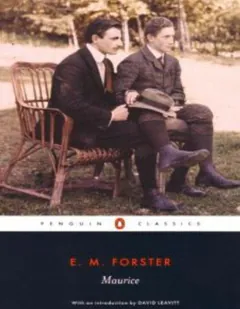
Maurice
Part
This chapter is long, so it is split into 2 parts.
In the first glow of his engagement, when she was the whole world to him, the Acropolis included, he thought of confessing to her about
Maurice. She had confessed a peccadillo to him. But loyalty to his friend withheld him, and he was glad afterwards, for, immortal as Anne proved, she was not Pallas Athene, and there were many points on which he could not touch. Their own union became the chief of these. When he arrived in her room after marriage, she did not know what he wanted. Despite an elaborate education, no one had told her about sex. Clive was as considerate as possible, but he scared her terribly, and left feeling she hated him. She did not. She welcomed him on future nights. But it was always without a word.
They united in a world that bore no reference to the daily, and this secrecy drew after it much else of their lives. So much could never be mentioned. He never saw her naked, nor she him. They ignored the reproductive and the digestive functions. So there would never be any question of this episode of his immaturity.
It was unmentionable. It didn't stand between him and her. She stood between him and it, and on second thoughts he was glad, for though not disgraceful it had been sentimental and deserved oblivion.
Secrecy suited him, at least he adopted it without regret. He had never itched to call a spade a spade, and though he valued the body the actual deed of sex seemed to him unimaginative, and best veiled in night. Between men it is inexcusable, between man and woman it may be practised since nature and society approve, but never discussed nor vaunted. His ideal of marriage was temperate and graceful, like all his ideals, and he found a fit helpmate in Anne, who had refinement herself, and admired it in others. They loved each other tenderly. Beautiful conventions received them—while beyond the barrier Maurice wandered, the wrong words on his lips and the wrong desires in his heart, and his arms full of air.
34 Maurice took a week's holiday in August and reached Penge according to invitation three days before the Park v. Village cricket match. He arrived in an odd and bitter mood. He had been thinking over Risley's hypnotist, and grew much inclined to consult him. It was such a nuisance. For instance, as he drove up through the park he saw a gamekeeper dallying with two of the maids, and felt a pang of envy. The girls were damned ugly, which the man wasn't:
somehow this made it worse, and he stared at the trio, feeling cruel and respectable; the girls broke away giggling, the man returned the stare furtively and then thought it safer to touch his cap; he had spoilt that little game. But they would meet again when he had passed, and all over the world girls would meet men, to kiss them and be kissed; might it not be better to alter his temperament and toe the line? He would decide after his visit—for against hope he was still hoping for something from Clive.
"Clive's out," said the young hostess. "He sends you his love or something, and will be in to dinner. Archie London will look after you, but I don't believe you want looking after."
Maurice smiled and accepted some tea. The drawing-room had its old air. Groups of people stood about with the air of arranging something, and though Clive's mother no longer presided she remained in residence, owing to the dower house drains. The sense of dilapidation had increased. Through pouring rain he had noticed gate posts crooked, trees stifling, and
indoors some bright wedding presents showed as patches on a threadbare garment. Miss Woods had brought no money to Penge.
She was accomplished and delightful, but she belonged to the same class as the Durhams, and every year England grew less inclined to pay her highly.
"Clive's canvassing," she continued, "there'll be a by-election in the autumn. He has at last induced them to induce him to stand"; she had the aristocratic knack of anticipating criticism. "But seriously, it will be a wonderful thing for the poor if he gets in. He is their truest friend, if only they knew it."
Maurice nodded. He felt disposed to discuss social problems. "They want drilling a bit," he said.
"Yes, they need a leader," said a gentle but distinguished voice, "and until they find one they will suffer." Anne introduced the new rector, Mr Borenius. He was her own importation. Clive did not mind whom
he appointed if the man was a gentleman and devoted himself to the village. Mr Borenius fulfilled both conditions, and as he was High Church might strike a balance against the outgoing incumbent, who had been Low.
"Oh Mr Borenius, how interesting!" the old lady cried from across the room. "But I suppose in your opinion we all want a leader. I quite agree." She darted her eyes hither and thither. "AH of you want a leader, I repeat." And Mr Borenius's eyes followed hers, perhaps looking for something he did not find, for he soon took leave.
"He can't have anything to do at the Rectory," said Anne thoughtfully,
'Taut he always is like that. He comes up to scold Clive about the housing, and won't stop to dinner. You see, he's so sensitive; he worries about the poor."
"I've had to do with the poor too," said Maurice, taking a piece of cake, "but I can't worry over them. One must give them a leg up for the sake of the country generally, that's all. They
haven't our feelings. They don't suffer as we should in their place."
Anne looked disapproval, but she felt she had entrusted her hundred pounds to the right sort of stock broker.
"Caddies and a college mission in the slums is all I know. Still, I've learned a little. The poor don't want pity. They only really like me when I've got the gloves on and am knocking them about."
"Oh, you teach them boxing."
"Yes, and play football. . . they're rotten sportsmen."
"I suppose they are. Mr Borenius says they want love," said Anne after a pause.
"I've no doubt they do, but they won't get it."
"Mr Hall!"
Maurice wiped his moustache and smiled.
"You're horrible."
"I didn't think. I suppose that does sound so."
"But do you like being horrible?"
"One gets used to anything," he said, suddenly turning, for the door had blown open behind.
"Well, good gracious me, I scold Clive for being cynical, but you outdo him."
"I get used to being horrible, as you call it, as the poor do to their slums. It's only a question of time." He was speaking rather freely; a biting recklessness had come to him since his arrival. Clive hadn't bothered to be in to receive him. Very well! "After you've banged about a bit you get used to your particular hole. Everyone yapping at the start like a lot of puppies, Waou! Waou!" His unexpected imitation made her laugh. "At last you learn that everyone's far too busy to listen to you, so you stop yapping. That's a fact."
"A man's view," she said, nodding her head. "I'll never let Clive hold it. I believe in sympathy... in bearing one another's
burdens. No doubt I'm unfashionable. Are you a disciple of Nietzsche?"
"Ask me another!"
Anne liked this Mr Hall, whom Clive had warned her she might find unresponsive. So he was in a way, but evidently he had personality.
She understood why her husband had found him a good travelling companion in Italy. "Now why don't you like the poor?" she asked suddenly.
"I don't dislike them. I just don't think about them except when I'm obliged. These slums, syndicalism, all the rest of it, are a public menace, and one has to do one's little bit against them. But not for love. Your Mr Borenius won't face facts."
She was silent, then asked him how old he was.
"Twenty-four tomorrow."
"Well, you're very hard for your age."
"Just now you said I was horrible. You're letting me off very easily, Mrs Durham!"
"Anyhow, you're set, which is worse."
She saw him frown, and, fearing she had been impertinent, turned the talk on to Clive. She had expected Clive to be back by now, she said, and it was the more disappointing because tomorrow Clive would have to be really away. The agent, who knew the constituency, was showing him round. Mr Hall must be forgiving, and he must help them in the cricket match.
"It rather depends upon some other plans. ... I might have to...
She glanced at his face with a sudden curiosity, then said, "Wouldn't you like to see your room?—Archie, take Mr Hall to the Russet Room."
"Thanks.... Is there a post out?"
"Not this evening, but you can wire. Wire you'll stop. ... Or oughtn't I to interfere?"
"I may have to wire—I'm not quite sure. Thanks frightfully."
Then he followed Mr London to the Russet Room, thinking "Clive might have ... for the sake of the past he might have been here to greet me. He ought to have known how wretched I should feel." He didn't care for Clive, but he could suffer from him. The rain poured out of a leaden sky on to the park, the woods were silent. As twilight fell, he entered a new circle of torment.
He stopped up in the room till dinner, fighting with ghosts he had loved. If this new doctor could alter his being, was it not his duty to go, though body and soul would be violated? With the world as it is,
one must marry or decay. He was not yet free of Clive and never would be until something greater intervened.
"Is Mr Durham back?" he inquired, when the housemaid brought hot water.
"Yes, sir."
"Just in?"
"No. About half an hour, sir."
She drew the curtains and hid the sight but not the sound of the rain.
Meanwhile Maurice scribbled a wire. " 'Lasker Jones, 6 Wigmore Place, W.,' " he read. " 'Please make appointment Thursday. Hall.
C/o Durham, Penge, Wiltshire.'"
"Yes, sir."
"Thanks so much," he said deferentially, and grimaced as soon as he was alone. There was now a complete break between his public and private actions. In the drawing-room he greeted Clive without a tremor. They shook hands warmly, Clive saying, "You look awfully fit.
Do you know whom you are going to take in?" and introducing him to a girl. Clive had become quite the squire. All his grievances against society had passed since his marriage. Agreeing politically, they had plenty to talk about.
On his side, Clive was pleased with his visitor. Anne had reported him as "rough, but very nice"—a satisfactory condition. There was a coarseness of fibre about him, but that didn't matter
now: that horrible scene about Ada could be forgotten. Maurice also got on well with Archie London—important, for Archie bored Anne and was the sort of man who could fix on to someone. Clive assigned them to each other, for the visit.
In the drawing-room they talked politics again, convinced every one of them that radicals are untruthful, and socialists mad. The rain poured down with a monotony nothing could disturb. In the lulls of conversation its whisper entered the room, and towards the end of the evening there was "tap, tap" on the lid of the piano.
"The family ghost again," said Mrs Durham with a bright smile.
"There's the sweetest hole in the ceiling," cried Anne. "Clive, can't we leave it?"
"We shall have to," he remarked, ringing the bell. "Let's shift our pianoforte though. It won't stand much more."
"How about a saucer?" said Mr London. "Clive, how about a saucer?
Once the rain came through the ceiling of the club, I rang the bell and the servant brought a saucer."
"I ring the bell and the servant brings nothing," said Clive, pealing again. "Yes, we'll have a saucer, Archie, but we must move the piano too. Anne's dear little hole may grow in the night. There's only a lean-to roof over this part of the room."
"Poor Penge!" said his mother. All had risen to their feet, and were gazing at the leak. Anne began to probe the piano's entrails with blotting paper. The evening had broken up, and they were well content to make fun about the rain, which had sent them this hint of its presence.
"Bring a basin, will you," said Clive, when the bell was answered,
"and a duster, and get one of the men to help shift the piano and take up the carpet in the bay. The rain's come through again."
"We had to ring twice, ring twice," remarked his mother.
"Le delai s'explique," she added, for when the parlourmaid returned it was with the keeper as well as the valet. "C'est tou-jours comme 5a quand—we have our little idylls below stairs too, you know."
"You men, what do you want to do tomorrow?" said Clive to his guests. "I must go canvassing. Don't come too. It's beyond words dull. Like to take out a gun or what?"
"Very nice," said Maurice and Archie.
"Scudder, do you hear?"
"Le bpnhomme est distrait," said his mother. The piano had rucked up a rug, and the servants, not liking to raise their voices before gentlefolk, misunderstood one another's orders, and whispered
"What?"
"Scudder, the gentlemen'll shoot tomorrow—I'm sure I don't know what, but come round at ten. Shall we turn in now?"
"Early to bed's the rule here, as you know, Mr Hall," said Anne. Then she wished the three servants good night and led the way upstairs.
Maurice lingered to choose a book. Might Lecky's History of Rationalism fill a gap? The rain dripped into the basin, the men muttered over the carpet in the bay, and, kneeling, seemed to celebrate some obsequy.
"Damnation, isn't there anything, anything?"
"—ish, he's not talking to us," said the valet to the gamekeeper.
Lecky it was, but his mind proved unequal, and after a few minutes he threw it on the bed and brooded over the telegram. In the dreariness of Penge his purpose grew stronger. Life had proved a blind alley, with a muck heap at the end of it, and he must cut back and start again. One could be absolutely transformed, Risley implied, provided one didn't care a damn for the past. Farewell, beauty and warmth. They ended in muck and must go. Drawing the curtains, he gazed long into the rain, and sighed, and struck his own face, and bit his own lips.
35 The next day was even drearier and the only thing to be said in its favour was that it had the unreality of a nightmare. Archie London chattered, the rain dribbled, and in the sacred name of sport they were urged after rabbits over the Penge estate. Sometimes they shot the rabbits, sometimes missed them, sometimes they tried ferrets and nets. The rabbits needed keeping down and perhaps that was why the entertainment had been forced on them: there was a prudent strain in Clive. They returned to lunch, and Maurice had a thrill: his telegram had arrived from Mr Lasker Jones, granting him an appointment for tomorrow. But the thrill soon passed. Archie thought they had better go after the bunnies again, and he was too depressed to refuse. The rain was now less, on the other hand the mist was thicker, the mud stickier, and towards tea time they lost a ferret. The keeper made out this was their fault, Archie knew better, and explained the matter to Maurice in the smoking-room with the aid of diagrams. Dinner arrived at eight, so did the politicians, and after dinner the drawing-room ceiling dripped into basins and saucers. Then in the Russet Room, the same weather, the same despair, and the fact that now Clive sat on his bed talking intimately did not make any difference. The talk might have moved him had it come earlier, but he had been so pained by the inhospitality, he had spent so lonely and so imbecile a day, that he could respond to the past no longer. His thoughts were all with Mr Lasker Jones, and he wanted to be alone to compose a written statement about his case.
Clive felt the visit had been a failure, but, as he remarked, "Politics can't wait, and you happen to coincide with the rush." He was vexed too at forgetting that today was Maurice's birthday—and was urgent that their guest should stop over the match. Maurice said he was frightfully sorry, but now couldn't, as he had this urgent and unexpected engagement in town.
"Can't you come back after keeping it? We're shocking hosts, but it's such a pleasure having you. Do treat the house as an hotel—go your way, and we'll go ours."
"The fact is I'm hoping to get married," said Maurice, the words flying from him as if they had independent life.
"I'm awfully glad," said Clive, dropping his eyes. "Maurice, I'm awfully glad. It's the greatest thing in the world, perhaps the only one—"
"I know." He was wondering why he had spoken. His sentence flew out into the rain; he was always conscious of the rain and the decaying roofs at Penge.
"I shan't bother you with talk, but I must just say that Anne guessed it. Women are extraordinary. She declared all along that you had something up your sleeve. I laughed, but now I shall have to give in."
His eyes rose. "Oh Maurice, I'm so glad. It's very good of you to tell me—it's what I've always wished for you."
"I know you have."
There was a silence. Clive's old manner had come back. He was generous, charming.
"It's wonderful, isn't it?—the—I'm so glad. I wish I could think of something else to say. Do you mind if I just tell Anne?"
"Not a bit. Tell everyone," cried Maurice, with a brutality that passed unnoticed. "The more the better." He courted external pressure. "If the girl I want won't, there's others."
Clive smiled a little at this, but was too pleased to be squeamish. He was pleased partly for Maurice, but also because it rounded off his own position. He hated queerness, Cambridge, the Blue Room, certain glades in the park were—not tainted, there had been nothing disgraceful—but rendered subtly ridiculous. Quite lately he had turned up a poem written during Maurice's first visit to Penge, which might have hailed from the land through the looking-glass, so fatuous it was, so perverse. "Shade from the old hellenic ships." Had he addressed the sturdy undergraduate thus? And the knowledge
that Maurice had equally outgrown such sentimentality purified it, and from him also words burst as if they had been alive.
"I've thought more often of you than you imagine, Maurice my dear.
As I said last autumn, I care for you in the real sense, and always shall. We were young idiots, weren't we?—but one can get something even out of idiocy. Development. No, more than that, intimacy. You and I know and trust one another just because we were once idiots. Marriage has made no difference. Oh, that's jolly, I do think—"
"You give me your blessing then?"
"I should think so!"
"Thanks."
Clive's eyes softened. He wanted to convey something warmer than development. Dare he borrow a gesture from the past?
"Think of me all tomorrow," said Maurice, "and as for Anne— she may think of me too."
So gracious a reference decided him to kiss the fellow very gently on his big brown hand.
Maurice shuddered.
"You don't mind?"
"Oh no."
"Maurice dear, I wanted just to show I hadn't forgotten the past. I quite agree—don't let's mention it ever again, but I wanted to show just this once."
"All right."
"Aren't you thankful it's ended properly?"
"How properly?"
"Instead of that muddle last year."
"Oh with you."
"Quits, and I'll go."
Maurice applied his lips to the starched cuff of a dress shirt. Having functioned, he withdrew, leaving Clive more friendly than ever, and insistent he should return to Penge as soon as circumstances allowed this. Clive stopped talking late while the water gurgled over the dormer. When he had gone Maurice drew the curtains and fell on his knees, leaning his chin upon the window sill and allowing the drops to sprinkle his hair.
"Come!" he cried suddenly, surprising himself. Whom had he called? He had been thinking of nothing and the word had leapt out. As quickly as possible he shut out the air and the darkness, and re-enclosed his body in the Russet Room. Then he wrote his statement. It took some time, and, though far from imaginative, he went to bed with the jumps. He was convinced that someone had looked over his shoulder while he wrote. He wasn't alone. Or again, that he hadn't personally written. Since coming to Penge he seemed a bundle of voices, not Maurice, and now he could almost hear them quarrelling inside him. But none of them belonged to Clive: he had got that far.
36 Archie London was also returning to town, and very early next morning they stood in the hall together waiting for the brougham, while the man who had taken them after rabbits waited outside for a tip.
"Tell him to boil his head," said Maurice crossly. "I offered him five bob and he wouldn't take it. Damned cheek!"
Mr London was scandalized. What were servants coming to? Was it to be nothing but gold?
If so, one might as well shut up shop, and say so. He began a story about his wife's monthly nurse. Pippa had treated that woman more than an equal, but what can you expect with half educated people? Half an education is worse than none.
"Hear, hear," said Maurice, yawning.
All the same, Mr London wondered whether noblesse didn't oblige.
"Oh, try if you want to."
He stretched a hand into the rain.
"Hall, he took it all right, you know."
"Did he, the devil?" said Maurice. "Why didn't he take mine? I suppose you gave more."
With shame Mr London confessed this was so. He had increased the tip through fear of a snub. The fellow was the limit evidently, yet he couldn't think it was good taste in Hall to take the matter up. When servants are rude one should merely ignore it.
t
But Maurice was cross, tired, and worried about his appointment in town, and he felt the episode part of the ungraciousness of Penge. It was in the spirit of revenge that he strolled to the door, and said in his familiar yet alarming way, "Hullo! So five shillings aren't good enough! So you'll only take gold!" He was interrupted by Anne, who had come to see them off.
"Best of luck," she said to Maurice with a very sweet expression, then paused, as if inviting confidences. None came, but she added,
"I'm so glad you're not horrible."
"Are you?"
"Men like to be thought horrible. Clive does. Don't you, Clive? Mr Hall, men are very funny creatures." She took hold of her necklace and smiled. "Very funny. Best of luck." By now she was delighted with Maurice. His situation, and the way he took it, struck her as appropriately masculine. "Now a woman in love," she explained to Clive on the doorstep, as they watched their guests start: "now a woman in love never bluffs—I wish I knew the girl's name."
Interfering with the house-servants, the keeper carried out Maurice's case to the brougham, evidently ashamed. "Stick it in then," said Maurice coldly. Amid wavings from Anne, Clive, and Mrs Durham,
they started, and London recommenced the story of Pippa's monthly nurse.
"How about a little air?" suggested the victim. He opened the window and looked at the dripping park. The stupidity of so much rain! What did it want to rain for? The indifference of the universe to man!
Descending into woods, the brougham toiled along feebly. It seemed impossible that it should ever reach the station, or Pippa's misfortune cease.
Not far from the lodge there was a nasty little climb, and the road, always in bad condition, was edged with dog roses that scratched the paint. Blossom after blossom crept past them,
draggled by the ungenial year: some had cankered, others would never unfold: here and there beauty triumphed, but desperately, flickering in a world of gloom. Maurice looked into one after another, and though he did not care for flowers the failure irritated him.
Scarcely anything was perfect. On one spray every flower was lopsided, the next swarmed with caterpillars, or bulged with galls.
The indifference of nature! And her incompetence! He leant out of the window to see whether she couldn't bring it off once, and stared straight into the bright brown eyes of a young man.
"God, why there's that keeper chap again!"
"Couldn't be, couldn't have got here. We left him up at the house."
"He could have if he'd run."
"Why should he have run?"
"That's true, why should he have?" said Maurice, then lifted the flap at the back of the brougham and peered through it into the rose bushes, which a haze already concealed.
"Was it?"
"I couldn't see." His companion resumed the narrative at once, and talked almost without ceasing until they parted at Waterloo.
In the taxi Maurice read over his statement, and its frankness alarmed him. He, who could not trust Jowitt, was putting himself into the hands of a quack; despite Risley's assurances, he connected hypnotism with seances and blackmail, and had often growled at it from behind the Daily Telegraph; had he not better retire?
But the house seemed all right. When the door opened, the little Lasker Joneses were playing on the stairs—charming children, who mistook him for "Uncle Peter", and clung to his hands; and when he was shut into the waiting room with Punch the sense of the normal grew stronger. He went to his fate
calmly. He wanted a woman to secure him socially and diminish his lust and bear children. He never thought of that woman as a positive joy—at the worst, Dickie had been that—for during the long struggle he had forgotten what Love is, and sought not happiness at the hands of Mr Lasker Jones, but repose.
That gentleman further relieved him by coming up to his idea of what an advanced scientific man ought to be. Sallow and expressionless, he sat in a large pictureless room before a roll-top desk. "Mr Hall?"
he said, and offered a bloodless hand. His accent was slightly American. "Well, Mr Hall, and what's the trouble?" Maurice became detached too. It was as if they met to discuss a third party. "It's all down here," he said, producing the statement. "I've consulted one doctor and he could do nothing. I don't know whether you can."
The statement was read.
"I'm not wrong in coming to you, I hope?"
"Not at all, Mr Hall. Seventy-five per cent of my patients are of your type. Is that statement recent?"
"I wrote it last night."
"And accurate?"
"Well, names and place are a bit changed, naturally."
Mr Lasker Jones did not seem to think it natural. He asked several questions about "Mr Cumberland", Maurice's pseudonym for Clive, and wished to know whether they had ever united: on his lips it was curiously inoffensive. He neither praised nor blamed nor pitied: he paid no attention to a sudden outburst of Maurice's against society.
And though Maurice yearned for sympathy—he had not had a word of it for a year— he was glad none came, for it might have shattered his purpose.
He asked, "What's the name of my trouble? Has it one?"
"Congenital homosexuality."
"Congenital how much? Well, can anything be done?"
"Oh, certainly, if you consent."
"The fact is I've an old-fashioned prejudice against hypnotism."
"I'm afraid you may possibly retain that prejudice after trying, Mr Hall.
I cannot promise a cure. I spoke to you of my other patients—
seventy-five per cent—but in only fifty per cent have I been successful."
The confession gave Maurice confidence, no quack would have made it. "We may as well have a shot," he said, smiling. "What must I do?"
"Merely remain where you are. I will experiment to see how deeply the tendency is rooted. You will return (if you wish) for regular treatment later. Mr Hall! I shall try to send you into a trance, and if I succeed I shall make suggestions to you which will (we hope) remain, and become part of your normal state when you wake. You are not to resist me."
"All right, go ahead."
Then Mr Lasker Jones left his desk and sat in an impersonal way on the arm of Maurice's chair. Maurice felt he was going to have a tooth out. For a little time nothing happened, but presently his eye caught a spot of light on the fire irons, and the rest of the room went dim. He could see whatever he was looking at, but little else, and he could hear the doctor's voice and his own. Evidently he was going into a trance, and the achievement gave him a feeling of pride.
"You're not quite off yet, I think."
"No, I'm not."
He made some more passes. "How about now?"
"I'm nearer off now."
"Quite?"
Maurice agreed, but did not feel sure. "Now that you're quite off, how do you like my consulting-room?"
"It's a nice room."
"Not too dark?"
"Rather dark."
"You can see the picture though, can't you?"
Maurice then saw a picture on the opposite wall, yet he knew that there was none.
"Have a look at it, Mr Hall. Come nearer. Take care of that crack in the carpet though."
"How broad is the crack?"
"You can jump it."
Maurice immediately located a crack, and jumped, but he was not convinced of the necessity.
"Admirable—now what do you suppose this picture is of, whom is it of—?"
"Whom is it of—"
"Edna May."
"Mr Edna May."
"No, Mr Hall, Miss Edna May."
"It's Mr Edna May."
"Isn't she beautiful?"
"I want to go home to my mother." Both laughed at this remark, the doctor leading.
"Miss Edna May is not only beautiful, she is attractive."
"She doesn't attract me," said Maurice pettishly.
"Oh Mr Hall, what an ungallant remark. Look at her lovely hair."
"I like short hair best."
"Why?"
"Because I can stroke it—" and he began to cry. He came to himself in the chair. Tears were wet on his cheeks, but he felt as usual, and started talking at once.
"I say, I had a dream when you woke me up. I'd better tell it
you. I thought I saw a face and heard someone say, "That's your friend.' Is that all right? I often feel it—I can't explain—sort of walking towards me through sleep, though it never gets up to me, that dream."
"Did it get near now?"
"Jolly near. Is that a bad sign?"
"No, oh no—you're open to suggestion, you're open—I made you see a picture on the wall."
Maurice nodded: he had quite forgotten. There was a pause, during which he produced two guineas, and asked for a second appointment. It was arranged that he should telephone next week, and in the interval Mr Lasker Jones wanted him to remain where he was in the country, quietly.
Maurice could not doubt that Clive and Anne would welcome him, nor that their influence would be suitable. Penge was an emetic. It helped him to get rid of the old poisonous life that had seemed so sweet, it cured him of tenderness and humanity. Yes, he'd go back, he said: he would wire to his friends and catch the afternoon express.
"Mr Hall, take exercise in moderation. A little tennis, or stroll about with a gun."
Maurice lingered to say, "On second thoughts perhaps I won't go back."
"Why so?"
"Well, it seems rather foolish to make that long journey twice in a day."
"You prefer then to stop in your own home?"
"Yes—no—no, all right, I will go back to Penge."
37 On his return he was amused to find that the young people were just off for twenty-four hours' electioneering. He now cared less for Clive than Clive for him. That kiss had disillusioned. It was such a trivial prudish kiss, and alas! so typical. The less you had the more it was supposed to be— that was Clive's teaching. Not only was the half greater than the whole—at Cambridge Maurice would just accept this—but now he was offered the quarter and told it was greater than the half. Did the fellow suppose he was made of paper?
Clive explained how he wouldn't be going had Maurice held out hopes of returning, and how he would be back for the match any way. Anne whispered, 'Was the luck good?" Maurice replied, "So-so," whereupon she covered him with her wing and offered to invite his young lady down to Penge. "Mr Hall, is she very charming? I am convinced she has bright brown eyes." But Clive called her off, and Maurice was left to an evening with Mrs Durham and Mr Borenius.
Unusual restlessness was on him. It recalled the initial night at Cambridge, when he had been to Risley's rooms. The rain had stopped during his dash to town. He wanted to walk about in the evening and watch the sun set and listen to the dripping trees.
Ghostly but perfect, the evening primroses were expanding in the shrubbery, and stirred him by their odours. Clive had shown him evening primroses in the past, but had never told
him they smelt. He liked being out of doors, among the robins and bats, stealing hither and thither bare-headed, till the gong should summon him to dress for yet another meal, and the curtains of the Russet Room close. No, he wasn't the same; a rearrangement of his being had begun as surely as at Birmingham, when Death had looked away, and to Mr Lasker Jones be all credit! Deeper than conscious effort there was a change, which might land him with luck in the arms of Miss Tonks.
As he wandered about, the man whom he had reprimanded in the morning came up, touched his cap, and inquired whether he would shoot tomorrow. Obviously he wouldn't, since it was the cricket match, but the question had been asked in order to pave the way for
an apology. "I'm sure I'm very sorry I failed to give you and Mr London full satisfaction, sir," was its form. Maurice, vindictive no longer, said, "That's all right, Scudder." Scudder was an importation
—part of the larger life that had come into Penge with politics and Anne; he was smarter than old Mr Ayres, the head keeper, and knew it. He implied that he hadn't taken the five shillings because it was too much; he didn't say why he had taken the ten! He added, "Glad to see you down again so soon, sir," which struck Maurice as subtly unsuitable, so he repeated, "That's all right, Scudder," and went in.
It was a dinner-jacket evening—not tails, because they would only be three—and though he had respected such niceties for years he found them suddenly ridiculous. What did clothes matter as long as you got your food, and the other people were good sorts—which they wouldn't be? And as he touched the carapace of his dress shirt a sense of ignominy came over him, and he felt he had no right to criticize anyone who lived in the open air. How dry Mrs Durham seemed—she was Clive with the sap perished. And Mr Borenius—
how dry! Though to do Mr Borenius justice he contained surprises.
Contemptuous of all parsons,
Maurice had paid little attention to this one, and was startled when he came out strong after dessert. He had assumed that as rector of the parish he would be helping Clive in the election. But "I vote for no one who is not a communicant, as Mr Durham understands."
"The Rads are attacking your church, you know," was all he could think of.
"That is why I do not vote for the Radical candidate. He is a Christian, so naturally I should have done."
"Bit particular, sir, if I may say so. Clive will do all the things you want done. You may be lucky he isn't an atheist. There are a certain amount of those about, you know!"
He smiled in response, saying, "The atheist is nearer the Kingdom of Heaven than the hellenist. 'Unless ye become as little children'—and what is the atheist but a child?"
Maurice looked at his hands, but before he could frame a reply the valet came in to ask whether he had any orders for the keeper.
"I saw him before dinner, Simcox. Nothing, thanks. Tomorrow's the match. I did tell him."
"Yes, but he wonders whether you'd care to go down to the pond between the innings for a bathe, sir, now that the weather had altered. He has just bailed out the boat."
"Very good of him."
"If that's Mr Scudder may I speak to him?" asked Mr Borenius.
"Will you tell him, Simcox? Also tell him I shan't be bathing." When the valet had gone he said, "Would you rather speak to him here? Have him in as far as I'm concerned."
"Thank you, Mr Hall, but I'll go out. He'll prefer the kitchen."
"He'll prefer it no doubt. There are fair young females in the kitchen."
"Ah! Ah!" He had the air of one to whom sex occurs for the first time. "You don't happen to know whether he has anyone in view matrimonially, do you?"
" 'Fraid I don't. . . saw him kissing two girls at once on my arrival if that's any help."
"It sometimes happens that those men get confidential out shooting.
The open air, the sense of companionship—"
"They don't get confidential with me. Archie London and I got rather fed up with him yesterday as a matter of fact. Too anxious to boss the show. We found him a bit of a swine."
"Excuse the inquiry."
"What's there to excuse?" said Maurice, annoyed with the rector for alluding so smugly to the open air. i
"Speaking frankly, I should be glad to see that particular^ young man settled with a helpmate before he sails." Smiling gently, he added,
"And all young men."
"What's he sailing for?"
"He is to emigrate." And intoning "to emigrate" in a particular irritating way, he repaired to the kitchen.
Maurice strolled for five minutes in the shrubbery. Food and wine had heated him, and he thought with some inconsequence that even old Chapman had sown some wild oats. He alone— Clive admonishing—combined advanced thought with the conduct of a Sunday scholar. He wasn't Methuselah—he'd a right to a fling. Oh those jolly scents, those bushes where you could hide, that sky as black as the bushes! They were turning away from him. Indoors was his place and there he'd moulder, a respectable pillar of society who has never had the chance to misbehave. The alley that he was pacing opened through a swing gate into the park, but the damp grass there might dull his pumps, so he felt bound to return. As he did so he struck against corduroys, and was held for a moment by both elbows; it had been Scudder escaping from Mr Borenius.
Released, he continued his dreamings. Yesterday's shoot, which at the time had made little impression on him, began faintly to glow, and he realized that even during its boredom he had been alive. He felt back from it to the incidents of his arrival, such as the piano-moving: then forwards to the incidents of today, beginning with the five shillings' tip and ending with now. And when he reached "now", it was as if an electric current passed through the chain of insignificant events so that he dropped it and let it smash back into darkness.
"Damnation, what a night," he resumed while puffs of air touched him and one another. Then the swing gate in the distance, which hid been tinkling for a little, seemed to slam against freedom, and he went indoors.
"Oh Mr Hall!" cried the old lady. "How exquisite is your coiffure."
"My coiffure?" He found that his head was all yellow with evening primrose pollen.
"Oh, don't brush it off. I like it on your black hair. Mr Borenius, is he not quite bacchanalian?"
The clergyman raised sightless eyes. He had been interrupted in the middle of a serious talk. "But Mrs Durham," he persisted. "I understood so distinctly from you that all your servants had been confirmed."
"I thought so, Mr Borenius, I did think so."
"Yet I go into the kitchen, and straight away I discover Simcox, Scudder, and Mrs Wetherall. For Simcox and Mrs Wetherall I can make arrangements. Scudder is the serious case, because I have not time to prepare him properly before he sails, even if the bishop could be prevailed upon."
Mrs Durham tried to be grave, but Maurice, whom she rather liked, was laughing. She suggested that Mr Borenius should give Scudder a note to some clergyman abroad—there was bound to be one.
"Yes, but will he present it? He shows no hostility to the Church, but will he be bothered? Had I only been told which of your servants had been confirmed and which had not, this crisis would not have arisen."
"Servants are so inconsiderate," said the old lady. "They tell me nothing. Why, Scudder sprung his notice on Clive in just the same way. His brother invites him. So off he goes. Now Mr Hall, let's have your advice over this crisis: what would you do?"
"Our young friend condemns the entire Church, militant and triumphant."
Maurice roused himself. If the parson hadn't looked so damned ugly he wouldn't have bothered, but he couldn't stand that squinny face sneering at youth. Scudder cleaned a gun, carried a suitcase, baled out a boat, emigrated—did something7 anyway, while gentlefolk squatted on chairs finding fault with his soul. If he did cadge for tips it was natural, and if he didn't, if his apology was genuine—why then he was a fine fellow. He'd speak anyhow. "How do you know he'll
communicate if he's confirmed?" he said. "I don't communicate." Mrs Durham hummed a tune; this was going too far.
"But you were given the opportunity. The priest did what he could for you. He has not done what he could for Scudder and consequently the Church is to blame. That is why I make so much of a point which must appear very trivial to you."
"I'm awfully stupid, but I think I see: you want to make sure that he and not the Church shall be to blame in the future. Well, sir, that may be your idea of religion but it isn't mine and it wasn't Christ's."
It was as smart a speech as he had ever made; since the hypnotism his brain had known moments of unusual power. But Mr Borenius was unassailable. He replied pleasantly, "The unbeliever has always such a very clear idea as to what Belief ought
ii
to be, I wish I had half his certainty." Then he arose and went, and Maurice walked him through the short cut through the kitchen garden. Against the wall leant the subject of their deliberations, no doubt awaiting one of the maids; he appeared to be haunting the premises this evening. Maurice would have seen nothing, so thick now was the darkness; it was Mr Borenius who exacted a low "Good night, sir" for them both. A delicate scent of fruit perfumed the air; it had further to be feared that the young man had stolen an apricot.
Scents were everywhere that night, despite the cold, and Maurice returned via the shrubbery, that he might inhale the evening primroses.
Again he heard the cautious "Good night, sir," and feeling friendly to the reprobate replied, "Good night, Scudder, they tell me you're emigrating."
"That's my idea, sir," came the voice.
"Well, good luck to you."
"Thank you, sir, it seems rather strange."
"Canada or Australia, I suppose."
"No, sir, the Argentine."
"Ah, ah, a fine country."
"Have you visited it yourself, sir?"
"Rather not, England for me," said Maurice, strolling on and again colliding with corduroys. Dull talk, unimportant meeting, yet they harmonized with the darkness, the quietness of the hour, they suited him, and as he walked away he was followed by a sense of well-being which lasted until he reached the house. Through its window he could see Mrs Durham all relaxed and ugly. Her face clicked into position as he entered, so did his own, and they exchanged a few affected remarks about his day in town, before parting for bed.
He had taken to sleeping badly during the past year, and knew as soon as he lay down that this would be a night of physical labour.
The events of the last twelve hours had excited him, and clashed against one another in his mind. Now it was the early start, now the journey with London, the interview, the return; and at the back of all lurked a fear that he had not said something at that interview that he ought to have said, that he had missed out something vital from his confession to the doctor. Yet what was it? He had drawn up the statement yesterday in this very room, and been satisfied at the time.
He began to worry—which Mr Lasker Jones had forbidden him to do, because the introspective are more difficult to heal: he was supposed to lie fallow to the suggestions sown during the trance, and never wonder whether they would germinate or not. But he could not help worrying, and Penge, instead of numbing, seemed more stimulating than most places. How vivid, if complex, were its impressions, how the tangle of flowers and fruit wreathed his brain!
Objects he had never seen, such as rain water baled from a boat, he could see tonight, though curtained in tightly. Ah to get out to them!
Ah for darkness—not the darkness of a house which coops up a
man among furniture, but the darkness where he can be free! Vain wish! He had paid a doctor two guineas to draw the curtains tighter, and presently, in the brown cube of such a room, Miss Tonks would lie prisoned beside him. And, as the yeast of the trance continued to work, Maurice had the illusion of a portrait that changed, now at his will, now against it, from male to female, and came leaping down the football-field where he bathed. ... He moaned, half asleep. There was something better in life than this rubbish, if only he could get to it
—love—nobility—big spaces where passion clasped peace, spaces no science could reach, but they existed for ever, full of woods some of them, and arched with majestic sky and a friend. . . .
He really was asleep when he sprang up and flung wide the curtains with a cry of "Come!" The action awoke him; what had he done that for? A mist covered the grass of the park, and the tree trunks rose out of it like the channel marks in the estuary near his old private school. It was jolly cold. He shivered and clenched his fists. The moon had risen. Below him was the drawing-room, and the men who were repaying the tiles on the roof of the bay had left their ladder resting against his window sill. What had they done that for? He shook the ladder and glanced into the woods, but the wish to go into them vanished as soon as he could go. What use was it? He was too old for fun in the damp.
But as he returned to his bed a little noise sounded, a noise so intimate that it might have arisen inside his own body. He seemed to crackle and burn and saw the ladder's top quivering against the moonlit air. The head and the shoulders of a man rose up, paused, a gun was leant against the window sill very carefully, and someone he scarcely knew moved towards him and knelt beside him and whispered, "Sir, was you calling out for me? . . . Sir, I know. ... I know," and touched him.