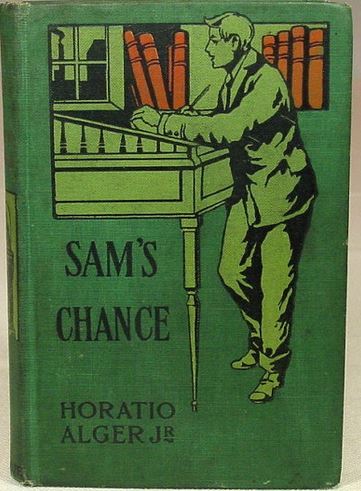
Sam’s Chance and How He Improved It
Sam’s Chance and How He Improved It is one of Horatio Alger Jr.’s many novels for boys, fitting squarely into the rags to respectability formula that earned him his lasting place in American popular literature. The book is a sequel to The Young Outlaw and follows Sam Barker, a young man who has already had one chance to climb out of his difficult circumstances and is now being given another. Alger’s plotting in his sequel novels often involved giving a previously imperfect protagonist the opportunity to demonstrate the moral growth that the first book had pointed toward.
In this novel, Sam has come to New York City after a difficult upbringing and is determined to use the chance the city offers to make something of himself. The standard Alger elements are all present. Honest labor, the temptation of the wrong sort of company, the discovery of a sympathetic older patron who recognizes the young man’s worth, the appearance of villains who would prefer to keep him in his original lowly station, and the slow accumulation of small successes that build toward the moral resolution Alger’s readers expected.
What makes the book slightly distinctive within the larger Alger catalogue is the explicit framing around the chance of the title. Sam knows from the beginning that he is being given an opportunity. The novel asks whether he will rise to it, and the moral lessons about the responsibility that comes with a second chance are delivered with Alger’s characteristic directness. The New York City setting gives Alger room to render the post Civil War American metropolis with the kind of street level detail that makes his urban fiction more interesting than its sometimes formulaic plotting would suggest.
For scholars of nineteenth century American children’s literature, of the cultural construction of the self made man, or of the wider print culture that shaped American boyhood in the post Civil War decades, Alger’s catalogue remains essential. Sam’s Chance and How He Improved It is a representative entry and a fair sample of his style. The book is now in the public domain and available in various reprint editions.
About the Author
Horatio Alger Jr. was a 19th-century American author famous for his rags-to-riches juvenile novels, in which poor boys rise through hard work, honesty, and a little luck. His name became shorthand for the American self-made success story.
See all books by Horatio Alger →