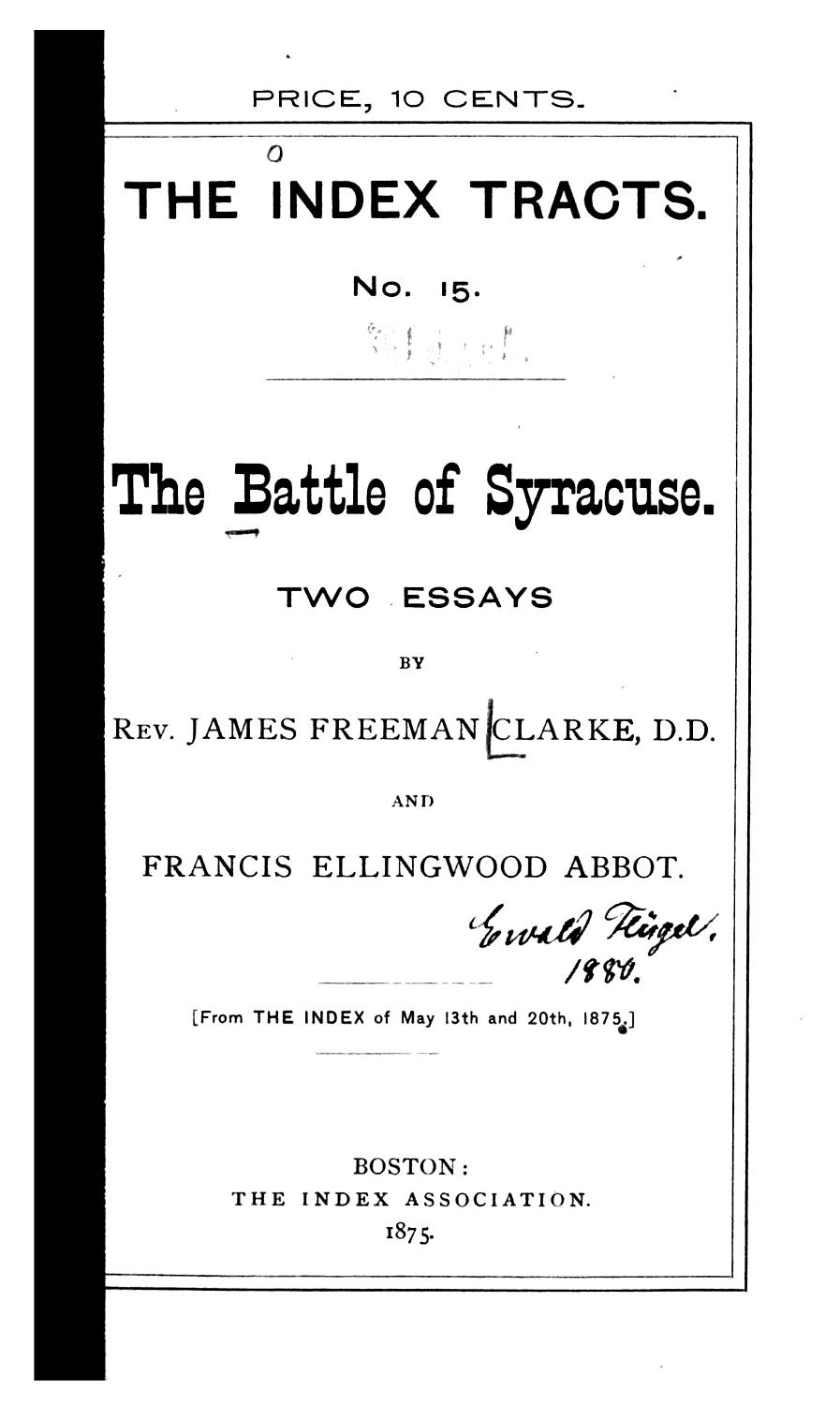
The Battle of Syracuse
The Battle of Syracuse is a historical study by James Freeman Clarke of the Athenian expedition against Syracuse from 415 to 413 BC. The Sicilian campaign was one of the great military disasters in Greek history and the central narrative of the second half of Thucydides’s History of the Peloponnesian War.
The Athenian assembly voted to launch the expedition in 415 BC at the urging of Alcibiades, the brilliant and unstable politician whose later career took him through Persian and Spartan service before his death in exile. The expedition was the largest Athens had ever sent overseas. The fleet sailed to Sicily with troops from across the Athenian alliance and orders to attack Syracuse, the major Greek city on the island and an ally of Sparta. The campaign collapsed across two years. By September 413 BC the entire force was destroyed or enslaved. Two generals were executed by the victorious Syracusans. Athens never fully recovered, and the loss contributed directly to the eventual defeat of Athens by Sparta in 404 BC.
Clarke’s treatment draws on Thucydides and the other ancient sources. The Thucydides account in Books 6 and 7 is one of the most powerful pieces of historical writing in any language, with set-piece scenes including the night battle on the heights of Epipolae and the final massacre in the river Assinarus that have impressed readers for more than two thousand years. Clarke works mostly through summary and commentary rather than original source criticism, in the popular American historical mode of his period.
The campaign attracts continued attention because the pattern is recognizable. A powerful state launches an ambitious overseas expedition based on optimistic forecasts, encounters unexpected resistance, doubles down rather than withdrawing, and eventually loses everything. Various commentators across the centuries have drawn parallels with their own contemporary military adventures.
The book is short. It pairs with Thucydides himself, with Donald Kagan’s modern four-volume history of the war, and with the various other Anglophone treatments of the Sicilian expedition.
About the Author
Download free books by James Freeman Clarke on BDeBooks. Read James Freeman Clarke’s works online or download as PDF/EPUB · part of our growing free eBook collection.
See all books by James Freeman Clarke →