On Giving Names to Towns and Streets
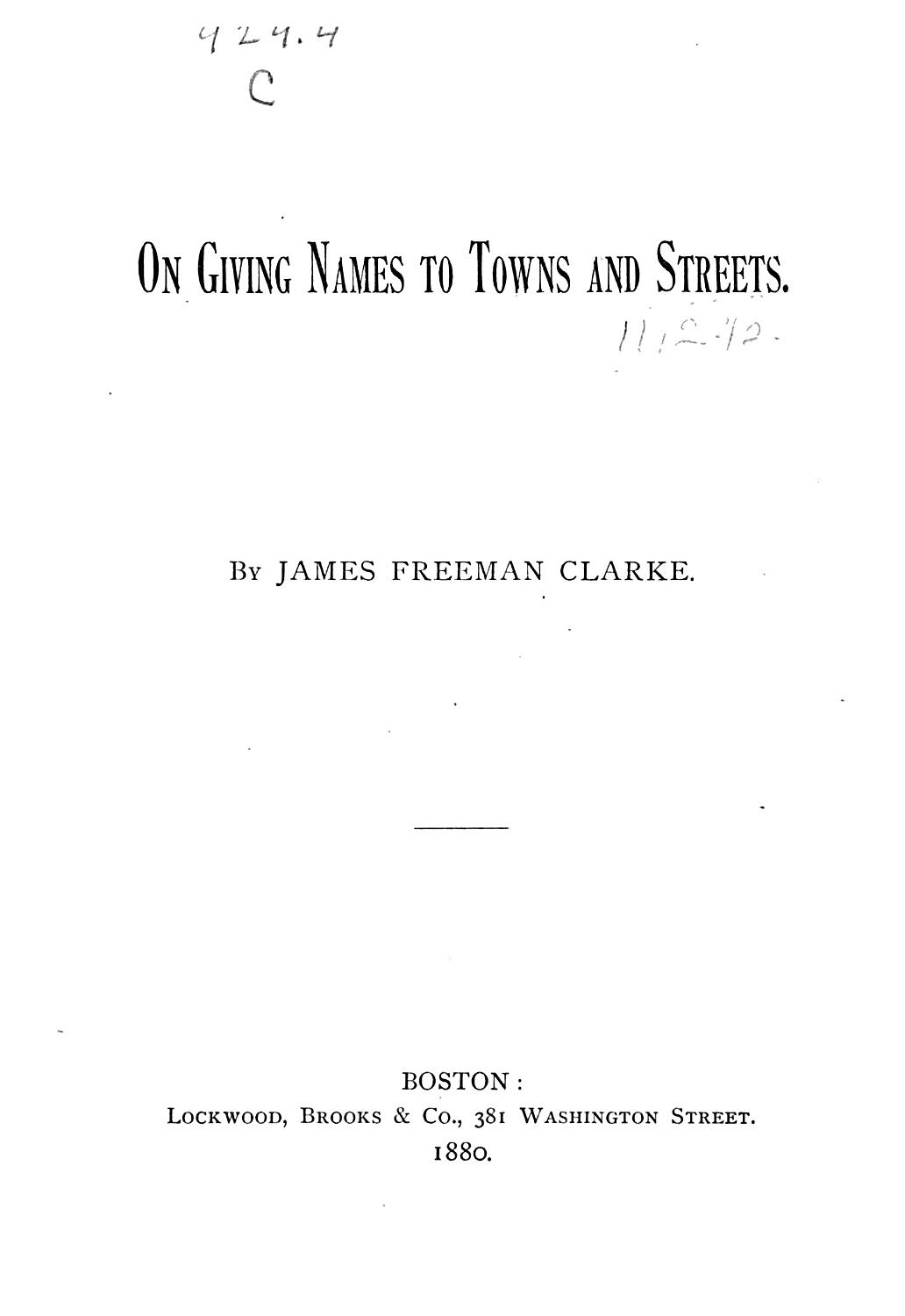
On Giving Names to Towns and Streets is a short essay by James Freeman Clarke on how American towns and streets should be named. The piece belongs to Clarke’s body of occasional writing on civic and cultural subjects.
Place-naming was a live practical question in nineteenth-century America. The country was growing rapidly, with new towns appearing constantly as settlement spread west. The naming of new places, the renaming of older ones, and the assignment of street names in expanding cities all involved real choices that were usually made without much thought. Clarke believed the questions deserved better attention than the casual local practice typically gave them.
The essay works through what Clarke considered the principles that should govern good naming. He argues for preserving indigenous American place names where they exist, for thoughtful commemoration of historical figures and events, for descriptive names rooted in local geography or natural features, and for avoiding the imitative use of classical names that often produced absurd combinations like a sleepy Massachusetts town called Athens or a Vermont village named Rome. He is particularly critical of the rote use of numerical street names that gave most American cities indistinguishable grids of First, Second, and Third streets without any local meaning.
The American place-name landscape that nineteenth-century settlement produced was a mixed result of various traditions. Some towns kept the indigenous names of the peoples who had lived there. Others took classical or biblical names from the broader European cultural inheritance. Others commemorated Revolutionary or other historical figures. Others were simply descriptive. Clarke’s essay represents one mid-nineteenth-century attempt to develop more deliberate thinking about the whole process.
The essay is short and reads in twenty minutes. For readers interested in nineteenth-century American cultural and civic thought, it pairs with other Clarke occasional writings and with the wider Boston intellectual tradition of the period.
About the Author
Download free books by James Freeman Clarke on BDeBooks. Read James Freeman Clarke’s works online or download as PDF/EPUB · part of our growing free eBook collection.
See all books by James Freeman Clarke →