
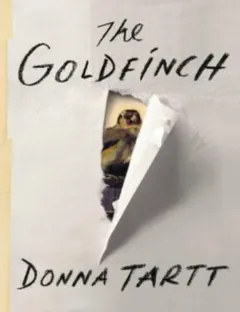
The Goldfinch
Chapter 6. Wind, Sand and Stars
This chapter is long, so it is split into 4 parts.
“No. It would al have to be arranged directly with the col ege or school of your choice. In other words, I’m going to need to see bil s, and pay bil s. There’s a lot of paperwork, as wel . And in the unlikely event you decide not to attend col ege…”
As he talked on, confusingly, about various ins and outs of the funds my mother had set up for me (al of which were fairly restrictive, as far as either my father or me getting our hands immediately on actual, spendable cash) my dad, holding the phone out from his ear, had something very like an expression of horror on his face.
“Wel , uh, that’s good to know, thank you sir,” I said, trying hard to wrap up the conversation.
“There are tax advantages of course. Setting it up like this. But what she real y wanted was to make sure your father would never be able to touch it.”
“Oh?” I said, uncertainly, in the overly long silence that fol owed.
Something in his tone had made me suspect that he knew my father might be the Lord Vader-ish presence breathing audibly (audibly to me—whether audibly to him I don’t know) on the other line.
“There are other considerations, as wel . I mean—” decorous silence—“I don’t know if I ought to tel you this, but an unauthorized party has twice tried to make a large withdrawal on the account.”
“What?” I said, after a sick pause.
“You see,” said Mr. Bracegirdle, his voice as distant as if it were coming from the bottom of the sea, “I’m the custodian on the account. And about two months after your mother died, someone walked in the bank in Manhattan during business hours and tried to forge my signature on the papers. Wel , they know me at the main branch, and they cal ed me right away, but while they were stil on the phone with me the man slipped out the door, before the security guard was able to approach and ask for ID. That was, my goodness, nearly two years ago. But then—only last week—did you get the letter I wrote you about this?”
“No,” I said, when at last I realized I needed to say something.
“Wel , without going into it too much, there was a peculiar phone cal . From someone purporting to be your attorney out there, requesting a transfer of funds. And then—checking into it—we found out that some party with access to your Social Security number had applied for, and received, a rather large line of credit in your name.
Do you happen to know anything about that?
“Wel , not to worry,” he continued, when I didn’t say anything. “I have a copy of your birth certificate here, and I faxed it to the issuing bank and had the line shut down immediately. And I’ve alerted Equifax and al the credit agencies. Even though you’re a minor, and legal y unable to enter into such a contract, you could be responsible for any such debts incurred in your name once you come of age. At any rate, I urge you to be very careful with your Social Security number in future. It’s possible to have a new Social issued, in theory, although the red tape is such a headache that I don’t suggest it…”
I was in a cold sweat when I hung up the telephone—and completely unprepared for the howl that my father let out. I thought he was angry—angry at me—but when he just stood there with the phone stil in his hand, I looked at him a little closer and realized he was crying.
It was horrible. I had no idea what to do. He sounded like he’d had boiling water poured over him—like he was turning into a werewolf—like he was being tortured. I left him there and—Popchik hurrying up the stairs ahead of me; clearly he didn’t want any part of this howling, either—went in my room and locked the door and sat on the side of my bed with my head in my hands, wanting aspirin but not wanting to go down to the bathroom to get it, wishing Xandra would hurry up and come home. The screams from downstairs were ungodly, like he was being burned with a blow torch. I got my iPod, tried to find some loud-ish music that wasn’t upsetting (Shostakovich’s Fourth, which though classical actual y was a bit upsetting) and lay on my bed with the earbuds in and stared at the ceiling, while Popper stood with his ears up and stared at the closed door, the hairs on his neck erect and bristling.
xv.
“HE TOLD ME YOU had a fortune,” said Boris, later that night at the playground, while we were sitting around waiting for the drugs to work. I slightly wished we had picked another night to take them, but Boris had insisted it would make me feel better.
“You believed I had a fortune, and wouldn’t tel you?” We’d been sitting on the swings for what seemed like forever, waiting for just what I didn’t know.
Boris shrugged. “I don’t know. There are a lot of things you don’t tel me. I would have told you. It’s al right, though.”
“I don’t know what to do.” Though it was very subtle, I’d begun to notice glittering gray kaleidoscope patterns turning sluggishly in the gravel by my foot—dirty ice, diamonds, sparkles of broken glass.
“Things are getting scary.”
Boris nudged me. “There’s something I didn’t tel you either, Potter.”
“What?”
“My dad has to leave. For his job. He’s going back to Australia in a few months. Then on, I think, to Russia.”
There was a silence that maybe lasted five seconds, but felt like it lasted an hour. Boris? Gone? Everything seemed frozen, like the planet had stopped.
“Wel , I’m not going,” said Boris serenely. His face in the moonlight had taken on an unnerving electrified flicker, like a black-and-white film from the silent era. “Fuck that. I’m running away.”
“Where?”
“Dunno. Do you want to come?”
“Yes,” I said, without thinking, and then: “Is Kotku going?”
He grimaced. “I don’t know.” The filmic quality had become so stage-lit and stark that al semblance of real life had vanished; we’d been neutralized, fictionalized, flattened; my field of vision was bordered by a black rectangle; I could see the subtitles running at the bottom of what he was saying. Then, at almost exactly the same time, the bottom dropped out of my stomach. Oh, God, I thought,
running both hands through my hair and feeling way too overwhelmed to explain what I was feeling.
Boris was stil talking, and I realized if I didn’t want to be lost forever in this grainy Nosferatu world, sharp shadows and achromatism, it was important to listen to him and not get so hung up on the artificial texture of things.
“… I mean, I guess I understand,” he was saying mournful y, as speckles and raindrops of decay danced al around him. “With her it’s not even running away, she’s of age, you know? But she lived on the street once and didn’t like it.”
“Kotku lived on the street?” I felt an unexpected surge of compassion for her—orchestrated somehow, with a cinematic music swel almost, although the sadness itself was perfectly real.
“Wel , I have too, in Ukraine. But I would be with my friends Maks and Seryozha—never more than few days at a time. Sometimes it was good fun. We’d kip in basement of abandoned buildings—drink, take butorphanol, build campfires even. But I always went home when my dad sobered up. With Kotku though, it was different. This one boyfriend of her mother’s—he was doing stuff to her. So she left.
Slept in doorways. Begged for change—blew guys for money. Was out of school for a while—she was brave to come back, to try and finish, after what happened. Because, I mean, people say stuff. You know.”
We were silent, contemplating the awfulness of this, me feeling as if I had experienced in these few words the entire weight and sweep of Kotku’s life, and Boris’s.
“I’m sorry I don’t like Kotku!” I said, real y meaning it.
“Wel , I’m sorry too,” said Boris reasonably. His voice seemed to be going straight to my brain without passing my ears. “But she doesn’t like you either. She thinks you’re spoiled. That you haven’t been through nearly the kind of stuff that she and I have.”
This seemed like a fair criticism. “That seems fair,” I said.
Some weighty and flickering interlude of time seemed to pass: trembling shadows, static, hiss of unseen projector. When I held out my hand and looked at it, it was dust-speckled and bright like a decaying piece of film.
“Wow, I’m seeing it too now,” said Boris, turning to me—a sort of slowed-down, hand-cranked movement, fourteen frames per second.
His face was chalk pale and his pupils were dark and huge.
“Seeing—?” I said careful y.
“You know.” He waved his floodlit, black-and-white hand in the air.
“How it’s al flat, like a movie.”
“But you—” It wasn’t just me? He saw it, too?
“Of course,” said Boris, looking less and less like a person every moment, and more like some degraded piece of silver nitrate stock from the 1920s, light shining behind him from some hidden source. “I wish we’d got something color though. Like maybe ‘Mary Poppins.’ ”
When he said this, I began to laugh uncontrol ably, so hard I nearly fel off the swing, because I knew then for sure he saw the same thing I did. More than that: we were creating it. Whatever the drug was making us see, we were constructing it together. And, with that realization, the virtual-reality simulator flipped into color. It happened for both of us at the same time, pop! We looked at each other and just laughed; everything was hysterical y funny, even the playground slide was smiling at us, and at some point, deep in the night, when we were swinging on the jungle gym and showers of sparks were flying out of our mouths, I had the epiphany that laughter was light, and light was laughter, and that this was the secret of the universe. For hours, we watched the clouds rearranging themselves into intel igent patterns; rol ed in the dirt, believing it was seaweed (!); lay on our backs and sang “Dear Prudence” to the welcoming and appreciative stars. It was a fantastic night—one of the great nights of my life, actual y, despite what happened later.
xvi.
BORIS STAYED OVER AT my house, since I lived closer to the playground and he was (in his own favorite term for loadedness) v gavno, which meant “shit-faced” or “in shit” or something of the sort—at any rate, too wrecked to get home on his own in the dark. And this was
fortunate, as it meant I wasn’t alone in the house at three thirty the next afternoon when Mr. Silver stopped by.
Though we’d barely slept, and were a little shaky, everything stil felt the tiniest bit magical and ful of light. We were drinking orange juice and watching cartoons (good idea, as it seemed to extend the hilarious Technicolor mood of the evening) and—bad idea—had just shared our second joint of the afternoon when the doorbel rang.
Popchyk—who’d been extremely on edge; he sensed that we were off-key somehow and had been barking at us like we were possessed—went off immediately almost as if he’d expected something of the sort.
In an instant, it al came crashing back. “Holy shit,” I said.
“I’l go,” said Boris immediately, tucking Popchyk under his arm.
Off he bopped, barefoot and shirtless, with an air of complete unconcern. But in what seemed like one second he was back again, looking ashen.
He didn’t say anything; he didn’t have to. I got up, put on my sneakers and tied them tight (as I’d gotten in the habit of doing before our shoplifting expeditions, in the event I had to flee), and went to the door. There was Mr. Silver again—white sports coat, shoe-polish hair, and al —only this time standing beside him was a large guy with blurred blue tattoos snaked al over his forearms, holding an aluminum basebal bat.
“Wel , Theodore!” said Mr. Silver. He seemed genuinely pleased to see me. “Hiya doing?”
“Fine,” I said, marvel ing at how un-stoned I suddenly felt. “And you?”
“Can’t complain. Quite a bruise you got going on there, pal.”
Reflexively, I reached up and touched my cheek. “Uh—”
“Better look after that. Your buddy tel s me your Dad’s not home.”
“Um, that’s right.”
“Everything okay with you two? You guys having any problems out here this afternoon?”
“Um, no, not real y,” I said. The guy wasn’t brandishing the bat, or being threatening in any way, but stil I couldn’t help being fairly aware that he had it.
“Because if you ever do?” said Mr. Silver. “Have problems of any nature? I can take care of them for you like that. ”
What was he talking about? I looked past him, out to the street, to his car. Even though the windows were tinted, I could see the other men waiting there.
Mr. Silver sighed. “I’m glad to hear that you don’t have any problems, Theodore. I only wish that I could say the same.”
“Excuse me?”
“Because here’s the thing,” he continued, as if I hadn’t spoken. “I have a problem. A real y big one. With your father.”
Not knowing what to say, I stared at his cowboy boots. They were black crocodile, with a stacked heel, very pointed at the toe and polished to such a high shine that they reminded me of the girly-girl cowboy boots that Lucie Lobo, a way-out stylist in my mother’s office, had always worn.
“You see, here’s the thing,” said Mr. Silver. “I’m holding fifty grand of your dad’s paper. And that is causing some very big problems for me.”
“He’s getting the money together,” I said, awkwardly. “Maybe, I don’t know, if you could just give him a little more time…”
Mr. Silver looked at me. He adjusted his glasses.
“Listen,” he said reasonably. “Your dad wants to risk his shirt on how some morons handle a fucking bal —I mean, pardon my language. But it’s hard for me to have sympathy for a guy like him.
Doesn’t honor his obligations, three weeks late on the vig, doesn’t return my phone cal s—” he was ticking off the offenses on his fingers—“makes plans to meet me at noon today and then doesn’t show. You know how long I sat and waited for that deadbeat? An hour and a half. Like I don’t got other, better things to do.” He put his head to the side. “It’s guys like your dad keep guys like me and Yurko here in business. Do you think I like coming to your house?
Driving al the way out here?”
I had thought this was a rhetorical question—clearly no one in their right mind would like driving al the way out where we lived—but since an outrageous amount of time passed, and stil he was staring at me like he actual y expected an answer, I final y blinked in discomfort and said: “No.”
“No. That’s right, Theodore. I most certainly do not. We got better things to do, me and Yurko, believe me, than spend al afternoon chasing after a deadbeat like your dad. So do me a favor, please, and tel your father we can settle this like gentlemen the second he sits down and works things out with me.”
“Work things out?”
“He needs to bring me what he owes me.” He was smiling but the gray tint at the top of his aviators gave his eyes a disturbingly hooded look. “And I want you to tel him to do that for me, Theodore.
Because next time I have to come out here, believe me, I’m not going to be so nice.”
xvi .
WHEN I CAME BACK into the living room Boris was sitting quietly and staring at cartoons with the sound off, stroking Popper—who, despite his earlier upset, was now fast asleep in his lap.
“Ridiculous,” he said shortly.
He pronounced the word in such a way that it took me a moment to realize what he’d said. “Right,” I said, “I told you he was a freak.”
Boris shook his head and leaned back against the couch. “I don’t mean the old Leonard Cohen-looking guy with the wig.”
“You think that’s a wig?”
He made a face like who cares. “Him too, but I mean the big Russian with the, metal, what do you cal it?”
“Basebal bat.”
“That was just for show,” he said disdainful y. “He was just trying to scare you, the prick.”
“How do you know he was Russian?”
He shrugged. “Because I know. No one has tattoos like that in U.S. Russian national, no question. He knew I was Russian too, minute I opened my mouth.”
Some period of time passed before I realized I was sitting there staring into space. Boris lifted Popchyk and put him down on the
sofa, so gently he didn’t wake. “You want to get out of here for a while?”
“God,” I said, shaking my head suddenly—the impact of the visit had for whatever reason just hit me, a delayed reaction—“fuck, I wish my dad had been home. You know? I wish that guy would beat his ass. I real y do. He deserves it.”
Boris kicked my ankle. His feet were black with dirt and he also had black polish on his toenails, courtesy of Kotku.
“You know what I had to eat yesterday?” he said sociably. “Two Nestlé bars and a Pepsi.” Al candy bars, for Boris, were ‘Nestlé bars,’ just as al sodas were ‘Pepsi.’ “And you know what I had to eat today?” He made a zero with thumb and forefinger. “Nul.”
“Me neither. This stuff makes you not hungry.”
“Yah, but I need to eat something. My stomach—” he made a face.
“Do you want to go get pancakes?”
“Yes—something—I don’t care. Do you have money?”
“I’l look around.”
“Good. I think I have five dol ars maybe.”
While Boris was rummaging for shoes and a shirt, I splashed some water on my face, checked out my pupils and the bruise on my jaw, rebuttoned my shirt when I saw it was done up the wrong way, and then went to let Popchik out, throwing his tennis bal to him for a bit, since he hadn’t had a proper walk on the leash and I knew he felt cooped-up. When we came back in, Boris—dressed now—was downstairs; we’d done a quick search of the living room and were laughing and joking around, pooling our quarters and dimes and trying to figure out where we wanted to go and the quickest way to get there when al of a sudden we noticed that Xandra had come in the front door and was standing there with a funny look on her face.
Both of us stopped talking immediately and went about our change-sorting in silence. It wasn’t a time when Xandra normal y came home, but her schedule was erratic sometimes and she’d surprised us before. But then, in an uncertain-sounding voice, she said my name.
We stopped with the change. General y Xandra cal ed me kiddo or hey you or anything but Theo. She was, I noticed, stil wearing her
uniform from work.
“Your dad’s had a car accident,” she said. It was like she was saying it to Boris instead of me.
“Where?” I said.
“It happened like two hours ago. The hospital cal ed me at work.”
Boris and I looked at each other. “Wow,” I said. “What happened?
Did he total the car?”
“His blood alcohol was .39.”
The figure was meaningless to me, though the fact he’d been drinking wasn’t. “Wow,” I said, pocketing my change, and: “When’s he coming home, then?”
She met my eye blankly. “Home?”
“From the hospital.”
Rapidly, she shook her head; looked around for a chair to sit in; and then sat in it. “You don’t understand.” Her face was empty and strange. “He died. He’s dead.”
xvi i.
THE NEXT SIX OR seven hours were a daze. Several of Xandra’s friends showed up: her best friend Courtney; Janet from her work; and a couple named Stewart and Lisa who were nicer and way more normal than the usual people Xandra had over to the house. Boris, generously, produced what was left of Kotku’s weed, which was appreciated by al parties present; and someone, thankful y (maybe it was Courtney), ordered out for pizza—how she got Domino’s to deliver al the way out to us, I don’t know, since for over a year Boris and I had wheedled and pleaded and tried every cajolement and excuse we could think of.
While Janet sat with her arm around Xandra, and Lisa patted her head, and Stewart made coffee in the kitchen, and Courtney rol ed a joint on the coffee table that was almost as expert as one of Kotku’s, Boris and I hung in the background, stunned. It was hard to believe that my dad could be dead when his cigarettes were stil on the
kitchen counter and his old white tennis shoes were stil by the back door. Apparently—it al came out in the wrong order, I had to piece it together in my mind—my dad had crashed the Lexus on the highway, a little before two in the afternoon, veering off on the wrong side of the road and plowing headlong into a tractor-trailer which had immediately kil ed him (not the driver of the truck, fortunately, or the passengers in the car that had rear-ended the truck, although the driver of the car had a broken leg). The blood-alcohol news was both surprising, and not—I’d suspected my father might be drinking again, though I hadn’t seen him doing it—but what seemed to baffle Xandra most was not his extreme drunkenness (he’d been virtual y unconscious at the wheel) but the location of the accident—outside Vegas, heading west, into the desert. “He would have told me, he would have told me,” she was saying sorrowful y in response to some question or other of Courtney’s, only why, I thought bleakly, sitting on the floor with my hands over my eyes, did she think it was in my father’s nature to tel the truth about anything?
Boris had his arm over my shoulder. “She doesn’t know, does she?”
I knew he was talking about Mr. Silver. “Should I—”
“Where was he going?” Xandra was asking Courtney and Janet, almost aggressively, as if she suspected them of withholding information. “What was he doing al the way over there?” It was strange to see her stil in her work uniform, as she usual y changed out of it the second she walked in the door.
“He didn’t go meet that guy like he was supposed to,” whispered Boris.
“I know.” Possibly he had intended to go to the sit-down with Mr.
Silver. But—as my mother and I had so often, so fatal y, known him to do—he had probably stopped in a bar somewhere for a quick belt or two, to steady his nerves as he always said. At that point—who knew what might have been going through his mind? nothing helpful to point out to Xandra under the circumstances, but he’d certainly been known to skip town on his obligations before.
I didn’t cry. Though cold waves of disbelief and panic kept hitting me, it al seemed highly unreal and I kept glancing around for him, struck again and again by the absence of his voice among the
others, that easy, wel -reasoned, aspirin-commercial voice ( four out of five doctors…) that made itself known above al others in a room.
Xandra went in and out of being fairly matter-of-fact—wiping her eyes, getting plates for pizza, pouring everybody glasses of the red wine that had appeared from somewhere—and then col apsing in tears again. Popchik alone was happy; it was rare we had so much company in the house and he ran from person to person, undiscouraged by repeated rebuffs. At some bleary point, deep in the evening—Xandra weeping in Courtney’s arms for the twentieth time, oh my God, he’s gone, I can’t believe it—Boris pul ed me aside and said: “Potter, I have to go.”
“No, don’t, please.”
“Kotku’s going to be freaked out. Am supposed to be at her mom’s now! She hasn’t seen me for like forty-eight hours.”
“Look, tel her to come over if she wants—tel her what’s happened. It’s going to completely suck if you have to leave right now.”
Xandra had grown sufficiently distracted with guests and grief that Boris was able to go upstairs to make the cal in her bedroom—a room usual y kept locked, that Boris and I never saw. In about ten minutes he came skimming rapidly down the steps.
“Kotku said to stay,” he said, ducking in to sit beside me. “She told me to say she’s sorry.”
“Wow,” I said, coming close to tears, scrubbing my hand over my face so he wouldn’t see how startled and touched I was.
“Wel , I mean, she knows how it is. Her dad died too.”
“Oh yeah?”
“Yes, a few years ago. In a motor accident, as wel . They weren’t that close—”
“Who died?” said Janet, swaying over us, a frizzy, silk-bloused presence redolent of weed and beauty products. “Somebody else died?”
“No,” I said curtly. I didn’t like Janet—she was the ditz who’d volunteered to take care of Popper and then left him locked up alone with his food dispenser.
“Not you, him,” she said, stepping backwards and focusing her foggy attention on Boris. “Somebody died? That you were close to?”
“Several people, yeah.”
She blinked. “Where are you from?”
“Why?”
“Your voice is so funny. Like British or something—wel no. Like a mix of British and Transylvania.”
Boris hooted. “Transylvania?” he said, showing her his fangs. “Do you want me to bite you?”
“Oh, funny boys,” she said vaguely, before bopping Boris on the top of the head with the bottom of her wine glass and wandering off to say goodbye to Stewart and Lisa, who were just leaving.
Xandra, it seemed, had taken a pil . (“Maybe more than one,” said Boris, in my ear.) She appeared on the verge of passing out. Boris—
it was shitty of me, but I just wasn’t wil ing to do it—took her cigarette away from her and stubbed it out, then helped Courtney get her up the stairs and into her room, where she lay face down on the bedspread with the door open.
I stood in the doorway while Boris and Courtney got her shoes off
—interested to see, for once, the room that she and my dad always kept locked up. Dirty cups and ashtrays, stacks of Glamour magazine, puffy green bedspread, laptop I never got to use, exercise bike—who knew they had an exercise bike in there?
Xandra’s shoes were off but they’d decided to leave her dressed.
“Do you want me to spend the night?” Courtney was asking Boris in a low voice.
Boris, shamelessly, stretched and yawned. His shirt was riding up and his jeans hung so low you could see he wasn’t wearing any underwear. “Nice of you,” he said. “But she is out cold, I think.”
“I don’t mind.” Maybe I was high—I was high—but she was leaning so close to him it looked like she was trying to make out with him or something, which was hilarious.
I must have made some sort of semi-choking or laughter-like noise—since Courtney turned just in time to see my comical gesture to Boris, a thumb jerked at the door— get her out of here!
“Are you okay?” she said coldly, eyeing me up and down. Boris was laughing too but he’d straightened up by the time she turned back to him, his expression al soulful and concerned, which only made me laugh harder.
xix.
XANDRA WAS OUT COLD by the time they al left—asleep so deeply that Boris got a pocket mirror from her purse (which we had rifled, for pil s and cash) and held it under her nose to see if she was breathing.
There was two hundred and twenty-nine dol ars in her wal et, which I didn’t feel al that bad about taking since she stil had her credit cards and an uncashed check for two thousand and twenty-five.
“I knew Xandra wasn’t her real name,” I said, tossing him her driver’s license: orange-tinged face, different fluffed-up hair, name Sandra Jaye Terrel , no restrictions. “Wonder what these keys go to?”
Boris—like an old-fashioned movie doctor, fingers on her pulse, sitting by her on the side of the bed—held the mirror up to the light.
“Da, da, ” he muttered, then something else I didn’t understand.
“Eh?”
“She’s out.” With one finger, he prodded her shoulder, and then leaned over and peered into the nightstand drawer where I was rapidly sorting through a bewilderment of junk: change, chips, lip gloss, coasters, false eyelashes, nail polish remover, tattered paperbacks ( Your Erroneous Zones), perfume samples, old cassette tapes, ten years’ expired insurance cards, and a bunch of giveaway matchbooks from a Reno legal office that said REPRESENTING DWI AND
ALL DRUG OFFENSES.
“Hey, let me have those,” said Boris, reaching over and pocketing a strip of condoms. “What’s this?” He picked up something that at first glance looked like a Coke can—but, when he shook it, it rattled.
He put his ear to it. “Ha!” he said, tossing it to me.
“Good job.” I screwed off the top—it was obviously fake—and dumped the contents out on the top of the nightstand.
“Wow,” I said, after a few moments. Clearly this was where Xandra kept her tip money—partly cash, partly chips. There was a lot of other stuff, too—so much I had a hard time taking it al in—but my eyes had gone straight to the diamond-and-emerald earrings that my mother had found missing, right before my father took off.
“Wow,” I said again, picking one of them up between thumb and forefinger. My mother had worn these earrings for almost every cocktail party or dress-up occasion—the blue-green transparency of the stones, their wicked three a.m. gleam, were as much a part of her as the color of her eyes or the spicy dark smel of her hair.
Boris was cackling. Amidst the cash he’d immediately spotted, and snatched up, a film canister, which he opened with trembling hands. He dipped the end of his little finger in, tasted it. “Bingo,” he said, running the finger along his gums. “Kotku’s going to be pissed she didn’t come over now.”
I held out the earrings to him on my open hands. “Yah, nice,” he said, hardly looking at them. He was tapping out a pile of powder on the nightstand. “You’l get a couple of thousand dol ars for those.”
“These were my mother’s.” My dad had sold most of her jewelry back in New York, including her wedding ring. But now—I saw—
Xandra had skimmed some of it for herself, and it made me weirdly sad to see what she’d chosen—not the pearls or the ruby brooch, but inexpensive things from my mother’s teenage days, including her junior-high charm bracelet, ajingle with horseshoes and bal et slippers and four leaf clovers.
Boris straightened up, pinched his nostrils, handed me the rol ed-up bil . “You want some?”
“No.”
“Come on. It’l make you feel better.”
“No, thanks.”
“There must be four or five eight bal s here. Maybe more! We can keep one and sel the others.”
“You did that stuff before?” I said doubtful y, eyeing Xandra’s prone body. Even though she was clearly down for the count, I didn’t like having these conversations over her back.
“Yah. Kotku likes it. Expensive, though.” He seemed to blank out for a minute, then blinked his eyes rapidly. “Wow. Come on,” he said, laughing. “Here. Don’t know what you’re missing.”
“I’m too fucked-up as it is,” I said, shuffling through the money.
“Yah, but this wil sober you up.”
“Boris, I can’t goof around,” I said, pocketing the earrings and the charm bracelet. “If we’re going, we need to leave now. Before people
start showing up.”
“What people?” said Boris skeptical y, running his finger back and forth under his nose.
“Believe me, it happens fast. Child services coming in, and like that.” I’d counted the cash—thirteen hundred and twenty-one dol ars, plus change; there was much more in chips, close to five thousand dol ars’ worth, but might as wel leave her those. “Half for you and half for me,” I said, as I began to count the cash into two even piles.
“There’s enough here for two tickets. Probably we’re too late to catch the last flight but we should go ahead and take a car to the airport.”
“Now? Tonight?”
I stopped counting and looked at him. “I don’t have anyone out here. Nobody. Nada. They’l stick me in a home so fast I won’t know what hit me.”
Boris nodded at Xandra’s body—which was very unnerving, as in her face-down mattress splay she looked way too much like a dead person. “What about her?”
“What the fuck?” I said after a brief pause. “What should we do?
Wait around until she wakes up and finds out we ripped her off?”
“Dunno,” said Boris, eyeing her doubtful y. “I just feel bad for her.”
“Wel , don’t. She doesn’t want me. She’l cal them herself as soon as she realizes she’s stuck with me.”
“Them? I don’t understand who is this them. ”
“Boris, I’m a minor.” I could feel my panic rising in an al -too-familiar way—maybe the situation wasn’t literal y life or death but it sure felt like it, house fil ing with smoke, exits closing off. “I don’t know how it works in your country but I don’t have any family, no friends out here—”
“Me! You have me!”
“What are you going to do? Adopt me?” I stood up. “Look, if you’re coming, we need to hurry. Do you have your passport? You’l need it for the plane.”
Boris put his hands up in his Russianate enough already gesture.
“Wait! This is happening way too fast.”
I stopped, halfway out the door. “What the fuck is your problem, Boris?”
“My problem?”
“You wanted to run away! It was you who asked me to go with you! Last night.”
“Where are you going? New York?”
“Where else?”
“I want to go someplace warm,” he said instantly. “California.”
“That’s crazy. Who do we know—”
“California!” he crowed.
“Wel —” Though I knew almost nothing about California, it was safe to assume that (apart from the bar of “California Über Al es” he was humming) Boris knew even less. “Where in California? What town?”
“Who cares?”
“It’s a big state.”
“Fantastic! It’l be fun. We’l stay high al the time—read books—
build camp fires. Sleep on the beach.”
I looked at him for a long unbearable moment. His face was on fire and his mouth was stained blackish from the red wine.
“Al right,” I said—knowing ful wel I was stepping off the edge and into the major mistake of my life, petty theft, the change cup, sidewalk nods and homelessness, the fuck-up from which I would never recover.
He was gleeful. “The beach, then? Yes?”
This was how you went wrong: this fast. “Wherever you want,” I said, pushing the hair out of my eyes. I was dead exhausted. “But we need to go now. Please.”
“What, this minute?”
“Yes. Do you need to go home and get anything?”
“Tonight?”
“I’m not kidding, Boris.” Arguing with him was making the panic rise again. “I can’t just sit around and wait—” The painting was a problem, I wasn’t sure how that was going to work, but once I got Boris out of the house I could figure something out. “Please, come on.”
“Is State Care that bad in America?” said Boris doubtful y. “You make it seem like the cops.”
“Are you coming with me? Yes or no?”
“I need some time. I mean,” he said, fol owing after me, “we can’t leave now! Real y—I swear. Wait a little while. Give me a day! One day!”
“Why?”
He seemed nonplussed. “Wel , I mean, because—”
“Because—?”
“Because—because I have to see Kotku! And—al kinds of things!
Honest, you can’t leave tonight, ” he repeated, when I said nothing.
“Trust me. You’l be sorry, I mean it. Come to my house! Wait til the morning to go!”
“I can’t wait,” I said curtly, taking my half of the cash and heading back to my room.
“Potter—” he fol owed after me.
“Yes?”
“There is something important I have to tel you.”
“Boris,” I said, turning, “what the mother fuck. What is it?” I said, as we stood and stared at each other. “If you have something to say, go on and say it.”
“Am afraid it wil make you mad.”
“What is it? What have you done?”
Boris was silent, gnawing the side of his thumb.
“Wel , what?”
He looked away. “You need to stay,” he said vaguely. “You’re making a mistake.”
“Forget it,” I snapped, turning away again. “If you don’t want to come with me, don’t come, okay? But I can’t stand around here al night.”
Boris—I thought—might ask what was in the pil owcase, particularly since it was so fat and weirdly shaped after my over-enthusiastic wrapping job. But when I un-taped it from the back of the headboard and put it in my overnight bag (along with my iPod, notebook, charger, Wind, Sand and Stars, some pictures of my mom, my toothbrush, and a change of clothes) he only scowled and said nothing. When I retrieved, from the back of my closet, my school blazer (too smal for me, though it had been too big when my mother bought it) he nodded and said: “Good idea, that.”
“What?”
“Makes you look less homeless.”
“It’s November,” I said. I’d only brought one warm sweater from New York; I put it in the bag and zipped it up. “It’s going to be cold.”
Boris leaned insolently against the wal . “What wil you do, then?
Live on the street, railway station, where?”
“I’l cal my friend I stayed with before.”
“If they wanted you, those people, they’d have adopted you already.”
“They couldn’t! How could they?”
Boris folded his arms. “They didn’t want you, that family. You told me so yourself—lots of times. Also, you never hear from them.”
“That’s not true,” I said, after a brief, confused pause. Only a few months before, Andy had sent me a long-ish (for him) email tel ing me about some stuff going on at school, a scandal with the tennis coach feeling up girls in our class, though that life was so far away that it was like reading about people I didn’t know.
“Too many children?” said Boris, a bit smugly as it seemed. “Not enough room? Remember that bit? You said the mother and father were glad to see you go.”
“Fuck off.” I was already getting a huge headache. What would I do if Social Services showed up and put me in the back of a car?
Who—in Nevada—could I cal ? Mrs. Spear? The Playa? The fat model-store clerk who sold us model glue without the models?
Boris fol owed me downstairs, where we were stopped in the middle of the living room by a tortured-looking Popper—who ran directly into our path, then sat and stared at us like he knew exactly what was going on.
“Oh, fuck,” I said, putting down my bag. There was a silence.
“Boris,” I said, “can’t you—”
“No.”
“Can’t Kotku—”
“No.”
“Wel , fuck it,” I said, picking him up and tucking him under my arm. “I’m not leaving him here for her to lock up and starve.”
“And where are you going?” said Boris, as I started for the front door.
“Eh?”
“Walking? To the airport?”
“Wait,” I said, putting Popchik down. Al at once I felt sick and like I might vomit red wine al over the carpet. “Wil they take a dog on the plane?”
“No,” said Boris ruthlessly, spitting out a chewed thumbnail.
He was being an asshole; I wanted to punch him. “Okay then,” I said. “Maybe somebody at the airport wil want him. Or, fuck it, I’l take the train.”
He was about to say something sarcastic, lips pursed in a way I knew wel , but then—quite suddenly—his expression faltered; and I turned to see Xandra, wild-eyed, mascara-smeared, swaying on the landing at the top of the stairs.
We looked at her, frozen. After what seemed like a centuries-long pause, she opened her mouth, closed it again, caught the railing to balance herself, and then said, in a rusty voice: “Did Larry leave his keys in the bank vault?”
We gazed horrified for several more moments before we realized she was waiting for a reply. Her hair was like a haystack; she appeared completely disoriented and so unsteady it seemed she might topple down the steps.
“Er, yes,” said Boris loudly. “I mean no.” And then, when she stil stood there: “It’s al right. Go back to bed.”
She mumbled something and—uncertain on her feet—staggered off. The two of us stood motionless for some moments. Then—
quietly, the back of my neck prickling—I got my bag and slipped out the front door (my last sight of that house, and her, though I didn’t even take a last look round) and Boris and Popchik came out after me. Together, al three of us walked rapidly away from the house and down to the end of the street, Popchik’s toenails clicking on the pavement.
“Al right,” said Boris, in the humorous undertone he used when we had a close cal at the supermarket. “Okay. Maybe not quite so much out-cold as I thought.”
I was in a cold sweat, and the night air—though chil y—felt good.
Off in the west, silent Frankenstein flashes of lightning twisted in the darkness.
“Wel , at least she’s not dead, eh?” He chuckled. “I was worried about her. Christ.”
“Let me use your phone,” I said, elbowing on my jacket. “I need to cal a car.”
He fished in his pocket, and handed it to me. It was a disposable phone, the one he’d bought to keep tabs on Kotku.
“No, keep it,” he said, holding his hands up when I tried to give it back to him after I’d made my cal : Lucky Cab, 777-7777, the number plastered on every shifty-looking bus-stop bench in Vegas.
Then he dug out the wad of money—his half of the take from Xandra
—and tried to press it on me.
“Forget it,” I said, glancing back anxiously at the house. I was afraid she might wake up again and come out in the street looking for us. “It’s yours.”
“No! You might need it!”
“I don’t want it,” I said, sticking my hands in my pockets to keep him from foisting it on me. “Anyway, you might need it yourself.”
“Come on, Potter! I wish you wouldn’t go this moment. ” He gestured down the street, at the rows of empty houses. “If you won’t come to my house—kip over there for a day or two! That brick house has furniture in it, even. I’l bring you food if you want.”
“Or, hey, I can cal Domino’s,” I said, sticking the phone in my jacket pocket. “Since they deliver out here now and everything.”
He winced. “Don’t be angry.”
“I’m not.” And, in truth, I wasn’t—only so disoriented I felt I might wake up and find I’d been sleeping with a book over my face.
Boris, I realized, was looking up at the sky and humming to himself, a line from one of my mother’s Velvet Underground songs: But if you close the door… the night could last forever…
“What about you?” I said, rubbing my eyes.
“Eh?” he said, looking at me with a smile.
“What’s up? Wil I see you again?”
“Maybe,” he said, in the same cheerful tone I imagined him using with Bami and Judy the barkeep’s wife in Karmeywal ag and everyone else in his life he’d ever said goodbye to. “Who knows?”
“Wil you meet me in a day or two?”
“Wel —”
“Join me later. Take a plane—you have the money. I’l cal you and tel you where I am. Don’t say no.”
“Okay then,” said Boris, in the same cheerful voice. “I won’t say no.” But clearly, from his tone, he was saying no.
I closed my eyes. “Oh God.” I was so tired I was reeling; I had to fight the urge to lie down on the ground, a physical undertow pul ing me to the curb. When I opened my eyes, I saw Boris looking at me with concern.
“Look at you,” he said. “Fal ing over, almost.” He reached in his pocket.
“No, no, no,” I said, stepping back, when I saw what he had in his hand. “No way. Forget it.”
“It’l make you feel better!”
“That’s what you said about the other stuff.” I wasn’t up for any more seaweed or singing stars. “Real y, I don’t want any.”
“But this is different. Completely different. It wil sober you up.
Clear your head—promise.”
“Right.” A drug that sobered you up and cleared your head didn’t sound like Boris’s style at al , although he did seem a good bit more with-it than me.
“Look at me,” he said reasonably. “Yes.” He knew he had me. “Am I raving? Frothing at mouth? No—only being helpful! Here,” he said, tapping some out on the back of his hand, “come on. Let me feed it to you.”
I half expected it was a trick—that I would pass out on the spot and wake up who knew where, maybe in one of the empty houses across the street. But I was too tired to care, and maybe that would have been okay anyway. I leaned forward and al owed him to press one nostril closed with a fingertip. “There!” he said encouragingly.
“Like this. Now, sniff.”
Almost instantly, I did feel better. It was like a miracle. “Wow,” I said, pinching my nose against the sharp, pleasant sting.
“Didn’t I tel you?” He was already tapping out some more. “Here, other nose. Don’t breathe out. Okay, now. ”
Everything seemed brighter and clearer, including Boris himself.
“What did I tel you?” He was taking more for himself now. “Aren’t you sorry you don’t listen?”
“You’re going to sel this stuff, god, ” I said, looking up at the sky.
“Why?”
“It’s worth a lot, actual y. Few thousand of dol ars.”
“That little bit?”
“Not that little! This is a lot of grams—twenty, maybe more. Could make a fortune if I divide up smal and sel to girls like K. T.
Bearman.”
“You know K. T. Bearman?” Katie Bearman, who was a year ahead of us, had her own car—a black convertible—and was so far removed from our social scale she might as wel have been a movie star.
“Sure. Skye, KT, Jessica, al those girls. Anyway—” he offered me the vial again—“I can buy Kotku that keyboard she wants now. No more money worries.”
We went back and forth a few times until I began to feel much more optimistic about the future and things in general. And as we stood rubbing our noses and jabbering in the street, Popper looking up at us curiously, the wonderfulness of New York seemed right on the tip of my tongue, an evanescence possible to convey. “I mean, it’s great,” I said. The words were spiraling and tumbling out of me.