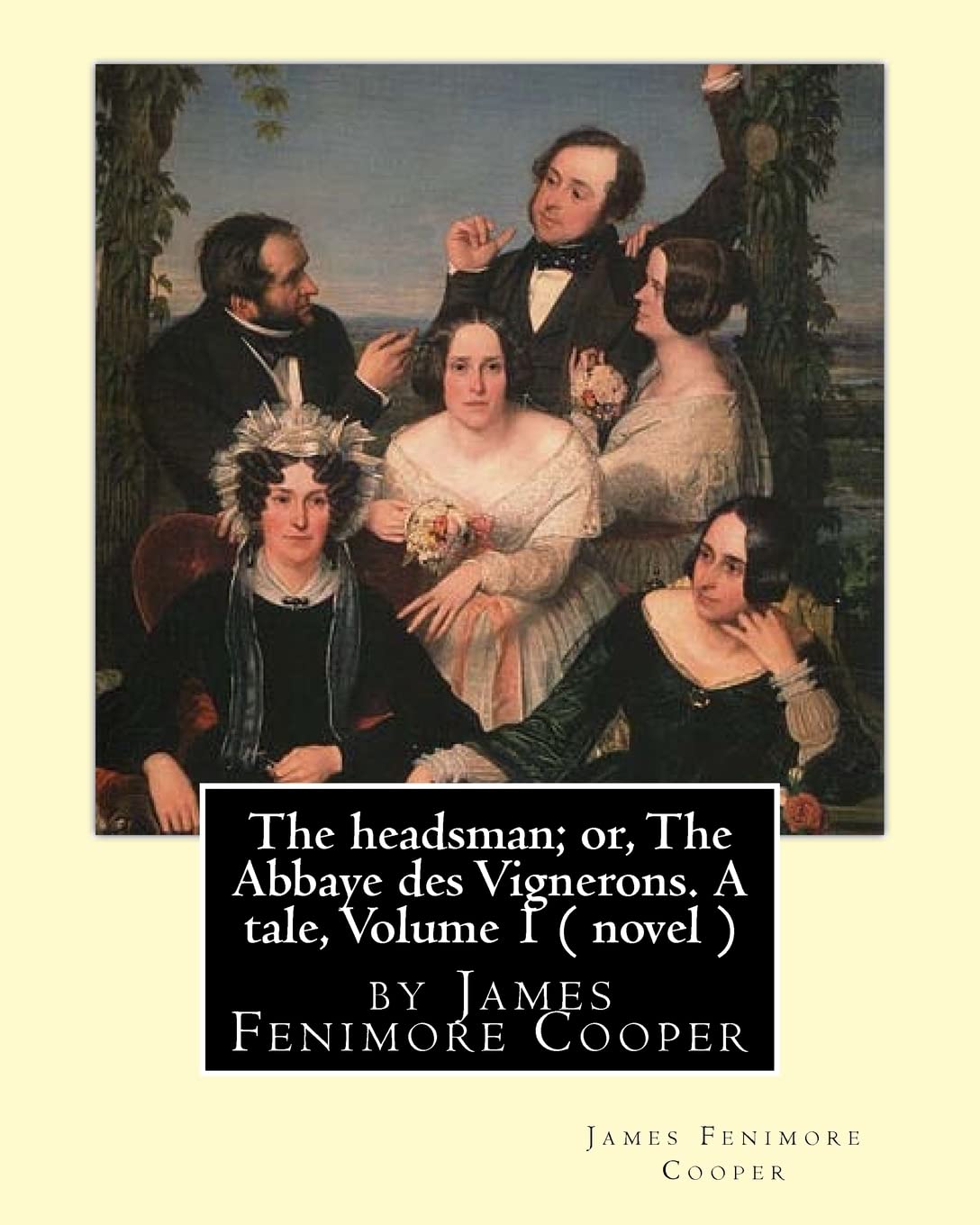
The Headsman; or, The Abbaye des Vignerons
The Headsman is one of James Fenimore Cooper’s lesser known novels, set in Switzerland in the early eighteenth century rather than in the American wilderness most readers associate with his name. Cooper spent several years living in Europe in the late 1820s and early 1830s, and a number of the books he wrote during and after that period drew on European settings and themes. The Headsman, published in 1833, was the third in this loose European trilogy alongside The Bravo and The Heidenmauer.
The story centers on the figure of the headsman, the hereditary public executioner of the Swiss canton, and the social stigma attached to his profession even among people who depend on him to carry out their justice. Cooper uses this premise to dig into questions about inherited guilt, social class, and the gap between what a society says it values and what it actually rewards. The Abbaye des Vignerons of the subtitle is a wine growers’ guild whose annual festival provides the central public setting for much of the action.
Cooper’s prose is in the formal style of his time, which can take some getting used to. The dialogue is long and the descriptions of the Swiss landscape are frequent and detailed. Readers who come to Cooper through the Leatherstocking Tales may be surprised by how different the European books feel. There are no Mohicans or frontier scouts here, just Swiss villagers and the political tensions of pre revolutionary Europe. For Cooper completists or for readers interested in nineteenth century American writers’ engagement with Europe, this volume is a worthwhile if demanding read.
About the Author
James Fenimore Cooper was an early American novelist best known for The Last of the Mohicans and the Leatherstocking Tales, frontier adventures that helped shape the myth of the American wilderness.
See all books by James Fenimore Cooper →