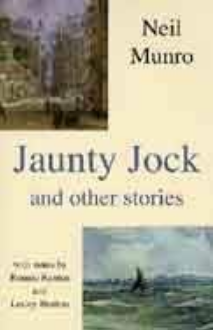
Jaunty Jock and other stories
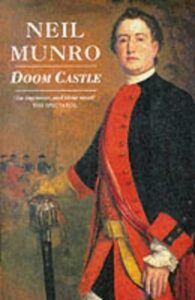
Jaunty Jock and other stories is one of Neil Munro’s collections of short stories, working in the territory he explored across his many shorter works alongside his better known Para Handy sketches and his serious Scottish novels. Munro was a Scottish journalist and novelist working at the turn of the twentieth century, and his shorter fiction shows the same gifts that made the Para Handy stories beloved alongside the more literary qualities that distinguished his serious novels like Doom Castle and Gilian The Dreamer.
The Jaunty Jock title piece would have given the collection its name, with the wider volume containing other stories that share Munro’s particular Scottish setting and his characteristic ear for Scottish speech and culture. Munro had a real ear for Scottish dialect and his stories capture the rhythms of various levels of Scottish speech, from the working class Glasgow voices of his journalistic period through the more elevated registers of the Highland gentry that his serious historical novels worked with.
The short story form gave Munro room to work in modes that the longer Para Handy sketches and the serious novels did not always allow. Some of his shorter pieces are comic in ways that resemble the Para Handy material. Some are atmospheric and slightly melancholy in ways that connect to his Highland novels. Some are reflective sketches more in the personal essay tradition. The variety across a collection like Jaunty Jock gives the reader a sense of Munro’s range across his career.
For readers interested in Scottish literature, in early twentieth century Scottish short fiction, or in Neil Munro’s catalogue beyond the Para Handy stories, Jaunty Jock and other stories is worth knowing. The collection sits in the wider body of work that Munro produced alongside his major projects, and the shorter pieces have a particular charm that the longer works sometimes did not have room for. The pacing is slower than modern short fiction and the prose is in the formal late Victorian and Edwardian style, but readers who settle into the rhythm find a strong, atmospheric collection that takes its time with its themes.
Neil Munro had a substantial career as a journalist, editor, and writer of fiction, and his work was widely read in his own time before the twentieth century literary fashions began to shift away from the kind of Scottish regional fiction that he had specialized in. His Para Handy stories have remained the most widely read of his works, but the serious novels and the short fiction reward attention from readers who want to see his full range.
About the Author
Download free books by Neil Munro on BDeBooks. Read Neil Munro’s works online or download as PDF/EPUB · part of our growing free eBook collection.
See all books by Neil Munro →