The Young Lieutenant
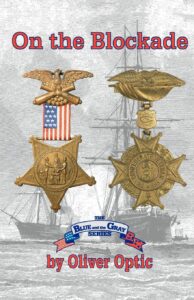
The Young Lieutenant is one of Oliver Optic’s many novels for boys, working in the kind of military adventure territory that the author used across multiple connected series. Oliver Optic was the pen name of William Taylor Adams, a Massachusetts writer who became one of the most prolific producers of boys’ fiction in mid to late nineteenth century America. His total output runs into more than a hundred novels, and his various military and naval series took young protagonists through the major American military experiences of the nineteenth century.
The young lieutenant of the title points to the protagonist’s military rank, with the lieutenant being typically the youngest commissioned officer rank in the nineteenth century American army or navy. Optic used this rank for protagonists across multiple of his military series, with the young officer position giving him a hero who has enough authority to drive the action while still being young enough to be a relatable figure for his teenage readers. The standard plot beats of military adventure fiction follow. The protagonist faces escalating challenges that test his courage, his judgment, and his loyalty, with the moral lessons about the responsibilities of leadership being delivered through the narrative rather than imposed in lectures.
The specific war or campaign that this novel is set in would shape its content. Optic produced military fiction set in the American Revolution, the War of 1812, the Mexican American War, and the Civil War, with each series developing a connected cast across multiple novels in the relevant historical setting. Whatever the specific historical context, the basic adventure structure remains consistent across his military fiction. The young protagonist faces the dangers and the moral tests of military service, develops as a leader through the experience, and earns the respectability and the personal recognition that the wider Optic catalogue is built around.
Optic’s prose is brisk and his action sequences move at the pace his young readers expected. The moral lessons are delivered through the narrative rather than imposed in lectures. Modern readers should be aware that the period assumptions about race, region, and the moral character of the various participants in the wars are very much present in Optic’s military fiction in ways that have not aged well.
For scholars of nineteenth century American children’s literature, of how American military history was translated into adventure fiction for the young, or of the wider career of Oliver Optic, the military and naval series are essential. The Young Lieutenant is a representative entry. Many of his books are now in the public domain.
About the Author
Oliver Optic was the pen name of William Taylor Adams, a hugely popular 19th-century American author of adventure and travel stories for young readers, who wrote well over a hundred books and edited several children’s magazines.
See all books by Oliver Optic →