
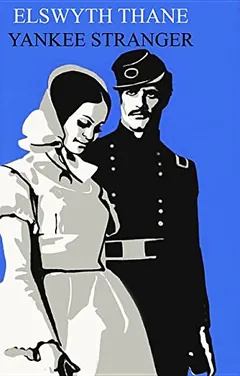
Yankee Stranger
IV: May 5, 1862
This chapter is long, so it is split into 3 parts.
“Lookit, dawn comin’ up at last.”
The lingering drizzle of rain stopped as they rode on in the dim grey light, out across the trampled shambles of open ground before the Fort.
“Gwine git de sun today sho’ nuff,” said Micah, sniffing the morning air.
“Dry things out some. Whereat you think we fin’ him, Miss Sue?”
“Trees,” she said, frowning after the lost moments on the steps of the store. “Let’s go down to the edge of those woods.”
The broadening light showed hideous sights on the deserted battlefield.
Men and horses lay grotesquely, disfigured in death. Sometimes something stirred or cried out, and Micah averted his eyes, but Sue rode on, aware only of the dark line of trees ahead. When they reached the edge of the felled timber they dismounted and saw that most of the quiet forms which were scattered like broken toys on the ground were blue-clad. They had come to where Hooker’s Jersey troops had held against Stuart’s pounding charges.
“Should I shout?” asked Micah, awed by the spreading silence under the trees, a silence made louder by the occasional cries and groans of despairing wounded men. “Jude might hear me. Seems like we oughta see somethin’
o’ Jude, finally.”
Sue moved off slowly without replying, groping for the certainty she had felt on the steps of the store, which seemed forever shattered now. There were acres of this battlefield, scores of uniformed bodies…. As she went, a hand reached up and caught at her skirt, almost tripping her.
“Help me—somebody help me—”
She stopped, knelt beside the wounded man, motioned Micah down beside her. Together they raised him a little, pushed a knapsack under his head. He was caked with blood from the waist down, and he picked feebly at the bright buttons of his blue coat.
“Inside—pocket—” he kept mumbling. “Pocket—inside—my coat—
help—”
She undid the buttons, and the edge of a little leather case showed from the inner breast pocket. She drew it out, put it in the fumbling hand. Before
he could open it his head fell back and he died.
They left him there, the picture of his children in his stiffening fingers, and plodded on along the edge of the clearing. Once Micah bent to turn over a grey-clad body which lay face down, and shook his head. They went on, leading the horses.
Suddenly they both halted in their tracks, and their eyes met unbelievingly. While they held their breath, listening, the faint call came again.
“Jude! Judah, are you all right? Jude!”
Micah uttered a prayerful sound, but Sue’s voice rang out confidently.
“Sedgwick! We’re here, Sedgie, call again—louder!”
Silence.
They looked at each other—but both of them had heard it— both of them, at the same time. Micah began to look frightened.
“Sedgie! Answer me, Sedgie, we’ve come to find you!”
And when there was still no reply she dropped Philomel’s bridle and ran forward towards the fallen trees, her unhooped skirt dragging round her feet while she scrambled over down logs and fought her way through underbrush which tore off the kerchief she wore, and tore down her hair until it lay in short, tumbled curls on her shoulders—but still she ran, half sobbing now, stopping often to call his name and listen, begging him to answer. Micah followed at the edge of the timber with the horses, arguing with her.
“’Tain’ no use in dere, Miss Sue, honey—cavalry cain’ work in de woods—he boun’ to be out in de open, Miss Sue—”
She came back towards him and stood poised on a slanting log several feet above the ground which gave her a wider view. The sun came up behind her, throwing the long dark shadows of the trees at her feet. The stir of their presence and their voices had raised all round them a feeble clamour for succour among the crumpled figures strewn about the field, who had roused to a hope that the stretcher-bearers had come at last—but Sedgwick, wherever he was, had made no sound to guide her. Then she saw him, not far from where Micah had paused with the horses, saw him lying on the muddy ground at the edge of the timber, with Cherry’s corpse across his legs.
Together she and Micah raced the last few yards and fell on their knees beside him. He opened his eyes as her arms went round him, and looked up into her face.
“Oh, God, Susannah, I—thought I was hearing things—how did you get here—”
“You’re hurt—oh, Sedgie, you’re bleeding—!” The hand that had touched his shoulder came away covered with blood.
“Get Cherry off my leg, Micah—can’t move—” He hid his face against her, stiff with pain, while Micah tugged the carcass of the horse away.
“Can you ride, Sedgie? We’ve brought Laurel for you—can you stay on?”
“I’ll stay on. Where’s Jude?”
“We haven’t seen him. Jingle came home alone.”
“He was here. Find Jude—I won’t go without him—” He leaned against her, his breath coming fast and irregular with the pain.
“Find Judah quick,” she told Micah. “He must be here somewhere. Call to him.”
“Ju-dah! Where you go to, boy? Oh, Jude—! ” Micah’s voice ceased abruptly, came again on a different note, from the underbrush beyond. “I got him, suh—he’s daid.”
There was a moment’s silence, and then Sedgwick said, “We’ll take him with us,” and Micah came back to them, half carrying, half dragging the body of his brother.
“He kin have de Firefly hoss, suh, dat I was ridin’ today—we got Laurel yere fer you—time fer us to git movin’, too, dem Yankees be ’long any minute now—” Unaided, he got Judah’s body across Firefly’s saddle and came to bend over Sedgwick. “Now den, Marse Sedgwick, you put yo’
good arm roun’ my neck an’ jus’ hang on tight to Micah, we git you into dat ol’ saddle in no time—easy, now—rest yo’ weight on me, suh—yere we go
—”
Sedgwick’s right leg was bruised and almost useless, and his left arm hung limp from a bayonet stab in the shoulder. When after a sweating, swearing struggle he was actually up on Laurel, he held a moment to Micah’s supporting hands and said, “You’re sure—?” and Micah nodded, his black cheeks shining with tears. “He came for me,” said Sedgwick. “He brought me Jingle.”
With Sue holding Sedgwick’s bridle while he clung with his good hand to the pommel, and Micah walking at Firefly’s head, they started back in brilliant sunlight towards Williamsburg. And as they drew away, the Federal field surgeons and stretcher men filtered into the haunted thickets behind them, picking up the last of the wounded and carrying them to where the wagons waited. The Federal Army had wagons, and even ambulances, for the transport of its wounded.
It was a little easier going now that there was daylight over the road. But they had not covered more than half the distance to the town, Sedgwick swaying in the saddle, his teeth clenched, when Micah called out sharply,
“Yankees comin’!” and dashed into the underbrush at the side of the road, dragging Firefly after him. Sue followed quickly, leading Laurel, and they dismounted, except for Sedgwick, well off the road, hidden from it by the dense foliage, holding their horses’ noses and peering through the leaves.
Soon the clink of bit and spur and the creak of saddle leather came opposite to them and a group of scouts went by. Close behind them, at as smart a pace as the condition of the road would allow, came a dozen men in dark blue coats with gold braid and crimson sashes. Sue gave a smothered gasp, and swallowed the impulse to tell Sedgwick what she had seen. Only a few horse-lengths away from her in the morning sunlight, Cabot Murray rode with the Federal officers towards Williamsburg.
V
A detachment of Federal cavalry followed the group of officers, and then Micah, scouting cautiously towards the road, reported the long, inevitable line of infantry on its way.
They dared not return to the road. And so began a sunlit nightmare of beating through wet underbrush and cutting across muddy fields to the outskirts of the town, where they paused again to get their breath. Sedgwick was barely conscious now, and they had to hold him in the saddle, walking one on either side of him.
“Nebber git him home to England Street bang in de middle o’ dat ol’
Yankee army,” said Micah. “Might git him into our own stables, though, round through de orchard.”
“Come on, then,” said Sue doggedly, and somehow they made it, through the orchard, and Pharaoh came running out of the house as they rode into the stable yard. With exclamations of amazement and concern he helped lift Sedgwick down and support him into the house where they allowed him to collapse on the drawing room sofa.
Felicity and Eden had not been to bed at all, in their anxiety over Sue’s disappearance, and breakfast was just coming in. Eden was upstairs with Gran, who was having her tray in bed as usual. Sue ran up in her torn, muddy dress with her hair down on her shoulders and her hoop missing and her face chalky with weariness and strain, and said: “Gran, I’ve got Sedgie downstairs wounded, and the town is full of Yankees. What shall we do?”
“Where is he?” asked Gran, for nothing could surprise her any more, and she had told them all along that Sue would be safe with Micah.
“On the drawing room sofa.”
“Heavens me!” said Gran. “He’ll get blood on the upholstery. Bring him up here at once.”
“Oh, Gran, will they take him for a prisoner? He’ll die if he doesn’t get good nursing!”
“Tell Pharaoh to bring him up here to me. And go and change your clothes at once and hide the ones you’ve got on. Eden, take away the tray.”
Pharaoh, who was still a young man and had the strength of an ox, made nothing of getting Sedgwick upstairs, but as they reached the top step Micah’s voice rose hysterically from the lower hall.
“Unc’ Phare, Yankees comin’ in at de gate!”
“Bring Sedgwick in here,” Gran repeated without hesitation, and added, pointing, “Under the bed, quick.” She sat up very straight against the pillows, her eyes bright and dark under the fetching lace-trimmed cap she wore, and her little bed-jacket had frills at the neck and wrists.
They lowered Sedgwick to the floor and rolled him under the flowered chintz valance which reached from the bottom of the mattress to the polished floor.
“Now, don’t make a sound, Sedgwick, whatever you do,” she said firmly. “All of you leave the room except Eden. Micah, go and get the saddles off the horses in case they search the stables. Sue, get into a dressing-gown and be ready to show yourself as though you had just got out of bed. Felicity, go down to the dining-room and behave as though you
were eating breakfast. Eden, give me back that tray. There’s the doorbell, Pharaoh. If they want to search the house don’t try to stop them.”
Everybody scattered, hypnotized by her commands. Gran poured out a rather coolish cup of tea with a steady hand. These were only Yankees, and in her young days she had seen the British come to Williamsburg, and even then nobody ate her.
In a very short time Pharaoh was back again, the whites of his eyes showing.
“Cap’n Murray in de drawing room, Miss Eden,” he announced with stately disapproval of the company she kept.
“I c-can’t see him,” gasped Eden, her hands cold, moist paws.
“Of course you can,” said Gran. “In fact, you must. Ask Captain Murray to come up here, Pharaoh.”
“Yes, ma’am.” Pharaoh’s back as he turned away was very straight.
“Gran—!”
Tibby Day put milk in her tea, because that was the way she always took it, though it would now be stone cold.
“It’s always nice to have a friend at court,” she remarked gently, wondering if she would really have to drink the stuff.
Cabot came up the stairs with a clink of spurs and sword-belt. He looked enormous in the unfamiliar blue uniform, and he spoke very quietly, his eyes seeking Eden’s across the room.
“I hope you got my message,” he said. “Otherwise this must be rather a shock.”
A moment more she looked back at him from where she stood—then without a sound she crossed the room swiftly and buried her face against his shoulder with a touching effect of homing and submission.
He held her there, gratefully, and over her head he looked at Gran, sipping her tea in bed.
“Yes, we got the message,” said Gran. “I do hope your army isn’t going to be a nuisance, we’ve just got rid of ours.”
“That’s partly why I’m here,” he explained. “There is an order that all Confederate wounded in the town must be listed as prisoners of war and surrendered for medical care, and the search is pretty thorough. I have given my word at headquarters that this is a household of defenceless women and servants, and I don’t think you’ll be molested in any way. But as a mere
formality, there is a man from headquarters downstairs who must be allowed to satisfy himself that I am not mistaken. After that he will post a sentry at the gate until things settle down.” He waited a moment as though for her to speak, but her eyes were steady and calm. “Have I your permission for him just to—glance through the rooms in the name of duty?”
“Certainly,” said Gran. “Let him come up. Have you had breakfast, Mr.
—Captain Murray?”
“Yes, thanks.” He went to the head of the stairs. “You may come up, Wilson—and then get out, will you?”
“Thank you, sir.” Grinning self-consciously, a very young lieutenant clanked briskly up the staircase and looked in at the open door of Gran’s room. “Good morning, ma’am—sorry to disturb you, I’m sure—”
“Go with him, Eden,” said Gran graciously. “And open all the doors for him. You’ll probably find Sue not dressed yet.”
The lieutenant followed Eden from door to door apologetically, averting a tactful gaze from the ruffled confusion in Sue’s room, thanked Gran politely, saluted smartly, and retired noisily down the stairs. Cabot stood near the window waiting to see that a sentry remained in front of the gate when the officer moved away with his detail. Then he turned and came towards the bed with a smile.
“Well, that’s a relief,” he said. “I got permission to come here with him because there was a report that you had—” He stopped, his eyes resting on the floor at the edge of the chintz valance. Across the polished surface of the floor a narrow dark trickle crept from under the bed towards the braided rug under his feet. “Is it Dabney?” he asked.
They only looked at him, speechless.
“Who is it?” he repeated then, more brusequely. “Dabney or Sedgwick, which? Under the bed.”
“Sedgwick,” admitted Gran, and dropped her hands on the edge of the tray with a little gesture of defeat. “He needs good nursing. You know what military hospitals are, he might lose his arm. Sue went all the way down to the battlefield for him last night.”
Cabot knelt and turned up the valance and reached in.
“All right, son,” he said kindly. “Come out and let’s stop that bleeding.”
But Sedgwick was unconscious, as he had been ever since they put him there, and did not move. Cabot laid hold of his grey coat and pulled him
across the polished floor, folding up the edge of the rug to save it from staining.
“That’s bad,” he said after a quick look at the wound. “Let’s get him to bed.” With no apparent effort of his broad shoulders he lifted Sedgwick’s stripling length in his arms and said enquiringly: “I suppose Dabney’s bed is empty?”
Eden fled silently before him to show the way, and he laid Sedgwick on a sofa in the room while she stripped back the counterpane and opened the bed, which had yet to be made up for use.
“I’ll bring sheets and blankets and send Pharaoh to undress him,” she said. “His own servant seems to be—to be missing.”
Cabot untied his own sash and laid his sword across a chair and began to unbutton his coat.
“Send up a lot of hot water and bandages too,” he said. “And some brandy. And tell them to be quick.”
Eden stared at him.
“Are you going to—”
“You’re wasting time, my dear,” he said briefly, rolling up his shirtsleeves, and she ran out of the room to do his bidding.
When she returned with the brandy bottle, a maid had brought kettles of hot water and basins and cloths, and was helping Mammy to make up the bed. Cabot worked over the wound with the cool concentration of a surgeon while Pharaoh, also in his shirtsleeves, hung above him obeying orders with silent zeal. The floor beside the sofa was littered with blood-soaked linen.
“Don’t want the brandy yet,” he said without a glance at the bottle she held. “Leave him in peace a bit longer. This isn’t a pretty sight, I’d come back in about twenty minutes if I were you.”
“Sue says he was pinned underneath his horse by the right leg and it might be broken.”
“We’ll come to that later. Got to stop this bleeding first of all. Keep Sue out of here, will you?”
Eden lingered.
“I—didn’t know that you—”
“I’m not a doctor, but you can’t get one now—and it’s only commonsense in the field to know something about wounds. Will you please go away like a good girl, I’m busy.”
Eden closed the door behind her with an expression of dazed surprise, and tracked down Sue in Gran’s room where, in a pink peignoir, she was drinking hot coffee and eating scrambled eggs under her grandmother’s eye.
Sue forgot food when Eden came in.
“Is he all right? May I see him now?”
“Not yet, honey. Cabot is dressing the wound.”
“Cabot is!’
“Just like a doctor,” Eden told them, awed. “I never knew he—Gran, could he get into trouble for this?”
“Probably. But I think we can trust him to get himself out again!”
“Yes.” Eden stood looking down at the sentry’s back, where he stood at ease between the gate-posts. Her round chin lifted proudly. “We can trust him.”
When Cabot returned to Gran’s room nearly an hour later he was buttoned again into his blue coat with its captain’s shoulder straps, his sword hung at his side, and every fold of his crimson sash lay precisely.
“He’ll do,” he said to the three questioning faces which awaited him.
“We’ve got him into bed and the bleeding has stopped. His leg will turn black and blue and be very painful but it isn’t broken.” He rested thoughtful eyes on Sue. “And while I’m playing at being the old family doctor,” he added, “I’d better order you to bed, Susannah, for the rest of the day.”
“Can’t I see him first?”
“No. He’s full of brandy and doesn’t care about anything. You’ve done your part, and your mother is sitting with him. Bed for you. March.”
Sue stood up rather stiffly and showed her dimple at him.
“You’re what they call a martinet,” she said. “Eden’s not used to being bossed around like this.”
“I haven’t begun to boss Eden yet. It’s you I’m after right now. Git!”
Sue got, her eyelids already heavy with sleep. He turned, smiling, to find Gran holding out both her hands to him from the bed.
“Cabot,” she said, and it was the first time she had used his name, “this family is going to love you very much—even when you come in brass buttons and a sword.”
“Thank you, Gran.” He stood a moment looking down at her, her hands in his, and Eden spoke haltingly from beside the bed.
“We didn’t—at least, I never thought you’d be wearing the blue!” she blurted, and flushed up to the eyes as he turned to her.
“I mentioned that I would try for a Staff appointment,” he reminded her.
“And I got it when McClellan took command. I rank as a volunteer aide to McClellan first, and Special Correspondent second. The general combs out all my despatches very thoroughly and tells me I am a better aide than I am a journalist. He means it as a compliment. I suppose you realize that you have got me right up a tree now, with McClellan, if I don’t report Sedgwick’s presence here.”
“Oh, but you can’t do that!” Eden flew at him, caught his arm. “Poor Sue, she saved him—you can’t take him away now, he isn’t able to be moved—oh, please promise to say nothing about it just yet!”
“That makes him liable to arrest for being behind our lines though not a prisoner of war,” he pointed out.
“If they find him,” said Gran. “We can meet that when he’s better.”
“I don’t like it this way,” Cabot objected. “Of course, Wilson would swear we didn’t see a trace. But after I’ve gone, suppose—”
“How long—” Eden swallowed and tried again. “How long will you be in Williamsburg?”
“Unless McClellan is completely crazy, which is not impossible, we’ll keep hard after Johnston till he turns and fights—somewhere between here and Richmond.”
“Another battle?” Eden asked faintly.
“Sweetheart, this wasn’t a battle, it was only a rear-guard action! The battle is still to come.” He held her by the waist, looking down, as though they were alone. “Where’s your blue dress?” he asked very low.
“I—” Her chin quivered, her eyes filled. She flung her arms tight around his neck and leaned against him, her face hidden. “How long does this go on?” she demanded fiercely, muffled against his coat. “How many battles do they have to fight?”
“If we took Richmond with the next one, it might be the last.”
She was suddenly very still, in his arms. When she raised her face her tears had stopped.
“But that would mean that you had beaten us.”
“You—us! North—South! Blue or grey! What does it matter, Eden, between you and me!”
“You say that because you are winning now.”
He shook her, not too gently, forcing her to meet his eyes.
“Take that back,” he said
“I—shouldn’t have said it.”
“Think what you like about McClellan, Eden, he can look after himself.
But I am not your enemy, remember that. Somebody has to win this war some time. Better for everyone if it doesn’t take too long. I’ve got to go now. May I come back this evening?”
She nodded, realizing gratefully that he had not used Sedgwick as a lever in that request.
“Unless Sedgwick seems a lot worse I wouldn’t call a doctor in the circumstances. It’s a clean wound, and nowhere near vital, he was bleeding to death, that’s all.”
She looked up at him piteously.
“Oh, Cabot, I do thank you! I didn’t mean—”
“Shut your eyes, Gran,” he said, and kissed Eden long and hard before he went.
VI
It was an endless day for everyone but Sue and Sedgwick, who slept through it.
Cabot was no sooner out of the house than Eden discovered with anguish that she had not said a word to him about the ring, which had been on her finger the whole time. In the depths of her chagrin she searched out last year’s blue lawn dress—no one had new clothes any more—and Mammy freshened it and sewed in clean lace collars and cuffs. Against it the blue stone in the ring took new fire and Eden was glowing too, Gran thought, as though she herself was set with diamonds.
Felicity and Louise worked at the schoolhouse hospital most of the day and Felicity found an opportunity to tell Louise that they had Sedgwick hidden in Ransom’s house, running a high fever and very uncomfortable, but in no danger so far as they could tell. Louise went round to see for herself during the afternoon, and decided against spending the night there for fear of its looking odd to the sentry at the gate.
McClellan had settled himself comfortably into the Vest house vacated only a few hours before by Johnston, and was bringing up reinforcements and supplies from his Yorktown and Hampton bases. The Federal troops who had taken part in the action in front of Fort Magruder went into camp around the town, appropriating the College buildings for their wounded and offices. McClellan was a soldier and a gentleman, and under his eye it was a fair y well behaved army on the whole, and its hosts treated it with icy courtesy.
Pharaoh came back indignant from an excursion through the streets just before twilight.
“Yankee soldier stop an’ ax me why I don’ jine up wid dem an’ fight fo’
my rights,” he reported to Felicity. “I tells him I done got my rights. Don’ I live jus’ as good as Marse Ransom, I tells him—don’ I eat jus’ as good, an’
sleep jus’ as warm, an’ don’ de same white tailor-man make my clothes outen best broadcloth dey is? Whaffor I go pointin’ off hollerin’ ’bout rights, I says to him, an’ he done look like a sheep sho’ nuff!”
It was after dark when Cabot returned to the house, and Felicity had gone wearily back to the schoolhouse hospital, reminding Gran that since it would never do for Eden to entertain him alone in the drawing room all evening they would have to come upstairs to her.
“I suppose I can go to bed before he comes,” said Gran tartly, for she always resented the role of chaperon. “Nothing matters at my age!”
Felicity remarked patiently that it mattered very much at Eden’s age, even if the man was considered one’s fiancé, and that she wasn’t going to have a Yankee think her girls were free and easy, and that as Mr. Murray had found Gran in bed once already that day she could do as she pleased about to-night.
And so she was sitting up against her pillows in the lace cap and frilled bedjacket, and Eden was knitting in the corner of the sofa, when Pharoah showed Cabot in. There was wailing and chanting in the quarters behind the house where Judah’s body lay, and the once quiet streets were churning with couriers and supply wagons and officious young aides as the Yankee army settled itself in. Against the impertinent tumult of war and the untimely festival of death, stood the sweet serenity of Gran’s room, where she had ordered a small fire kindled for cosiness, and all the lamps were
lighted, and the white dimity curtains at the windows moved in a breeze that was fragrant with the Virginia spring.
“Welcome home,” said Gran, as he paused on the threshold as though not quite sure he belonged in so pretty a picture, and his quick glance at her was full of mutual understanding. “Everything is here but your pipe and carpet slippers,” she added, indicating the sofa by the fire.
“You both look beautiful,” he said sincerely. “I’ll see Sedgwick first, and then come put my feet on the fender.”
Sedgwick, he told them ten minutes later, would not be very happy for a good many days to come, but would live through it, barring accidents, and must keep very quiet for fear of opening the wound. He sat down on the sofa beside Eden, still looking a little incredulous of his surroundings, and she held out her left hand to him, the ring winking in the firelight.
“There was no way to thank you,” she said simply. “And this morning I forgot! I’m very proud of it, Cabot.”
He kissed the hand, for Gran’s presence never embarrassed him in the least, and then kept Eden’s fingers locked in his so that the knitting languished in her lap.
“I let Melicent try it on,” he said, turning the ring in the light. “She has good hands, with long fingers—not as pretty as yours, though. She sent you her love.”
“We must find her a present,” said Eden. “What would she like?”
“Music!” he replied ironically, and shrugged. “Nothing but music!
Remembering a lesson I learned here last year, I asked her what she wanted for Christmas, and found she spends all her pocket money for songs to learn. And I must say the poor little beggar’s got a voice like a lark when she dares to let it out!”
“I’ve got lots of music,” said Eden. “I’ll choose some for her. Can you send it?”
“I can. With my copy for the paper. And she’ll like having it from you.
You see,” he said ruefully to Gran, “I do what I can for her now, and she’s so grateful it’s embarrassing. In fact, between you and Eden here, I’m a reformed character, haven’t you noticed?”
“You aren’t entirely, or you wouldn’t brag about it,” said Gran.
“I’ll brag if I like,” he retorted defiantly. “What has happened at home is a minor miracle. My father will never change, of course. But with him gone
for the day, and Melicent practising her music—well, it no longer feels as though the body was laid out in the best parlour! I even tried to buy her some pretty clothes the last time I was in New York, but I’m not very good at that, apparently. Her mother—which we will still say for the sake of convenience—said the dress I brought back was meant for a lady of the town, and Melicent is not going to be allowed to wear it.”
“She must come to the wedding,” Gran smiled. “After the war.”
“I doubt if she’d live through it. She’s never been anywhere.” He sat playing with the ring on Eden’s finger, and his face darkened and drew in.
“After the war,” he repeated. “Must we wait that long?”
“Will it be so long?”
He sighed impatiently.
“It’s easy enough to tell the generals where they’re wrong and what they ought to do,” he admitted. “But nobody has any gumption about this war! It can go on forever, as things are. You could have finished it after Manassas, I think—you had us on the run, you could have taken Washington if you’d kept on coming, but you sat down at Centreville for months! You had Shiloh won, hands down, last month, and you let Grant snatch it back again! Oh, we’re just as bad! Here we sit while Johnston retreats in good order and gets all ready for us in front of Richmond. If we kept moving and hit him now while he’s on one foot we might end it before the year is out!”
“Ransom said we had no transport and supplies to take Washington.”
“I know, I know all the reasons and excuses and justifications on both sides!” he said angrily. “It’s my business to know. But if I have to wait till this war is over before I marry Eden, I may be an old man with a long white beard! I want her now. I suppose her father wouldn’t hear of it?”
“He’s in Richmond,” said Gran sadly, and shook her head.
“Well, when I get there myself,” he said through his teeth, “I’ll ask him!”
“And if he says No I’ll come anyway,” said Eden, her heart beating faster at the thought.
“Would you?” His eyes raked her face with something of the old, bold, bantering look, from her hair to her throat. “Would you elope with me, Eden, down a rope ladder in the moonlight, with a carriage and pair, and live with me in sin at Willard’s till we could get a marriage license? I
believe you would, at that! Well, you won’t have to. I’ll manage things better than that, when the time comes.”
Pharaoh came in then with a big silver tray which he set on a table on the hearthrug.
“Coffee, suh?” he suggested softly. “Or Madeira, suh?”
“Coffee, please,” said Cabot, making a mental note to send them some from the officers’ mess. “Black.”
Pharaoh poured it out and took it to him, showing the same loving care with which he served Ransom or the boys. Captain Murray’s status had altered with Pharaoh since they put Sedgwick to bed in Dabney’s room that morning. Then he poured Eden’s cup, half hot milk with a dab of sugar, and set a plate of sponge cakes within their reach. Lastly he carried to Gran’s bedside a glass of Madeira wine and a thin sweetened biscuit on a smaller tray. After which he wished them a soft good-night and went away, closing the door gently behind them.
There was no such pleasant nightly ceremony in the great gloomy house in Trenton, and Cabot turned it over in his mind, perceiving that it was not done in his honour only, but was part of a household routine he had never encountered before. Each time he came here, it seemed, he realized anew the infinite possibilities of living with women like these who pampered their menfolk and in turn sunned themselves in masculine tenderness. Once more he contemplated rather dizzily the unending revelations his marriage with Eden would mean. Impatience, longing, a reckless exigency ran through him like a flame. His youth was wasting while they bungled this stupid war. He had much to learn from Eden, and something of his own to teach her. But first they had to take Richmond.
Gran broke the silence Pharaoh left, sipping her Madeira.
“I was thinking this afternoon,” she said slowly, “you could do a kindness for our Sue, Cabot, if you would.”
“Gladly,” he said, rousing himself, supposing at once that like all Southern women Sue wanted something the blockade denied her, something he could obtain for her from Washington or Trenton.
“You own a newspaper, don’t you?”
“My father does. It’s not quite the same thing. We don’t always see eye to eye.”
“Sue has been writing stories. I don’t mean novels like Fanny Burney, I mean stories—like the ones you see in Harper’s Monthly and Godey’s, only I think better than they are. My husband wrote. She gets it from him. If you could print in your paper something that she wrote, it might seem more worth while to her. I don’t mean I want you to pay her money for it. I just mean—to see something in print might encourage her to go on.”
Cabot groaned inwardly, for he agreed with his misanthrope father that the greatest cross an editor must bear is the literary output of his friends.
But he said forbearingly, “I might arrange it. Have you something of hers that I could see?”
“The last one she did is there on my desk. Give it to him, Eden. You see,” Gran continued, sipping her Madeira, “Sue has had a shock. She and Sedgwick want to marry, but the cousinship is too close. There is nothing anyone can do, they must make their lives separately. Sue needs something she can call her own. And her stories give her something to think about.”
Cabot took the closely written pages from Eden’s hand with an unuttered sigh and leaned towards the lamp. He had not much hope of Sue, at eighteen. He supposed it would be possible to give her a column now and then and out of his own pocket provide a small payment for her self-respect.
No more.
They watched him glance through the first page, and read the second.
Then they saw him go back to the first and read it again, and the second, and the third—slowly, attentively, absorbed and unhurried, to the end. Then he sat staring at the rug under his feet, frowning, silent, apparently puzzled.
We shouldn’t have asked him, Eden thought unhappily. He doesn’t like it, and he doesn’t like to say so. We’ve put him in a very embarrassing position….
“Are there any more of these?” Cabot asked abruptly.
“Quite a lot,” said Gran. “Some better—some not so good.”
“I want to see them all.”
“Do you think you can—?”
“People pay money for things like this. Where did she get it? How does she know how a man feels when he is going to fight a sword duel? How does she know that a fencer’s arm begins to ache way up in his back teeth as he tires? I know that, because I’ve done fencing at school, but Sue hasn’t! Did Sedgwick tell her?”
“Sedgwick doesn’t fence.”
“Give me the rest of them.”
“I can’t now, they’re in her room and she’s asleep.”
He turned to Eden.
“Go and get them,” he said.
“But it wouldn’t do to raise her hopes until we’re sure—”
“Her hopes can go as high as they will,” he said. “This thing is as good as published right now. I haven’t sweat at a desk for ten years for nothing, I know good writing when I see it! I don’t know how she does it, or where it comes from, but unless this story is just a freak, unless all the others are altogether different, Sue has a job if she wants it—she can sell what she writes, beginning now, and I know a dozen people twice her age who would give their ears to say the same!”
“She gets it from Julian,” said Gran complacently, and then she sat up very straight and looked at them with wide, dark eyes above the wine glass.
“Julian was a fencer,” she said. “So was St. John Sprague. Two of her great grandfathers were keen swordsmen. It’s as though she remembered—”
“And that’s not all she remembers,” said Cabot soberly. “She has laid this story in London. Was she ever there?”
They shook their heads silently.
“I have been. But how does Sue know that you walk uphill to St. Paul’s and keep left for Cheapside? All right, she saw a map. But how does she know that if you stand in a certain place beside the water in St. James’s Park the towers of Whitehall show like minarets against a pale blue sky?”
“It’s Julian!” said Tibby Day, with conviction. “I’ve felt it before, with Sue, but I never realized—”
“Now, listen to me, my dears,” he said gravely. “Don’t let’s start Sue thinking about this. Tell her I like the stories and can get them published.
Tell her to go on writing more. But don’t ever ask her how she knows.”
Eden slipped away to rifle Sue’s desk, and came back laughing, her hands full of papers, followed by Sue herself in the pink peignoir, her eyes still drowsy, her hair curling on her shoulders—and Cabot as he looked at her was stabbed with pity for Sedgwick.
“Eden said you might print something I wrote!” she said to him incredulously.
“What’s more, you might even get paid for it.”
“Money?” she cried delightedly. “Money for what I write?”
“Oddly enough, I get money for what I write,” he reminded her, grinning. “And it’s not half as interesting. Now, Susannah—listen carefully.
I may be wrong about this, but I’m willing to bet myself that I can sell your story about the man who was going to fight a duel. I don’t know about the rest, I can’t say till I’ve read them. I couldn’t sell stories about darkies and the life you lead here in Virginia—not to Northern papers, probably. But this eighteenth century story is worth something.”
“There’s one about Lafayette,” said Sue. “Gran told me.”
“I didn’t tell you that one,” said Gran instantly. “You made it up.”
“Well, you told me about Lafayette, and the rest was easy,” Sue insisted equably.
“I could tell you another one about Lafayette—” said Gran, looking back.
“You tell me and I’ll write it down. That would be a good idea, wouldn’t it, Mr. Murray? Because Gran can remember things, and I have to imagine them!”
“It comes to the same thing in the end,” he said, watching her. “Write another story about London, will you?”
“There seems to be more point to it when they’re going to be printed,”
she nodded. “I don’t mean just getting money for them—but putting them away in the desk when they were done, it seemed sort of childish. I wasn’t going to do it any more, but now I will.”
Gran lay back against the pillows, the empty wine glass in her hand. The Madeira had made her sleepy, and she was content. Between them, perhaps they could save Sue. Now for Sedgwick—in the morning, perhaps—when she had rested—when he was well again—something must be done about Sedgwick….
“Gran’s tired,” said Sue softly, and came to take the tilting glass from her hand. “I’ll go back to bed, and you two can whisper, and it won’t disturb her.”
Tactful Sue, tiptoeing out the door so that they might make the most of their time together, lying awake herself to plan a new story about London for Cabot in order not to listen tensely for every imagined sound from Sedgwick’s room, where Mammy watched beside the bed. The town was quieter now, with most of the army in exhausted sleep, but in the quarters
they still mourned Judah, brother of Micah, nephew to Pharaoh, who had died at his post in his young master’s service—a woman’s voice rose wild and sad in a formless, grieving chant, and was joined by other voices, low, minor, throbbing with pagan sorrow for the first-born—Micah would be there, with his earnest, eager face, and the maids in their white turbans, so silent, so docile, so quick to serve and to please, so civilized in their daytime duties about the house, and now—Sue shivered and pulled the sheet higher round her ears. No one knew quite what went on in the quarters when they got to singing like that. It was best not to know. Judah was dead. It might have been Sedgwick, deprived of his own mammy to-night by the mysterious rites for Judah, tended no less devotedly by their own mammy, starched and gentle and solicitous, her round black cheeks wet with tears—
for which of them? Judah was dead, and Sedgwick was safe in Dabney’s bed, thanks to Cabot who was a Yankee and who some day would take Eden away from them—better to love a Yankee than your own first cousin, Sue thought drearily, and pulled the sheet over her head entirely, and thought her way resolutely back to London a hundred years ago until she fell asleep.
Gran’s eyes were closed. Cabot laid his arm behind Eden and she slid into the curve of his shoulder as though she had done it a hundred times before. He held her silently, marvelling again at the unselfconscious confidence with which she received his love, she who had been so wrapped in affection all her life that more was only natural; while to him, from out of that bitter, uncompromising house in Trenton, it was an emotion still new and untried, full of surprises, full of uncertainty, but full, too, of undreamt-of delight. It shook him beyond all reason that she nestled against him in that quiet room, giving him her hands to hold and her lips to kiss, while her grandmother dozed in the big bed, and the log fell apart, and the clock ticked. This, then, was what men married for—this fireside serenity, and a warm, sweet weight above their hearts. Ah, yes, but married, you need not leave her again and go back to a dreary cell at headquarters with tomorrow’s despatch bag to catch….
His arms tightened cruelly and he drew a long sigh against her hair.
“When you marry a journalist,” he whispered, “you marry a deadline, and a printing-press as well. It amounts to bigamy on a large scale. The bag goes at daylight, and I still have my despatch to write.”