Earth’s Holocaust
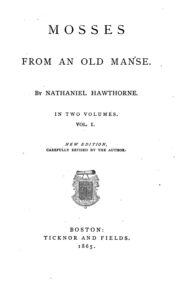
Earth’s Holocaust is one of Nathaniel Hawthorne’s allegorical short stories, originally published in his 1846 collection Mosses from an Old Manse. The story is one of his most directly allegorical pieces, with the central premise being a great public bonfire to which the people of the world bring all of the things they have decided are no longer needed in human life. Books, weapons, royal regalia, religious paraphernalia, monetary instruments, and various other categories of objects all get thrown onto the great fire as the story progresses.
The holocaust of the title is being used in the older Greek sense of a complete burnt offering, with the fire being a kind of ritual purification that is meant to cleanse the world of everything that the participants have decided is no longer worth keeping. Hawthorne uses the structure to develop a long meditation on what the various burning categories actually represent, on what kinds of human life would be possible after the destruction of all the burned objects, and on the question of whether the human heart itself might be the actual source of the problems that the various burned objects are being blamed for.
The closing section of the story turns toward Hawthorne’s characteristic moral framework, with the recognition that no purification of external objects can address the deeper problems that lie within human nature itself. The story has been read as a critique of the various nineteenth century reform movements that Hawthorne was sympathetic to in some respects but skeptical of in their more utopian ambitions, with the implication that the various external reforms cannot achieve what only internal moral transformation can produce.
For readers coming to Hawthorne through The Scarlet Letter and The House of the Seven Gables, Earth’s Holocaust shows him at his most directly engaged with the wider moral and political questions of his era. For students of nineteenth century American literature or of Hawthorne’s wider catalogue, the story is essential.
About the Author
Nathaniel Hawthorne was a 19th-century American novelist and short-story writer central to the Dark Romantic movement. He is best known for The Scarlet Letter and The House of the Seven Gables, with their themes of sin, guilt, and Puritan New England.
See all books by Nathaniel Hawthorne →