Main Street
Main Street is a sketch by Nathaniel Hawthorne, first published in 1849 and collected in The Snow Image and Other Twice Told Tales in 1852. It is one of the more ambitious of his historical pieces and is essentially a tour through the entire history of his home town of Salem from the original Indian settlement to the present day.
The device is theatrical. The narrator is the proprietor of a small show in which painted scenes are wheeled forward on a sort of moving panorama, each showing Salem at a different moment. The audience pays a few cents and watches the town grow from the first wigwams to the Puritan settlement, to the witchcraft trials, to the colonial period, to the early Republic, and on into the nineteenth century. The narrator provides the commentary, and his patter is interrupted now and then by hecklers in the audience who complain that the painted scenes are crude or that the historical details are wrong.
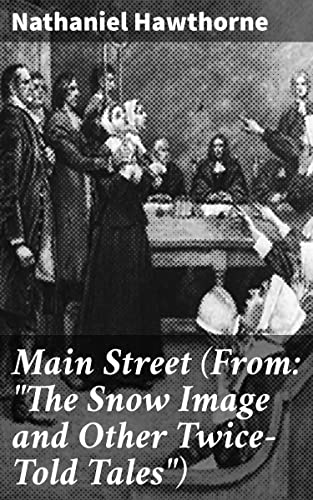
The witchcraft section is the heart of the piece. Hawthorne’s own ancestor John Hathorne was one of the magistrates at the Salem trials, and Hawthorne carried that family history all his life. In Main Street he shows the procession of accused women being led to Gallows Hill, and the writing slows down and turns serious in a way that the rest of the sketch does not. The hecklers are silent for that section. It is one of his clearest treatments of an episode he came back to throughout his work.
The piece runs perhaps forty pages and works as a panoramic history compressed into one street. For readers interested in Hawthorne’s relationship to his town and his ancestors, this is one of the most direct things he wrote on the subject. It pairs naturally with The Custom House sketch that opens The Scarlet Letter and with Young Goodman Brown, where the witchcraft material is handled as fiction rather than as history.
About the Author
Nathaniel Hawthorne was a 19th-century American novelist and short-story writer central to the Dark Romantic movement. He is best known for The Scarlet Letter and The House of the Seven Gables, with their themes of sin, guilt, and Puritan New England.
See all books by Nathaniel Hawthorne →