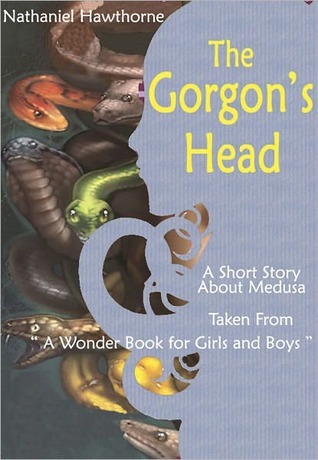
The Gorgon’s Head
The Gorgon’s Head is the first of six classical myths retold by Nathaniel Hawthorne in A Wonder Book for Girls and Boys, published in 1851. The collection was followed by Tanglewood Tales in 1853. Together the two books make up Hawthorne’s surprising late career sideline as a writer for children, and The Gorgon’s Head is the most direct retelling of the Perseus and Medusa story you can find from the period.
Hawthorne keeps the basic shape of the myth. Perseus is born to Danae after Zeus visits her in a shower of gold. They are exiled to a small island where the cruel king Polydectes wants to marry Danae and decides to get Perseus out of the way by sending him on the impossible task of bringing back the head of Medusa, the Gorgon whose look turns men to stone. The gods help him. He gets the cap of invisibility, the winged sandals, and the polished shield, finds the three Gray Sisters who share one eye, and eventually reaches the cave of the Gorgons. He uses the shield as a mirror and beheads Medusa without looking at her directly.
What is interesting about the Hawthorne version is the tone. He frames the whole book as stories told to a group of children gathered around a young college student named Eustace Bright. Eustace softens the violence, plays up the comedy, and lets the children interrupt with questions. The Perseus story comes out warmer and stranger than the schoolroom mythology of the period. There is a real charm to the way Hawthorne handles the giant Atlas, who in this version is almost a friendly figure.
For adult readers the book is a curiosity, and an enjoyable one. It shows what a serious writer can do with classical material when he is not aiming at scholarship. For younger readers it is one of the gentler introductions to the Greek myths in English. It pairs naturally with the other tales in the same book, particularly The Three Golden Apples and The Miraculous Pitcher.
About the Author
Nathaniel Hawthorne was a 19th-century American novelist and short-story writer central to the Dark Romantic movement. He is best known for The Scarlet Letter and The House of the Seven Gables, with their themes of sin, guilt, and Puritan New England.
See all books by Nathaniel Hawthorne →