
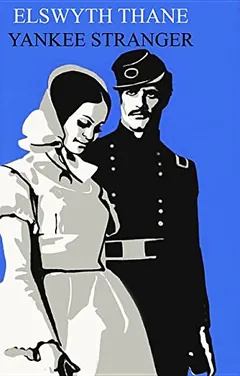
Yankee Stranger
I: October 29, 1860
This chapter is long, so it is split into 4 parts.
“What else can he do? He can’t fight all Charleston with sixty men and a brass band! It’s only a point of honour with him to hold Moultrie anyway, if you ask me—he’s on our side!”
“A soldier’s honour, though,” said Caroline. “I’d hate to be in his shoes now. Heavens, what’s that?”
“Cannon,” grinned Dabney. “Oh, just for fun! They’re firing the guns at the Citadel. Did you think the Yankees were bombarding us already?”
The windows rattled with another salvo and Caroline covered her ears.
“It sounds like war,” she said, white-faced. “Where’s Jonathan? Have you seen him? What’s Jonathan going to do? Why doesn’t he come home?”
Her voice rose hysterically. “I want Jonathan here!”
“All right, all right, I’ll go and find him,” Dabney soothed her. “He’s perfectly safe wherever he is, nobody is going to shoot at him! He’s probably turning out the company for parade.”
He tore out of the house without his hat—Dabney, the dandy, running down a street in Charleston in broad daylight without his hat! As he passed the Mills House he saw Cabot Murray standing quietly near the entrance, watching Charleston celebrate Secession.
“What will Lincoln do now?” he called, and saw that Cabot heard, and ran on towards Tradd Street where the bright militia uniforms were mustering in the December sunlight.
But it was his friend Anderson that Cabot was wondering about.
Major Anderson was a Kentuckian, married to a Georgia girl who, unlike the wives of most of the other officers at Fort Moultrie, had not followed her husband to Charleston. Mrs. Foster, wife of the engineer officer, was there, living in a charming little house at Moultrieville near the Fort, and some of the men housed whole families inside the fortress itself.
Mrs. Foster was giving a party on Christmas night which a number of
prominent Charleston people had promised to attend, and out of the kindness of her heart she had asked Major Anderson to bring along his Yankee friend, who must not be left to the dreary hospitality of the Mills House on Christmas. Cabot was wondering too, while Charleston shook with cannon fire and resounded with bells, what effect today’s news might have on Mrs. Foster’s party.
While he stood there a clod of dried horse manure struck the shoulder of his coat, and two half-grown boys ran by, looking back over their shoulders with rude gestures and yelling some insult which was drowned by the bells and the music of a martial band. Cabot brushed off his coat, and one of the hotel servants—an Irishman, for the Mills House departed from custom in that it did not employ coloured help in the dining-room—stepped close to him and said, “I’d go inside, sir, if I was you, before that happens again.”
“What did they say?” asked Cabot. “I didn’t hear.”
“Something about a damn Yankee, sir.”
“Children,” said Cabot, and strolled off in the direction Dabney had taken.
In the first block, two women he had met at Caroline’s cut him dead from their carriages, and a very young man in a fancy uniform, hurrying to join his company, said at the top of his voice, “I wonder you dare to show your face today, sir!” and waited for no reply. At the corner Cabot ran into Anderson’s orderly, who greeted him cordially and offered to walk along to the Mills House with him.
“I’ve just come from there,” said Cabot, and the orderly raised his eyebrows.
“I’d go back if I were you, sir. Things may get rather rough.”
“What about yourself?”
“I’m in uniform.”
“That’s no safe conduct now,” said Cabot, and they went on together through the town.
There were ugly looks and rude remarks, but no one attacked them.
When they parted an hour later the noise showed no sign of dying down, and the orderly made himself heard above it to say that he would see Cabot at Mrs. Foster’s on Christmas night, no doubt.
During the next four days Cabot went about Charleston unmolested, but a good many people let him very severely alone. On Christmas morning he
received a note from Mrs. Foster to say that Major Anderson was coming to Moultrieville direct from the Fort and had arranged for Mr. Murray to come out by boat at six o’clock, with directions where he would find the craft.
It rained throughout Christmas Day, and the short passage across the bay was chill and choppy. He arrived to find a family party, or combination of family parties, well under way. Children scampered and squealed and squabbled under foot, one of the rooms was cleared for dancing, and the punch had already begun to circulate. No one seemed to have a care in the world.
Anderson met him with a quizzical smile.
“I don’t mean to sound inhospitable,” he said, below the chatter all around them, “but I almost hoped you might have cleared off by now.”
“You know why I’m here,” Cabot said briefly.
“Devotion to duty,” Anderson nodded ruefully. “I’ve got it too. The only thing is—I’m under orders.”
“So am I, in a way.”
“You mean as a special correspondent? I suppose your father would fire you from the newspaper if you retreated now!”
“He’d fire me twice as quick as he’d fire anybody else, just because he is my father. Besides—I think it matters a good deal what sort of impression is sent North just now.”
“You’re a great believer in the power of the Press, aren’t you!”
“For good or evil,” Cabot told him seriously. “And the dignity of the Press, too. I would like to see that upheld a little better than it is!”
“You know, in the event of military operations, you newspaper fellows could make a lot of trouble for us poor devils of soldiers if you start telling all you know,” Anderson observed thoughtfully. “Now that every crossroads has a telegraph office, almost, you’ll have to take care not to tip off the enemy to every move we make—just by sending in your daily article.”
“In careless hands, the telegraph could certainly be a nuisance to you,”
Cabot agreed. “I’ll remember what you say about that. Anyone reporting from the field should always show his copy to the commanding officer, probably, before he sends it off.”
“As your commanding officer,” Anderson said gently, “with a campaign on my hands, I should probably tell you to go to hell.”
“You probably would. Well, perhaps they’ll have to set up some sort of clearing house in Washington for news.” He drank from the glass in his hand. “Where’s your toddy, sir?”
“I’m not drinking to-night,” Anderson murmured, his eyes travelling idly from face to face around the room. “Been having a little trouble with my insides. Have to be careful for a bit. How long do you expect to stay in Charleston?”
“Haven’t decided. Waiting for things to break, I guess.”
“Have you tried to use the telegraph office lately, by the way?”
“Yesterday. Why?”
“No trouble?”
“No trouble.”
“That’s good. I thought maybe now that the cat is out of the bag—that you write for the newspapers, I mean—you might find yourself a mite unpopular.”
“No more so than usual.”
“Who gave you away on that? I didn’t.”
“Somebody saw an old signed article of mine. It was to be expected. I should have travelled more incognito, maybe, but I didn’t think it would matter so much. Too late now.” He shrugged. “Well—how do we stand?”
“Oh, no, you don’t!” said Anderson in all friendliness, even with affection. “Trying to pump me for your no ’count rag of a paper, eh! I’m surprised at you.”
“Not for publication, sir. I’m just asking.”
“Oh, in that case—and not that it’s any secret—I have sixty-one men and a band to guard fifteen hundred feet of ramparts, which are entirely overlooked from Sullivan’s Island. A mob could overrun us from the sand banks in no time, and I am not allowed to raise fortifications there until after I see them coming, for fear of offending South Carolina. Forts Sumter and Pinckney, on the other hand, are defended by one ordnance sergeant each, armed with worsted epaulets and stripes down their pantaloons.”
“My God. Have a drink.”
But Anderson only smiled, and his eyes followed a chain of laughing children which wound in and out among the guests.
“You’d be better off out at Sumter, wouldn’t you?” Cabot asked after a minute.
“Oh, yeah, Sumter,” drawled Anderson inattentively. “But it’s all boarded up. And the worst of it is,” he added half to himself, “my heart isn’t in this war. It seems to me ridiculous and childish that a young, fearless, intelligent nation like this one cannot come to terms with itself. War is no remedy for what ails us, Cabot. I’m a soldier by trade, and yet I say that to go to war on this question of slavery—which doesn’t really come into it at all—is simply ridiculous. A fine thing if you took that to the telegraph office!”
“We’re going to get a war, aren’t we, sir?”
“We’re going to get a war,” Anderson assented wearily. “But how few can see that yet!” He shook his head, and sighed. “Somebody is going to take an awful whopping,” he sighed.
“Better have a drink, sir. You’ll feel better,” Cabot suggested.
“No, thanks, not to-night. Those little beggars are going to be sick as dogs before morning, eating all those ices. You know, I didn’t get a Christmas gift sent off to my wife up North. She’ll think I forgot it, but I couldn’t seem to get away to come into town lately.”
“She’ll be just as glad to see it if it comes a little late,” Cabot comforted him. “Come and have dinner with me at the Mills House and we’ll choose her something. I have to buy a gift myself. I’d like some advice.”
“Courting a girl at last, are you?” said Anderson with interest.
“She’s the sweetest thing in the world, sir. And she was ninety-five last birthday. How about dinner tomorrow?”
“No, not tomorrow, I’m afraid.”
“Well, let me know the first time you are in town, then.”
“Yes. I’ll let you know.”
X
The party broke up about midnight.
Early on the morning of the twenty-seventh, the inhabitants of Charleston saw smoke rising from Fort Moultrie. Crowds of citizens, their breakfasts untasted on the tables, rushed to the Battery or perched on the roofs of their houses, gazing seaward and speculating uneasily as to the meaning of the fire at the Fort. Some said they had heard gunfire during the night. Some said the garrison had burned blue-lights as signals. Finally
from some workmen returning from Moultrieville they learned with astonishment which mounted rapidly to indignation that at dusk on the twenty-sixth under the very nose of the guard-boat the entire garrison had removed itself successfully to Fort Sumter, which could not be overlooked and which could not be mobbed from the shore. Fort Moultrie was left without flagstaff or officer, not even an ordnance sergeant in striped pantaloons, its guns were spiked, and its gun carriages set afire. Charleston called it an act of aggressive war against the sovereign State of South Carolina, and before midday the streets were full of militia uniforms.
Major Robert Anderson, of the United States Army, has achieved the unenviable distinction of opening civil war between American citizens, by an act of gross breach of faith, said the Charleston Courier hotly. He has, under counsels of panic, deserted his post at Fort Moultrie and under false pretexts has transferred his garrison and military stores and supplies to Fort Sumter. “Bob Anderson has opened the ball,” said Caroline, smiling with white lips at her Jonathan, warlike in a red sash and sword worn with his frock coat, and a palmetto cockade.
Cabot was tickled. He couldn’t help it. He had known Major Anderson in Trenton before Anderson was sent south in November—to take charge of the fortifications in Charleston harbour—and on Christmas Day the fellow had looked him in the eye and worried about sending a present to his invalid wife. I’ll let you know, he had said, about coming to dinner at the Mills House. That was a good one. Trouble with his insides, like fun. He’d had an all night’s job in front of him, getting ready to evacuate. And he had stood about till twelve o’clock, cold sober and looking blank as a new slate, enjoying the party at the Fosters’. I mentioned Sumter, Cabot thought, chuckling, and he never batted an eye. Boarded up, he chuckled. So it was all boarded up, the old fox! Well, that’s one story the paper didn’t get till afterward!
By evening on the twenty-seventh the militia in their new uniforms had stormed and occupied the unresisting forts Moultrie and Pinckney, and taken over the Post Office and Custom House building on Broad Street. Cut off from most of his acquaintances in the city, and owning no real friends there except Anderson and the Fosters, Cabot spent the day observing the endless excitement in the streets and pondering the events it would now be his duty to report to the daily paper which his father owned and edited in
Trenton, and the other publications he served occasionally as a roving correspondent. He knew that he was seeing history made—tragic history, it seemed to him, as he watched the arrogant, noisy Charlestonians preparing so confidently for the war they never doubted their ability to win before it had even begun.
He returned to the Mills House at twilight for a meal and to write up his notes. But during the evening a new outburst of cheering and a torchlight procession with a band attracted him into the streets again and led him to the vicinity of the Custom House where some sort of oratory was going on.
He set his back against the corner of a building at the fringe of the crowd and began to listen. The speaker, who had obviously been tippling, thundered on, his discursive theme the unfair and ill-informed hostility of the North to South Carolina, who wouldn’t hurt a fly; the iniquities of the Abolitionists in general and the Black Republicans in particular; and the abusive language used by Northern statesmen and Northern newspapers against the courteous, soft-spoken, unexcitable, unprejudiced people of South Carolina—suddenly at the finish of a sweeping gesture which nearly overbalanced him, his glance fell on Cabot, tall behind the crowd, and recognition glimmered in his blood-shot eyes.
“There’s one of ’em now!” he cried, and his voice rose a notch triumphantly. “There’s a Yankee now— spyin’ on us down here—and telegraphin’ back his lyin’ drivel to be printed and enflame ’em against us some more—listenin’ to every word I say, mind you, and takin’ notes on it, no doubt, lookin’ on at an honest man in that damn’ top-lofty Yankee way of his— eavesdropping’‚ that’s what he’s doin’, spyin’ on us—”
Too late Cabot recognized the dishevelled orator as one of the clerks at the telegraph office. Heads turned in the crowd, and it began to mutter—
where?—who?—which one?—where was the spy? Cabot brought his weight firmly to both feet. He remembered subconsciously having passed the dark mouth of an alley farther down the block at his back—blinded by the torches, he could not tell how far away it was—if he could just recede unnoticed beyond the edge of the glare and duck up the alley—
“Yankee spy! ” someone yelled shrilly from the middle of the crowd.
“Lemme at him! Shoe me the damn Yankee spy!”
Cabot took several cautious steps backward, his eyes on the wall of faces. A man broke through the fringe and made a lunge at him. Cabot
threw him off easily, and he stumbled and fell and the crowd yelled. A tall figure loomed at Cabot’s shoulder and he whirled defensively, his fist ready.
It was Dabney.
“Steady,” said Dabney coolly. “Some of them are pretty drunk. Look out!” They both dodged. Something whizzed past their heads and shattered against the wall. “Back up and to the left,” said Dabney, moving with him, their faces towards the mob. “I’ll try and stay with you, but if we get separated—stand away, you little bastard, keep your filthy hands off me!”
He knocked a small rumpled man backwards into the front ranks with a well-placed upper-cut, and the crowd’s clamour rose to a roar. “If we get separated run for Caroline’s stables and take the first horse you see. Get out of town—this is no joke—”
The crowd was throwing anything it could pick up now, as they retreated before it. Just as they reached the entrance to the alley something cold and sharp struck Cabot’s head, knocking his hat off and starting a trickle of blood at the edge of his hair.
“Now run!” said Dabney, and they ran headlong into blackness, with the howl of the mob behind them.
After what must have been the length of a block they came to an opening between the outhouses and stables which lined the left-hand side of the alley, under a gleam of light from an upstairs window. Cabot staggered dizzily, and applied his handkerchief to the cut, for it was bleeding into his eyes. He felt dazed and sick. As they paused, torchlight showed at the mouth of the alley, and the mob turned into it towards them, baying as it came.
“Down!” said Dabney, and pushed Cabot to his knees in deep grass which stank and was full of briers, and flung himself flat beside him. “’Way down—now crawl—put that white handkerchief away—round here to your left—it’s a henhouse and the damn’ things will squawk if we’re not careful
—round this corner—keep crawling—keep down—”
Torchlight streamed through the narrow alley, and the tramp of feet and the strange unhuman sound a mob makes when it hunts a man both grew louder. The window above their hiding-place went up, and a head looked out.
“What is it?” yelled the head. “What’s going on?”
“Spies!” came the answering yell from the mob, and a huge, bearded fellow capered drunkenly with a rope from which a noose dangled. “Yankee spies! Come and see the hanging!”
“I’ll be there!” The window banged.
With Dabney’s arm heavy across his shoulders, Cabot lay still in the shadow of the hen-house, his face smothered in the rank grass, and strove with nausea. His head was singing till he could not be sure where it left off and the noise of the mob began. But gradually the tumult did recede down the alley away from where they lay, and the light in the upper window went out, and they sat up in a blessed, spreading silence.
“You all right?” Dabney whispered.
“Yes, thanks. You’re not in very good company, you know. Better leave me here and—Don’t think I’m not grateful, but—”
“Rats!” said Dabney the elegant one. “I’m not doing it for you. I’d catch hell from Gran if I didn’t get you out of this!”
“I’ll be all right now. It needn’t be your funeral too.”
“You don’t know Gran the way I do!” said Dabney, and got to his feet rather stiffly. “They caught me one on the shin with something. I did have a hat—here it is—come on, we’ll get you a horse.”
They retraced their steps cautiously to where they had entered the alley.
The mob could still be heard in the next street, and people were hurrying to join it, and hanging out of windows, and shouting questions. Dabney set his own hat, a broad-brimmed felt with a blue Secession cockade, on Cabot’s head and pulled it well down.
“All right, here we go—we’ve both had a little too much to drink, d’ya see, and I’ve lost my hat, but you still have yours—quite a load on, we must have—” He linked his arm to Cabot’s and they started unsteadily down the street. “Could you bring yourself to sing Dixie?” he inquired, and began in a carolling tenor: “Then I wish I was in Dixie—Hooray—Hooray—!”
Cabot joined in in a fruity baritone. Their progress was erratic and apparently without direction—but slowly they gained on Caroline’s stables.
“I had no idea you could sing!” said Dabney with admiration. “Let’s join a choir some place. In Dixie land I’ll take my stand, To live and die in Dixie
—Away—A-way—Away down south in Dixie!”
Two boys ran out of a gate and blocked their way, staring—fugitives from an unwatched nursery.
“Where’s the hanging?” one of them demanded. “Are we too late for the hanging?”
“You two sh-should be in bed,” Dabney told them thickly. “You’re sh-shure to catch it if they fin’ out you want to— what hanging?”
“Yankee spies!” piped up the smaller of the two. “We want to see the Yankee spies!”
“Well, they aren’t down thataway,” said Dabney with authority, pointing in the direction of the alley and the mob. “Because we just came from there and we didn’t shee—see—any s-spies.”
“Jack ee! Benjamin! Goodness, what a fright you gave me!” Light poured out from an open door beyond the gate. A young woman ran down to the gate and caught the children by the hand. “What do you think you’re doing, the minute my back is turned!”
Dabney swept her a gallant bow.
“Good evenin’, ma’am,” he said. “Excush my not havin’ a hat, ma’am, but I lef’ it—I l-left it in the café. Got to go back for it now. My friend, here, is a lil bit drunk, and tha’s how I came to leave my hat—excush me
—” He bowed again, and they staggered on, followed by her laughter.
On, towards Caroline’s stables, unhurried, unsteady, very drunk indeed, apologizing to the amused passers-by they met, many of them somewhat under the weather themselves, who beheld Dabney’s elegant disarray with indulgence. Cabot kept silent, lest his speech betray him, and Dabney was endlessly loquacious in an affable stream of slightly thickened words which would have done credit to a professional actor in a well-conned part, building up the history of his incapacitated friend who had no head for brandy, and the forgotten hat in the café which stood in some street whose name had slipped his mind and which seemed to have mislaid itself while he wasn’t looking.
Thus they traversed the city, arm in arm, the broad felt brim shading Cabot’s face, the trickling stream of blood stealthily staunched and wiped away whenever they came to a good patch of shadow between lamp-posts.
Thus they reached Caroline’s stables from the alley at the rear, and found them unlighted, empty of coachmen and horse-boys, who had all run out to see the drilling on the Battery.
Dabney felt his way in with no trouble and began jingling harness.
“Never saddled up in the dark before,” he muttered. “Have to take my time about it. Hullo, Ladybird, don’t you bite, now—”
Cabot leaned against the doorpost, feeling giddy and gone at the knees, while Dabney fumbled, cursed, and made love to the mare he saddled blindly. Finally he led her out of the stall and put the bridle in Cabot’s hand.
“Well, there she is,” he said. “Be good to her, she’s been pretty well coddled all her life. I’d make for Georgetown if I were you, and—”
“I can’t—can’t take your horse,” said Cabot dizzily, and Dabney bent forward to try and see his face in the dark.
“Say, are you all knocked up?” he asked anxiously. “Why didn’t you tell me?”
“It’s this damned crack on the skull,” Cabot said fretfully. “I can’t seem to—see straight.” He leaned against the doorpost again, the reins slack in his hand. “Be all right in a minute.”
“Stay right where you are,” Dabney ordered, and there was another period of jingling and fumbling and mumbling, and the creak of leather.
“All right,” he said, appearing and mumbling, and the creak of leather. “All right,” he said, appearing again at Dabney’s side. “I’m going with you.
Safer anyway, with two of us. Know my way around.”
“Please don’t bother about me,” said Cabot, rousing himself. If you’ll just give me a leg up, I’ll manage—”
“All right—here you go—” Cabot mounted heavily from Dabney’s bent knee. “Let’s have your reins.”
“I’d really rather you didn’t—”
“Hand over your reins.”
They moved out into the alley in single file. When they came to the street, which was nearly empty now, Dabney drew Cabot’s horse alongside.
“Catch hold,” he said, and Cabot took the reins again. “They’re down that way still,” Dabney said, listening. “Which means we go up this way.
All right now?”
“Yes, I’m all right.”
“Sure you are. Need some fresh air.”
They set off side by side at a circumspect trot. After what seemed to Cabot like miles of almost deserted, ill-lighted streets they came to the edge of the city and a hard-surfaced turnpike. By then the frosty air had cleared his head a little and he was feeling better.
“Let her out,” said Dabney, and they took the turnpike at a canter, by starlight. When he finally drew rein, both men and horses were breathing hard, and dawn was greying the rim of the world. “This is the Georgetown road,” he said. “Go to the inn there and go to bed. Say you were thrown, though it’s an insult to Ladybird. I’ll ride over tomorrow and see how you are. Don’t come back to Charleston till I’ve seen you.”
“It’s useless to try and thank you—”
“Rats!” said Dabney. “I’d have done the same for any beau of Gran’s!”
“Be sure to tell her you saved my life.”
“Come and tell her yourself,” retorted Dabney, and they shook hands in the dawn.
XI
Caroline lost no time in reporting an affair which both Dabney and Cabot would have been quite willing to have forgotten. And as her letter arrived in Williamsburg before Dabney’s return there, he couldn’t just try to pretend that nothing had happened at all.
“Your Mr. Murray,” wrote Caroline the first week in January, and with no attempt to tone anything down, “was taken for a Yankee spy, or should I say mis- taken, and but for Dabney’s interference might very well have been hanged to the nearest lamp-post. It is impossible to get the whole story out of Dabney, of course, he shuts up like a clam, but it’s all round town that Dabney was seen with him that night, ran away beside him with the mob after them, and somehow succeeded in getting him out of town in time to save his neck. Dabney was mysteriously absent from the house all day on the twenty-eighth, and Madeleine Morell—who loved knowing more about my own cousin than I did!—
told me her husband heard that during the next evening Dabney brought Mr. Murray back to the Mills House, went up to his room while he packed and settled his account, and saw him on to the train for Wilmington. And only a few days earlier Dabney had been wanting to shoot Mr. Murray at sight! I shall never understand men! ”
“Obviously, she never will, at this rate,” nodded her grandmother resignedly, reading the letter aloud to Eden.
“I’m not quite sure I do myself, Gran,” Eden admitted. “Why do you think Dabney changed his mind?”
“Probably because Mr. Murray behaved well in rather trying circumstances.”
“You mean he wasn’t afraid?”
“Any man is afraid of a hanging, Dee.”
Eden shivered.
“I mean,” Tibby Day went on gently, “that a man can be scared stiff and still behave well. The best soldiers are always frightened, they say. But they go on, just the same.”
“Oh,” said Eden faintly. “Is there any more to the letter?”
“Nothing but Caroline’s version of the political situation. Charleston seems to have just one idea, and that is to get possession of Fort Sumter. If Lincoln tries to reinforce Anderson, Charleston will fire on the ships, she says. A fine thing!” Gran folded the letter disdainfully and tossed it on to the silver-table beside her chair. “Let’s hope Dabney will make a little more sense—about everything—when he comes.”
During January five more states seceded, followed by Texas on February first. The Secession Congress met at Montgomery on the fourth, and elected Jefferson Davis as President of the new Confederacy. Virginia was not, of course, represented there, and maintained a watchful sort of neutrality, as her own State Convention met at Richmond in a last desperate effort to find a way of preserving the peace and the Union. It was composed of committees of men from both North and South who were willing to unite in the effort, which if it failed left very little hope of anything but civil war. At the same time Virginia was determined, as Lafe put it, not to be driven by the North nor dragged by the Cotton States.
All four of the Spragues went to Richmond in February, as Lafe was a delegate to the Convention and Sally demanded a season of gaiety after a depressing Christmas, marred by apprehension over South Carolina’s act of Secession. Once ensconced in the Spotswood Hotel, Sally found it fashionable to be a rebel, and linger in the hallways of the State House and flirt with one’s favourite delegates as they came in and out. Louise went to Richmond because Lafe would never have dreamed of going without her.
Sedgwick went because war between the States would be to him the most dreadful calamity the world had ever seen, and he was unable to stay away from the speeches and debates and the forlorn hope of some inspired solution.
But as the days passed, Sedgwick saw with a sort of creeping horror that nobody was going to be able to solve it like this. The sessions of the Convention seemed to him an orgy of loose declamation and purposeless resolutions—the Convention was talking itself to death, he wrote Sue, and the sands of time were running out.
Sue knew only too well what worried Sedgwick most. If war came, every man in the South would be expected to take up arms against the North. The Spragues were a fighting family, they never held back. Even Lafe at forty-one would expect to serve in the field. But Sedgwick, especially since the visit of Cabot Murray, whom he had liked and admired, saw no sense whatever in shooting at his fellow Americans. Sue knew that Gran backed him up in this extraordinary viewpoint. She knew, too, that to Lafe it was inexplicable, wrongheaded, and humiliating. And she even wished in her secret heart that with regard to the war Sedgwick could be a little more like Dabney, who had come back from Charleston to join one of the volunteer companies that drilled on the Palace Green—Dabney wore, until the new uniforms were ready, his grandfather Julian’s red sash and sword, which had seen Yorktown.
It was never that Sedgwick was a coward, she knew. Sedgwick wasn’t afraid to fight, even though it might look that way. If some foreign power had menaced Charleston, or Boston either, Sedgwick would have been the first to join the defending army. But he had a rational conviction that America was all one family, and that for one section to take up arms against another was as fantastic and unnecessary as it would have been for Dabney to go gunning for Fauquier because they had started some kind of brotherly wrangle. Sedgwick didn’t use any of the familiar arguments against war between the States. He didn’t consider it worth while to mention that the South would be hopelessly outnumbered and outgunned from the start, or that slavery ought to be done away with anyway, or that Lincoln had won in a perfectly fair and legal election in which the whole country had participated equally. He simply said that war between the States was silly.
And that wasn’t a very good argument, because it was a dead end.
Sue knew that Sedgwick himself would look silly if Dabney and Fauquier and Grafton Crabb and all the others joined the Southern army and went away to fight without him. Fight where? she would wonder, lying in bed at night with Eden asleep beside her and the moon coming in the window. Where would the battles be? Down at Charleston, of course, that’s where the forts were. She pushed away from her, night after night, the disturbing knowledge that there was a fort in Virginia too—Fortress Monroe, down at the end of the Peninsula beyond Yorktown, was full of Federal soldiers. Would there be fighting at Fortress Monroe as well as at Fort Sumter? If there was, or if the Yankees at Fortress Monroe started to come up the Peninsula, Sedgwick couldn’t possibly stand by, because Williamsburg would lie right in their path. Once the British had come to Williamsburg, Gran could remember. The militia couldn’t stop them, but it tried. Sedgwick would have to try….
Sue would go over and over it after the light was out, losing sleep till she began to lose weight as well, and one night Eden, who wasn’t sleeping any too well herself, roused to feel her sister lying rigid with the concentrated stillness of the wakeful.
“Sue—aren’t you asleep?” she whispered, reaching out a hand.
“Not yet.”
“Why not?”
“I got to thinking.”
“What about?”
“Dee—do you think there’s going to be a war?”
“I don’t know. I’m afraid so. We must try not to worry, they’re doing all they can in Richmond.”
“Sedgie says that’s no good.”
“Well, he’s got no right to say that yet. With men like Uncle Lafe there they ought to find a way.”
“Tell me honestly, Dee, do you think Sedgie ought to join a company and drill, the way Dabney does?”
“Well, I—I’m a little surprised that he doesn’t, aren’t you?”
“Do you think Uncle Lafe minds dreadfully?”
“Well, I—think he may begin to mind soon, if—if things go on like this.
You see, the Spragues have always—”
“Has he said anything? How do you know how he feels?”
“Only what Aunt Louise said to mother when Dabney joined the company.”
“What was that?”
“She only said she hoped Sedgwick would do the same soon, because it seemed to be the thing to do and—and Uncle Lafe couldn’t understand why he had refused, and—”
“They think Sedgie is a coward, don’t they!” cried Sue fiercely in the dark.
“Oh, no, Sue, it’s no question of courage! At least not yet. It’s rather as though Sedgwick just wouldn’t take the trouble, or as though he—You see, dear, if the boys drill now and there isn’t a war, there’s no harm done. But if there is a war, then they can be ready a little sooner. It will save time if we have to—have an army suddenly.”
“Sedgie isn’t afraid to fight!” Sue said passionately, lying on her back, staring up at the ruffled tester of the bed with hot, dry eyes. “Sedgie isn’t afraid of anything! It’s just that he thinks it doesn’t make any sense. Do you think it makes sense, Dee, for Sedgie to join a company that is drilling to learn how to fight people like Mr. Murray? Look at Dabney in Charleston—
he took quite a lot of trouble to save Mr. Murray’s life! Well, there you are!
That’s what Sedgie means! The Yankees are just like us. We don’t want them killed. Suppose Dabney and Mr. Murray met on a battlefield now—
would they have to kill each other? If it was Sedgie instead of Dabney, would he have to kill Mr. Murray? Would Uncle Lafe want him to?”
“Honey, I don’t know,” Eden moaned, and drew Susannah’s taut little body into her arms. “Let’s not think about it. Let’s go to sleep.”
“It doesn’t do any good not to think about it,” Sue said, muffled in her hair. “The next time you look it’s still there, getting worse all the time.
Fauquier says all the older boys at the Institute will be officers at once if the war starts. Fauquier wants to fight. Even Barry talks about it. What will Mr.
Murray do?”
“I haven’t an idea.”
“Where do you suppose he went after Charleston?”
“Back home, perhaps. He meant to be in Washington for the inauguration.”
“Will he come here again?”
“Oh, honey, do let’s try to go to sleep!”
“You liked him—didn’t you, Dee?”
“Yes—very much.”
“Would you marry him?”
“Well, I—I’m not likely to get the chance.”
“He’s nice. I liked him too, and Gran was positively smitten with him! If Yankees are like that, I don’t see why we can’t get along with them without a war.”
“We’ll find some way, Sue—we must. They’ll work out something at Richmond.”
“Sedgie says all they do there is egg each other on. You know how excited Uncle Lafe gets. It’s almost as though Dabney were Uncle Lafe’s son and Sedgie were father’s, isn’t it?”
“It might have been better that way.”
“Imagine Sedgie being my brother!” said Sue, amused, and fell asleep with the feeling that in some dim, unexplored way she was very glad he wasn’t.
XII
“In your hands, my dissatisfied fellow-countrymen, and not in mine, is the momentous issue of civil war,” said Mr. Lincoln in his inaugural speech.
“The Government will not assail you. You can have no conflict without being yourselves the aggressors. You have no oath registered in heaven to destroy the Government; while I shall have the most solemn one to preserve, protect, and defend it.”
That was the first real forecast of his policy, and the prospects of peace did not brighten as the telegraph wires carried his words to Richmond and Charleston and Montgomery. As Lafe had predicted, Southern officers in the United States Army were resigning their commissions and returning home to await events. The Confederate Government was therefore able to order General Beauregard to Charleston, and it looked as though South Carolina was going to try to take by force what she regarded as her own property. There were rumours that the garrison at Sumter would be withdrawn, and other rumours that it would be reinforced at whatever cost.
“Guess who is here now!” wrote Sally to Eden from Richmond. “Mr.
Cabot Murray, no less! He has come to see the Convention, and when I asked him what paper his articles would appear in, he showed his teeth at me the way he does, and said—‘The same ones as usual’—as though that was any help! People like him here, and because of his Washington connections he has come with introductions to some houses it is very difficult for Yankees to get into any more. I am quite popular because I knew him even before the Charleston episode, which everyone talks about, so it’s no good my pretending it’s a secret! Whatever hit him on the head that night has left quite a fascinating scar, near his temple on the right side. He and Sedgwick are thick as thieves, and I think Father is afraid Sedgwick will be corrupted even further into the Yankee viewpoint! Mr. Murray says poor Major Anderson is destined to be the scapegoat no matter what happens—though Anderson is married to a Georgia lady and is very Southern in sentiment, he has a stern sense of duty. Everybody says if only his sense of duty had not run away with him, he would never have gone and put his head in a hole, and made everything worse than it was before! Our Washington friends are all wondering what Colonel Lee will do—the man who settled John Brown’s hash at Harper’s Ferry—he is home on leave at Arlington now, and they say he is very depressed and very much against Secession.
They also say he is the handsomest man in the world….”
“Lee,” said Tibby Day thoughtfully. “Robert Lee, that must be. I remember. He married into the Washington family—Mary Custis, her name was. His father was Light Horse Harry Lee, in our war. Now who,” she demanded suddenly of Eden as though she had been meaning to ask someone for some time, “who is this man Jefferson Davis they have dug up down there in Alabama?”
“He was a senator, wasn’t he?” said Eden doubtfully.
“Was he, indeed!” said Tibby Day, and her needles clicked angrily. “A fine thing! Where was he born, then?”
“I’ll have to ask Father. I think he comes from Mississippi.”
“Aha! Very likely! Not a Virginian, you can be sure of that!”
“Shall I read you the rest of the letter?”
“Sally is a goose‚” said her grandmother. “Is there anything more there about Mr. Murray?”
“No.”
“Then I think I’ve heard enough.”
On the fourth of April a test vote in the Virginia Convention showed a majority of two to one against Secession, and there was a popular outcry that the conservative element was overbalancing the young blood and leading them into undignified compromise.
A few days later Tibby Day got a note from Cabot to say that if she would permit him to pay his respects on Saturday the thirteenth he would come and bring her her Christmas present from Charleston.
“And about time, too!” she remarked, looking pleased all the same. “I’m glad he will see Williamsburg looking so pretty, in the spring.” And she added, after a moment—“I wonder what he has got for me.”
OceanofPDF.com