
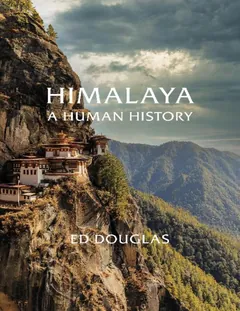
Himalaya: A Human History
A Note on Sources
During the long gestation of this book, I found myself at dinner with a former Conservative cabinet minister. He was graceful enough to take an interest, and seemed delighted with some of what I told him about the Himalaya. And then, to conclude the conversation, he said: ‘Of course, no strategic interest.’ This seemed to me a revealing comment. Not because it’s true, because it isn’t: just ask political scientists in Delhi, Beijing or Kathmandu. Rather, it opened a window on how the British imperial project – from which, however self-ironically, he was drawn – saw India’s northern border. Ultimately, the British Empire regarded the Himalaya as peripheral, somewhere exotic, a place for yarns, or adventure, not resources or policy, a place to recruit troops, not send them. Moreover, he had no inkling about how British interest in the relationship between China and Tibet made that relationship more combustible.
One consequence of this perspective is a lacuna in how the Himalayan
region has been mediated by outsiders. It is not that the Himalaya is an intellectual blank on the map: there’s a wealth of scholarship on every aspect of life there. It’s more that myths and legends about the Himalaya continue to dominate popular culture, insulating the West from using that scholarship to create a wider understanding of the region. In a small way, this book is an attempt to bridge that gap. It is, for better or worse, an attempt to write something of popular appeal to those with an interest who want to know more, using the insights of a long interest and much reading in Himalayan studies. That’s why I’ve deliberately not included endnotes, which would make a big subject even more unwieldy. Most scholars specialising in the region will recognise where most of what’s written here comes from. The bibliography below sets out the sources and offers a starting point for those who wish to read more wildly and more deeply. I draw particular attention to bibliographies from John Whelpton on Nepali history and Julie Marshall’s magisterial work on Tibet.
Largely missing from this list are the myriad media outlets that I’ve
relied on over the years, the Nepali Times, the Kathmandu Post, Himal and its successor Himal South Asian, The Record, Phayul, the Tibet Sun and Tibet Post and the Nepali literary magazine La.Lit. There are many Himalayan bloggers at work today but I enjoy particularly Jamyang Norbu’s ‘Shadow Tibet’ and Tim Chamberlain’s ‘Waymarks’. John Vincent Bellezza’s ‘Flight of the Khyung’ is referenced in the bibliography. The work of the Tibetan activist and writer Woeser appears on the website ‘High Peaks Pure Earth’. Other online resources I found useful included the website ‘Treasury of Lives’, which offers a useful guide to the complex world of Tibetan Buddhism and ‘Himalayan Art Resources’, art being perhaps one of the most accessible ways of appreciating the range and depth of Himalayan culture. Also missing, necessarily, is the Himalayan fiction that has deepened my appreciation and knowledge of the region. Manjushree Thapa’s non-fiction is referenced, but not her novels The Tutor of History and Each of Us in Our Own Lives. She and the outstanding short-story writer Prawin Adhikari have both translated works by the major Darjeeling author Indra Bahadur Rai, whose haunting work is consequently now available to non-Nepali speakers. Rai had such a particular voice and his writing catches a world that non-fiction, especially from an outsider, could never hope to match. Shradha Ghale is another Nepali writer who bridges non-fiction and fiction: her novel The Wayward Daughter is a beautifully written insight into the trials of growing up a young woman in modern Nepal, as well as revealing how Kathmandu is changing in the age of identity. There are many others: Rabi Thapa, Pranaya S J B Rana, Samrat Upadhyay and the Sikkimese architect and author Chetan Raj Shrestha. Himalayan writers deserve much more attention than they get, living as they do in the shadow of India. I’ve also benefitted from the work of Himalayan film-makers, particularly Kesang Tseten but also Ngawang Choephel, Khyentse Norbu, Deepak Rauniyar and Lu Chuan, to name but a few.
Of the works listed below, I want to pick out a very few that the general
reader will enjoy. Apart from the Himalayan writers already mentioned, Kate Teltscher’s book on George Bogle, The High Road to China, is a delight. So, for different reasons, is Nicola Shulman’s sharpwitted portrait of the self-absorbed plant collector Reginald Farrer, A Rage for Rock Gardening. Thomas Bell’s layered and shifting Kathmandu catches not only the complexities of this ancient city but those of modern Nepali politics as well. Robbie Barnett’s Lhasa: Streets with Memories does something similar for Tibet’s capital, capturing something of the old city before it was remade. Sam Cowan’s Essays on Nepal have all the insight you’d expect from a former Colonel Commandant of the Brigade of Gurkhas but are accessible and full of energy. I would also want to draw attention to the collections of academic essays included in the bibliography, for their variety of voices and the tight focus of subjects.
Finally, although there was almost no original research in the writing of
this book, I did explore the papers of F M Bailey in the British Library, where I found evidence of his antipathy towards Charles Bell, and made use of one or two gems I came across in the Alpine Club’s archive, and wish to thank the Alpine Club’s archivist Glyn Hughes and the librarian Nigel Buckley.
OceanofPDF.com