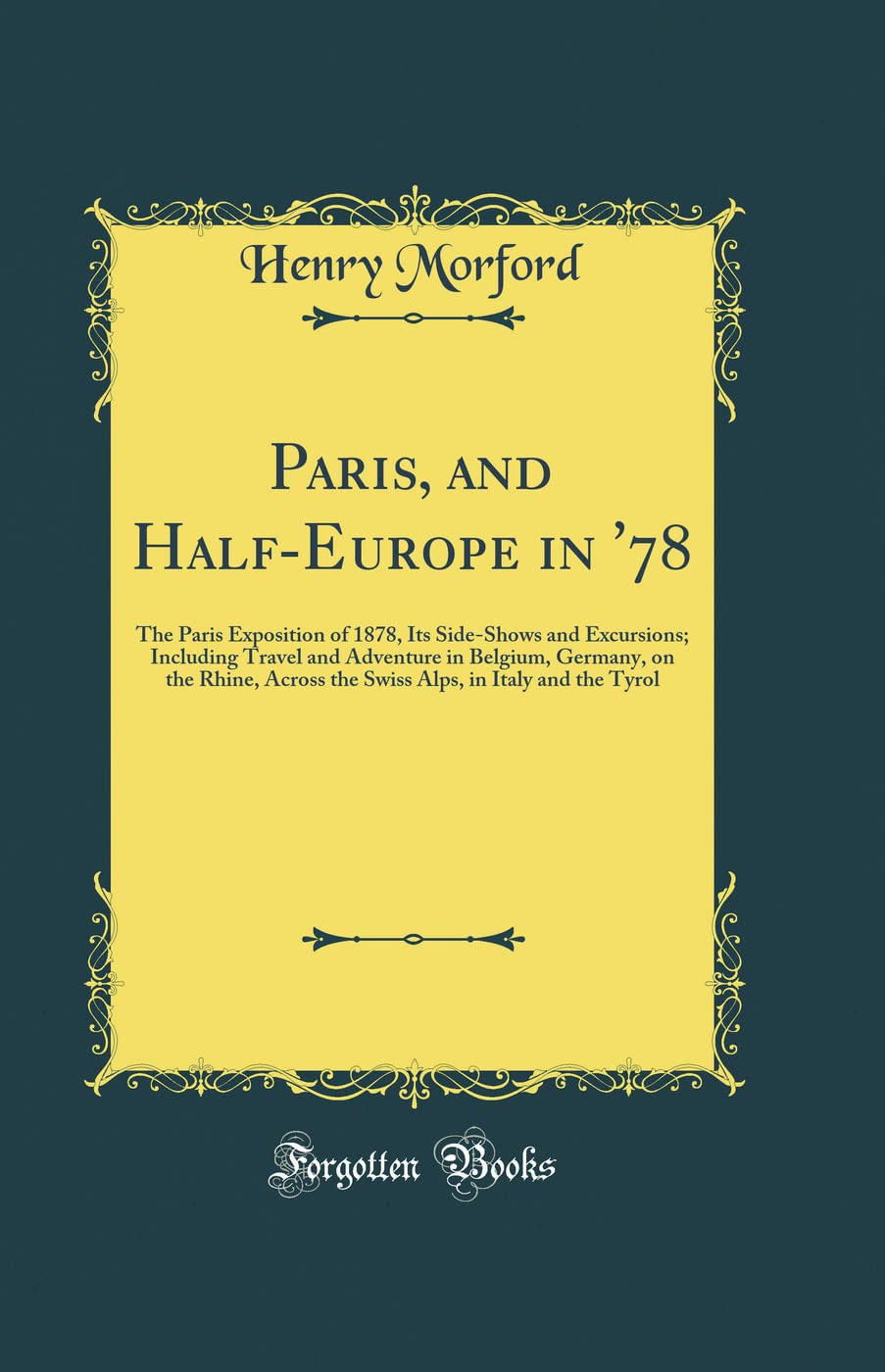
Paris, and Half-Europe in ’78
Paris, and Half Europe in ’78 is a travel book by Henry Morford, the American journalist and writer who lived from 1823 to 1881. The book records Morford’s observations during his European travels in 1878, with the Paris Universal Exposition of that year as one of the central destinations.
The Paris Universal Exposition of 1878 was one of the major international world fairs of the late nineteenth century. The Exposition was held on the Champ de Mars and the Trocadéro, with the new Trocadéro Palace built specifically for the event. The Exposition celebrated the recovery of France from the substantial disruptions of the Franco Prussian War of 1870-71 and the Paris Commune of 1871, and it attracted substantial international participation including major exhibits from the United States, Britain, the German Empire, and the various other European and non European countries that participated in the broader nineteenth century international exposition movement.
Morford had produced various previous travel books on European subjects, including Over Sea, or, England, France and Scotland as Seen by a Live American of 1867, and his various journalistic and literary work had given him substantial standing in the American newspaper and magazine world of the period. The Paris and Half Europe book continues his broader project of presenting European subjects to the substantial American audience interested in European travel and culture during the years when American international travel was becoming progressively easier and more popular.
Morford writes in the conventional American travel book mode of the period, combining substantial description of the major European cities and their cultural attractions with the kind of comparative observations between American and European life that his American readers expected. The Paris Exposition gives the book its central organising occasion, with substantial chapters on the various exhibits, the cultural events, the daily life of the city during the exposition months, and the broader European political and cultural situation that the exposition was celebrating.
The book is of interest now to historians of late nineteenth century American travel writing, of the Paris Universal Exposition of 1878, and of broader American observation of post war French recovery during the early Third Republic. It pairs naturally with Morford’s earlier travel books and with the broader American travel writing tradition on European subjects from the period.
About the Author
Download free books by Henry Morford on BDeBooks. Read Henry Morford’s works online or download as PDF/EPUB — part of our growing free eBook collection.
See all books by Henry Morford →