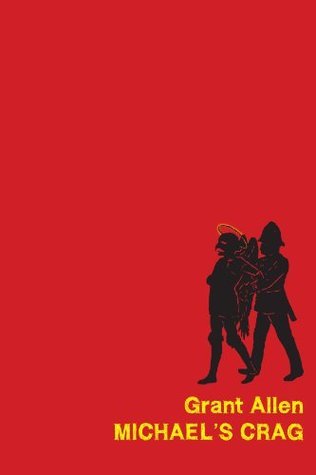
Michael’s Crag
Michael’s Crag is a novel by Grant Allen, published in 1893. It is one of his Cornish novels, set on the cliffs and coastline of the far southwest of England, in country Allen knew well and described carefully. The book sits between his more famous late Victorian polemic novels like The Woman Who Did and his lighter detective fiction, and it has a strangeness of its own that has kept a small readership coming back to it.
The story centers on a young Cornish man named Michael Trevennack who has inherited a remote cliff top property called Michael’s Crag. The crag is a tall sea stack with an ancient chapel and a long local history of strange occurrences. Michael’s family has lived in the area for generations and is connected with various local traditions, some of which involve unhappy events at the crag itself. The plot involves a young woman who comes to stay in the neighborhood, a developing romance, and an old crime that gradually surfaces over the course of the book.
Allen handles the Cornish setting with real affection. He had spent time on that coast and the descriptions of the cliffs, the moors, and the small fishing villages are precise. The folklore is treated seriously rather than as decoration. Some of the most interesting passages in the book are not directly part of the plot but are extended sequences in which Michael walks the coast or visits old church sites and reflects on the layered history of the place.
The novel is less famous than The Woman Who Did, the controversial book Allen would publish two years later, and it has none of that book’s polemic about marriage and women’s independence. It is a quieter book, more interested in atmosphere and inheritance than in social argument. For readers who want to see Grant Allen in a different mode, Michael’s Crag is one of the better choices. It pairs naturally with The Beckoning Hand and Recalled to Life, two of his other mystery novels from the same decade.
About the Author
Download free books by Grant Allen on BDeBooks. Read Grant Allen’s works online or download as PDF/EPUB · part of our growing free eBook collection.
See all books by Grant Allen →