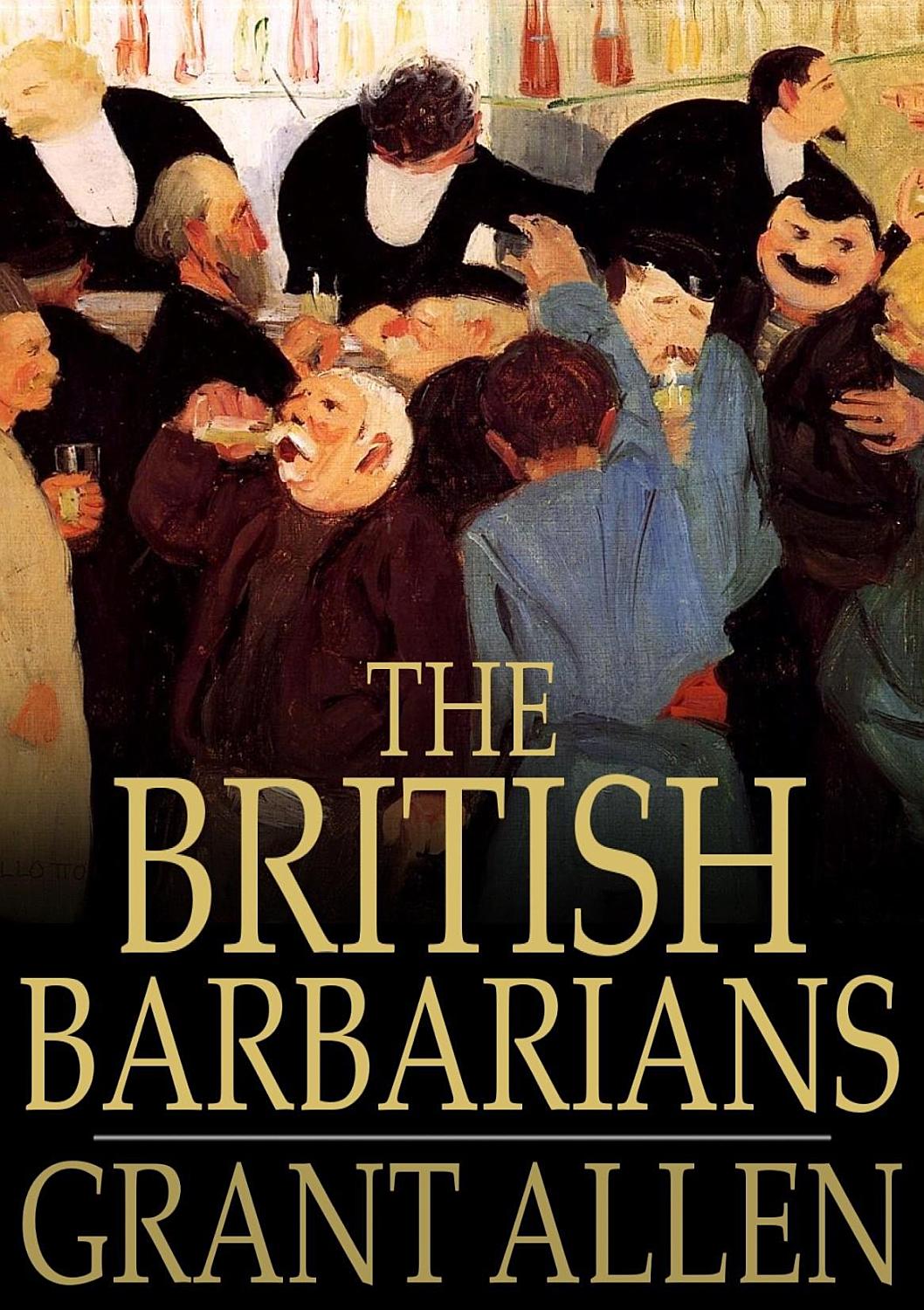
The British Barbarians
The British Barbarians is a novel by Grant Allen, published in 1895 in the same year as his more famous and more controversial The Woman Who Did. It is one of the strangest of Allen’s late novels and is essentially a piece of speculative or science fiction that uses a fantastic premise to deliver a satirical critique of late Victorian English social conventions.
The novel opens in a suburban English village called Brackenhurst when a mysterious stranger named Bertram Ingledew arrives. He has no obvious background or profession and asks endless questions about the most ordinary features of English life, from the way people eat their meals to the way they conduct their courtships to the way they think about property and money. The villagers find him fascinating and confusing in equal measure. The narrator gradually comes to understand that Bertram Ingledew is in fact a visitor from the twenty fifth century, sent back to study the habits of late nineteenth century England in the same way a Victorian anthropologist might study the habits of an unfamiliar tribal society.
The device gives Allen the opportunity to look at conventional English life as if it were genuinely strange. The British barbarians of the title are the English themselves, viewed through the eyes of a visitor for whom their customs are no more natural than the customs of any other society and considerably less rational than many. The book is essentially a piece of social satire dressed up as light science fiction, with Allen using Bertram’s polite incomprehension to make his points about marriage, money, religion, and the various irrational features of his contemporary social arrangements.
The book runs about two hundred pages and reads quickly. The science fiction device is handled lightly. Allen is not really interested in the mechanics of time travel but in the satirical opportunities it creates. For readers interested in late Victorian polemic fiction and in the early history of English science fiction, this is one of the more interesting curiosities of the period. It pairs naturally with The Woman Who Did, the more famous controversial novel from the same year, and with H G Wells’s earliest novels which were being published in the same months.
About the Author
Download free books by Grant Allen on BDeBooks. Read Grant Allen’s works online or download as PDF/EPUB · part of our growing free eBook collection.
See all books by Grant Allen →
Listen to The British Barbarians Audiobook Free
Listen to The British Barbarians by Grant Allen free online. The full audiobook (5 hr 3 min, 14 chapters, read by Ruth Golding) streams free on this page.
The British Barbarians (1895) is a public domain work.
| # | Chapter | Length | |
|---|---|---|---|
| 1 | 00 - Introduction | 23:17 | |
| 2 | 01 - Chapter I | 27:26 | |
| 3 | 02 - Chapter II | 28:32 | |
| 4 | 03 - Chapter III | 8:53 | |
| 5 | 04 - Chapter IV | 38:46 | |
| 6 | 05 - Chapter V | 27:39 | |
| 7 | 06 - Chapter VI | 19:31 | |
| 8 | 07 - Chapter VII | 17:03 | |
| 9 | 08 - Chapter VIII | 33:05 | |
| 10 | 09 - Chapter IX | 20:37 | |
| 11 | 10 - Chapter X | 25:04 | |
| 12 | 11 - Chapter XI | 15:40 | |
| 13 | 12 - Chapter XII | 7:26 | |
| 14 | 13 - Chapter XIII | 9:31 |
Prefer reading? Read The British Barbarians online free or download the PDF and EPUB above.