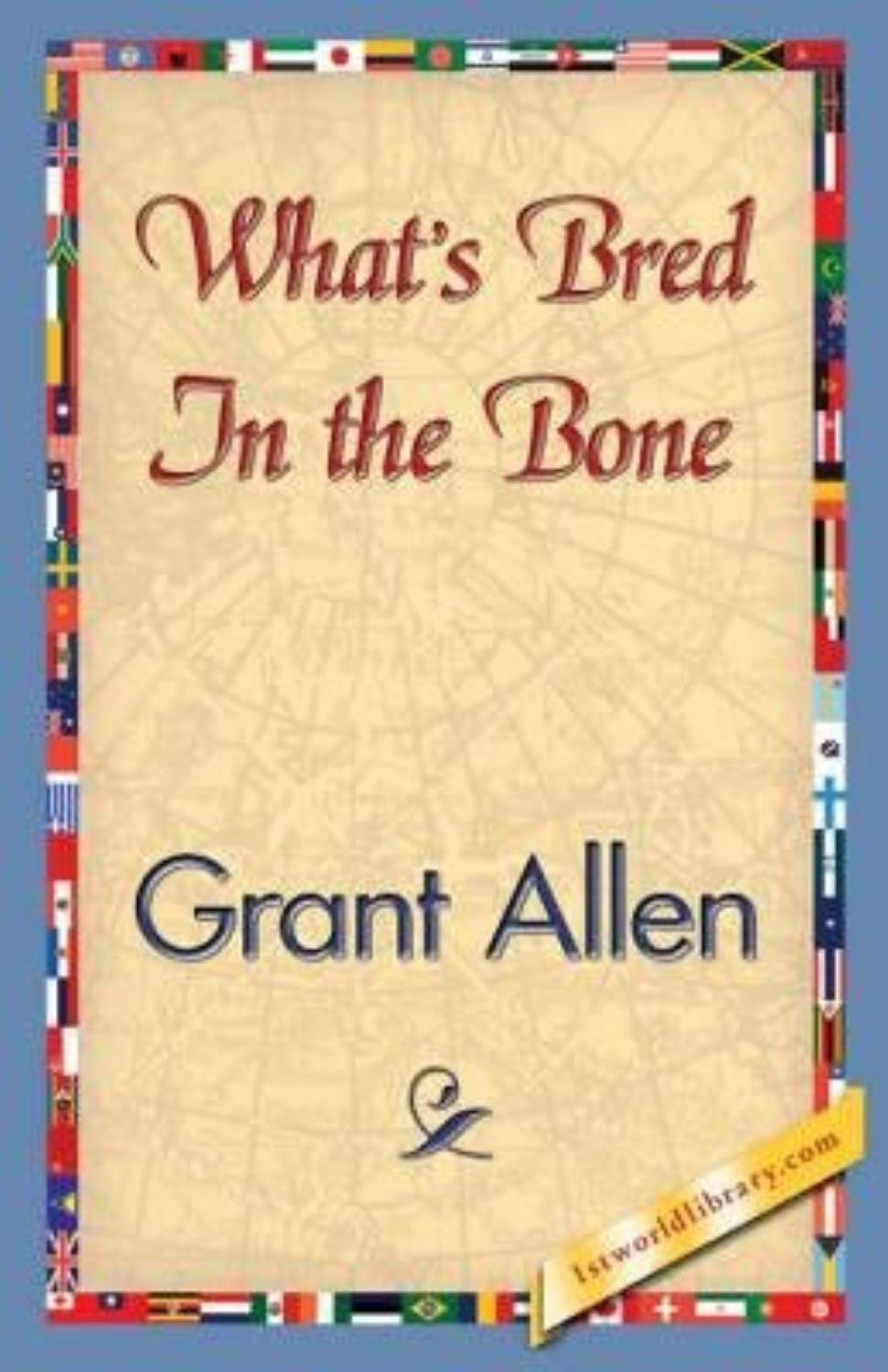
What’s Bred in the Bone
What’s Bred in the Bone is a novel by Grant Allen, published in 1891 after winning a thousand pound prize in a fiction competition run by Tit Bits magazine. The competition was one of the most publicized literary contests of the period and Allen’s winning entry became one of his best known novels of the early 1890s.
The novel works through a complicated plot involving inherited family traits, mistaken identity, and a number of melodramatic complications. The central character is a young woman named Elma Clifford who has an unexplained ability to fall into trances in which she behaves like a gypsy fortune teller, despite having been raised in entirely respectable middle class English circumstances. The mystery of her unusual gift is connected to a long buried family history involving an ancestor who was indeed a gypsy and whose blood, in the language of the novel, has come out unexpectedly in this descendant.
The title comes from the proverb What’s bred in the bone will not out of the flesh, which Allen uses as the organising principle of the plot. The novel is essentially a popular fictional treatment of late Victorian theories of heredity, including the developing ideas of Francis Galton on the inheritance of traits across generations. Allen was interested in genetics as a developing science and he uses the novel to dramatize ideas about inherited tendencies that were just beginning to be discussed in serious scientific literature. The melodramatic plot and the supernatural element of the trances are essentially decorative elements wrapped around what is really a popular essay on inheritance.
The book runs about three hundred pages and reads as a brisk Victorian sensation novel. The science is mostly out of date now, particularly the assumptions about racial inheritance that the plot depends on, and the gypsy material is handled in a way that reads uncomfortably in a modern context. The novel is most interesting now as a document of late Victorian popular thinking about heredity rather than as a piece of fiction. For readers interested in Allen as a science popularizer working in fiction, this is one of the more direct examples. It pairs naturally with his nonfiction essays on heredity collected variously in his late science writing.
About the Author
Download free books by Grant Allen on BDeBooks. Read Grant Allen’s works online or download as PDF/EPUB · part of our growing free eBook collection.
See all books by Grant Allen →