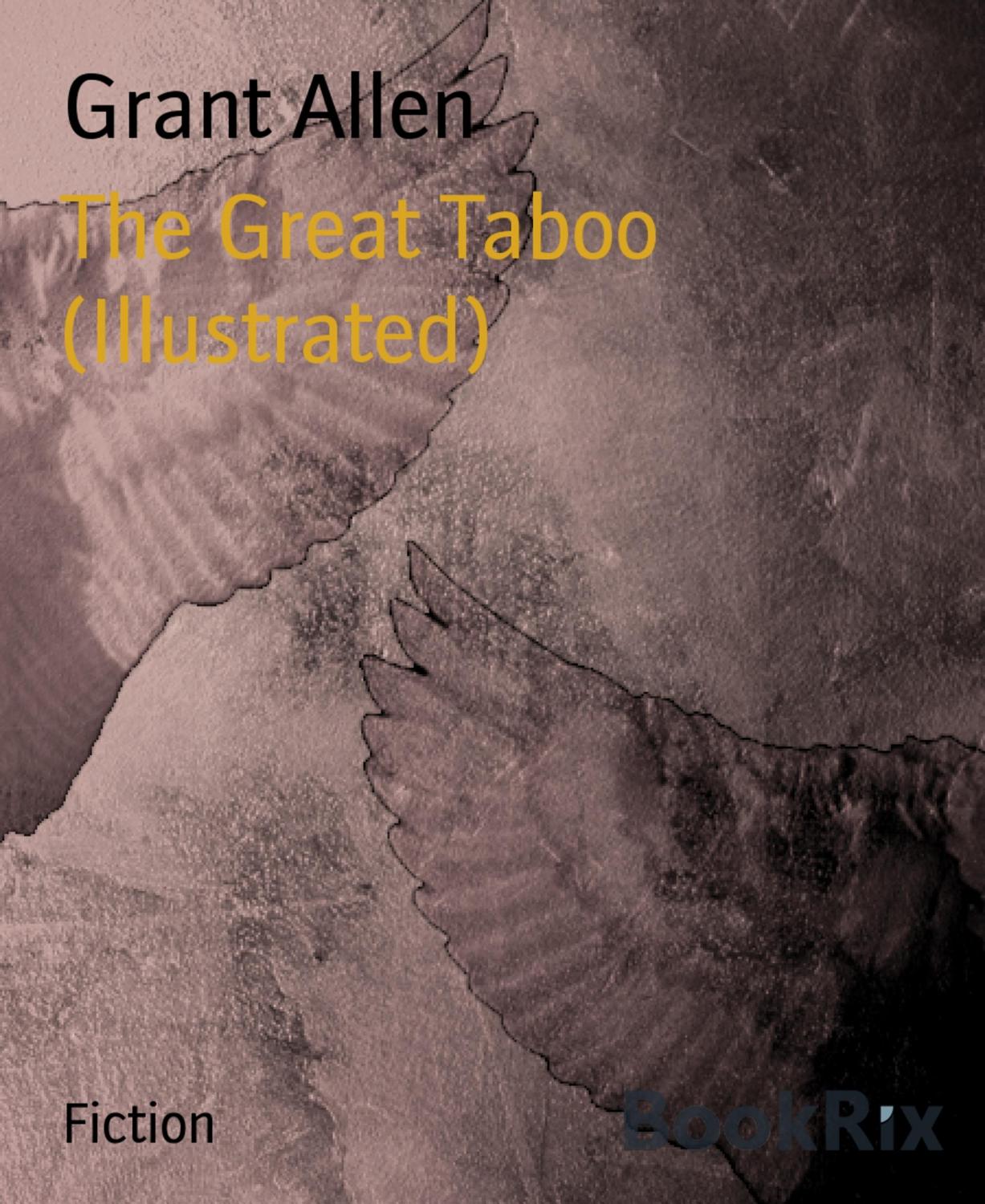
The Great Taboo
The Great Taboo is a novel by Grant Allen, published in 1890. It is one of his adventure novels and one of the more openly Darwinian of his fictions, applying his interest in evolutionary theory and the history of religion to a story of European castaways on a Polynesian island.
The novel opens with the British couple Felix Thurstan and Muriel Ellis being washed ashore on the small Pacific island of Boupari after their steamship is wrecked. The islanders, who have never seen Europeans before, declare the two to be gods of some kind. They are received with enormous reverence but also, as the novel develops, with the kinds of obligations and dangers that go with being a god on a small Polynesian island. The great taboo of the title is the elaborate system of religious prohibitions that governs every aspect of the islanders’ lives and that begins to threaten the survival of the Europeans as the months pass.
Allen was using the novel partly as a vehicle for his serious interests in comparative religion and in the evolution of religious belief. He had read his James Frazer and his Edward Tylor, and the descriptions of the Boupari religious system are based on the kind of late Victorian anthropological reading that was becoming available to general readers. The novel is partly an adventure story about whether the two Europeans will survive and escape, and partly a popular essay on how religion actually functions in a society where it is taken absolutely seriously.
The handling of the Polynesian characters is uneven by modern standards. There are passages where Allen treats the islanders with respect and tries to render their thinking in its own terms, and there are passages where the descriptions slide into the racial assumptions of the period. The novel reads now as a document of late Victorian thinking about race and religion as much as a piece of adventure fiction. It runs about three hundred pages and moves at a steady pace. For readers interested in Allen’s serious work outside the detective fiction of An African Millionaire, this is one of the better examples.
About the Author
Download free books by Grant Allen on BDeBooks. Read Grant Allen’s works online or download as PDF/EPUB · part of our growing free eBook collection.
See all books by Grant Allen →