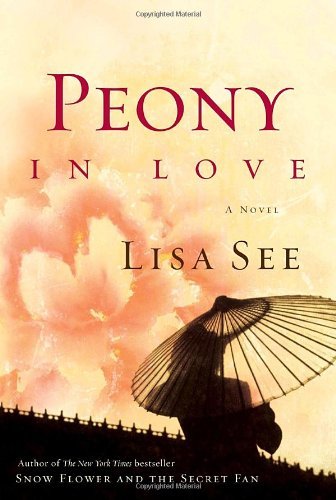
Peony in Love
Peony in Love is Lisa See’s 2007 historical novel, set in seventeenth century China during the early Qing dynasty and grounded in the real cultural phenomenon known as the Three Wives Commentary. The novel takes its central premise from a real Ming dynasty opera called The Peony Pavilion by the playwright Tang Xianzu, a long opera about a young woman who falls in love with a dream lover, dies of love sickness without ever meeting him in waking life, and returns from the dead to be united with him. The opera was so beloved by literate young women of the period that an unusual community of readers developed around it, with several young women writing extensive commentaries on the work and corresponding with each other about its themes.
The novel’s protagonist is Peony, a sheltered sixteen year old girl in a wealthy Hangzhou family who is about to enter an arranged marriage. When her family stages a private performance of The Peony Pavilion, Peony catches a glimpse of a young scholar in the audience and becomes convinced that he is the love of her own life. The opera’s themes about young women dying of love begin to take a literal turn for Peony, with consequences the novel works through across multiple sections that follow Peony’s spirit through the various afterworlds of seventeenth century Chinese cosmology.
Lisa See draws on extensive research into the actual Three Wives Commentary, the historical women who wrote it, and the wider cultural moment in which young women’s literacy and emotional intelligence were being expressed through commentaries on a single foundational opera. The novel manages to be both a love story and a meditation on what literature and obsession can do to a young woman in a culture that has given her almost no other outlets for ambition or longing.
For readers who came to Lisa See through Snow Flower and the Secret Fan or Shanghai Girls, Peony in Love is a more demanding novel that rewards the reader with one of the more unusual stories in her catalogue. The supernatural elements are handled with respect for the cosmological tradition they draw from, and the central love story has a strangeness that more conventional historical romance rarely achieves.
About the Author
Download free books by Lisa See on BDeBooks. Read Lisa See’s works online or download as PDF/EPUB · part of our growing free eBook collection.
See all books by Lisa See →